Sponsored By:
Policy shifts are already moving markets in 2026 — trade enforcement, regulatory changes, and tax positioning are redirecting capital flows right now. The stocks benefiting from these trends are showing momentum early, and institutional money is already repositioning.
Our latest research brief breaks down the 5 Best Stocks to Buy Under the Current Administration — including the sectors leading this rotation and a clear framework for acting before the crowd catches on. Markets don't wait for certainty. Don't get left behind.
Get the Free ReportBy clicking the link above, you're choosing to opt in to receive insightful updates from The Investment News Daily + 2 free bonus subscriptions. Your privacy is important to us. You can unsubscribe anytime. See our privacy policy for details.

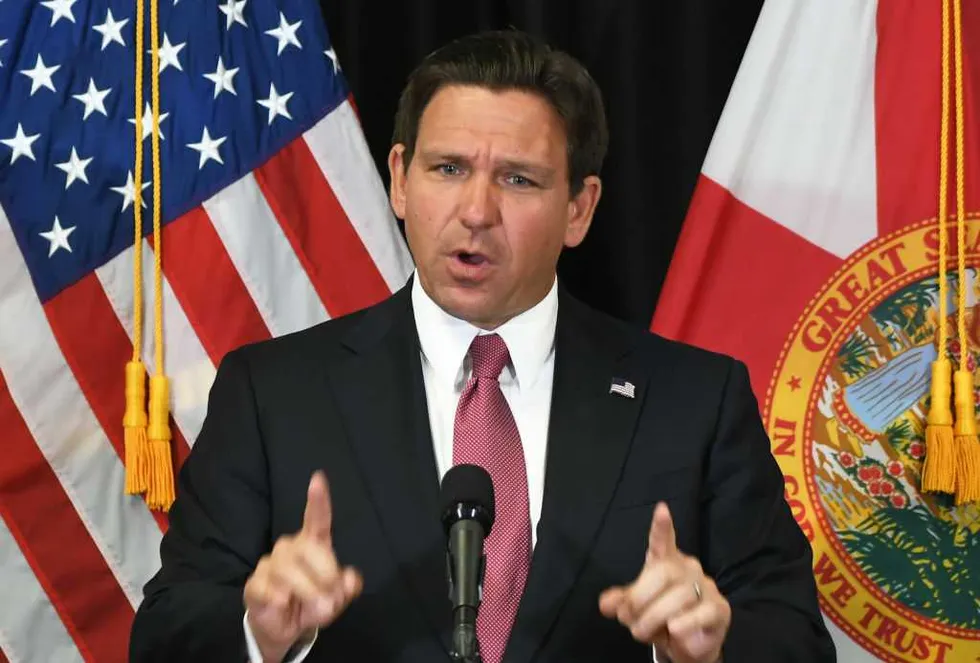
Image via TheBlaze
Red States Move on Election Integrity — With or Without Washington
President Trump keeps hammering the SAVE America Act in D.C., but the bigger story is what’s happening on the ground: red-state legislatures aren’t waiting on Congress to secure voter rolls, tighten ID rules, and standardize verification. Statehouses know what voters have been telling them for years — people want clean elections that are easy to vote in and hard to cheat.
That state-level urgency matters because confidence is a form of civic capital. When half the country thinks the system is rigged, you get social instability, weaker institutions, and businesses that hesitate to expand because they can’t forecast regulatory and tax policy with any confidence. Predictability is oxygen for investment.
✍ My Take: If you can’t run a fair vote count, you can’t run a serious country. States doing the blocking-and-tackling now are protecting more than ballots — they’re protecting long-term economic stability and the legitimacy markets rely on. Congress should pass the bill, but I’m glad the states aren’t holding their breath.
📎 TheBlaze

Image via American Thinker
Democrats’ 2028 Problem: The Party of “Democracy” and the Primary They Can’t Control
The left loves to preach “protect democracy,” but the American Thinker piece argues Democrats may struggle to give their own socialist wing a clean, credible presidential primary in 2028. The underlying tension isn’t new: the donor class and party machinery want a manageable nominee, while the activist base wants a crusader.
That internal fight has consequences beyond cable news. A party consumed by procedural knife-fights tends to lurch toward bigger promises, looser fiscal discipline, and more regulatory overreach to placate factions — which hits confidence in capital markets and raises the cost of doing business, especially for small operators who can’t hire a platoon of compliance lawyers.
✍ My Take: When a party can’t trust its own process, it doubles down on control — of speech, markets, and institutions. Investors should watch the Democratic primary rules like you’d watch covenants in a loan document: the fine print tells you who really holds power. Disorder in their house doesn’t make ours better, but it does create opportunity if you stay disciplined.
Iran Dangles a Hormuz Deal — Energy Markets Hear “Risk Premium”
AP reports Iranian officials are floating a proposal to reopen the Strait of Hormuz if the U.S. lifts its blockade and the war ends. Hormuz is the chokepoint that keeps energy traders up at night — and when it’s threatened, you’re not just talking about gasoline. You’re talking about shipping rates, insurance costs, petrochemical inputs, airline margins, and the inflation expectations that drive interest rates.
Even rumors around Hormuz move money. Businesses don’t price “peace,” they price “uncertainty,” and that uncertainty shows up as a premium in everything from diesel surcharges to construction bids. For commercial real estate, energy spikes feed straight into operating expenses and tenant stress — especially for logistics, manufacturing, and lower-margin retail.
✍ My Take: I don’t buy “good faith” headlines from a regime that uses leverage like a weapon. The market lesson is simple: keep some inflation hedges, watch your fuel-sensitive holdings, and don’t assume energy volatility is behind us. Washington’s job is to secure trade routes, not negotiate from weakness at the world’s most important chokepoint.
📎 AP News
JetBlue Accused of Personal-Data Pricing — Here Comes the “Algorithm Tax”
OANN reports JetBlue is accused of using personal data to determine ticket pricing — the kind of claim that lands right in the middle of America’s growing fight over privacy, surveillance capitalism, and corporate pricing power. Dynamic pricing isn’t new, but personalized pricing based on who you are (or what your device and history suggest you’ll tolerate) is a different animal.
If regulators decide airlines are crossing a line, expect a wave of hearings, lawsuits, and compliance costs — and those costs don’t come out of thin air. They flow downhill into higher base fares, more fees, and less competition as smaller players struggle to keep up with legal and technical mandates.
✍ My Take: If an airline is charging you more because it thinks you’ll pay more, that’s not “smart tech” — that’s digital discrimination dressed up as revenue management. But I also don’t want a Washington “privacy regime” that locks in Big Tech and Big Airlines while crushing everyone else with paperwork. Set clear rules, enforce fraud, and don’t build a regulatory moat that only giants can afford.
📎 OANN
DeLauro Explodes at Zeldin — Climate Politics as a Blunt Instrument
Breitbart reports Rep. Rosa DeLauro tore into EPA Administrator Lee Zeldin, calling the administration “climate deniers” during a heated exchange. The temperature of these hearings matters because the EPA isn’t just debating science — it’s shaping permitting timelines, energy costs, and the practical ability of the U.S. to build anything.
When climate politics turns into theater, real projects stall: pipelines, power plants, industrial expansions, and even housing developments that depend on affordable materials and reliable electricity. In the real economy, you can’t “tweet” a megawatt into existence, and you can’t regulate your way into lower prices.
✍ My Take: The left’s favorite move is to moralize the argument so they never have to cost it out. Zeldin’s job is to protect air and water without strangling the productive economy that pays for everything — including environmental improvements. If Democrats want electrification and reshoring, they’d better stop treating energy like a sin.
I’ll keep my eye on the money — you keep your feet on the ground and your family close.
— Wade Lawson