Sponsored By:
August setups are already taking shape — and the biggest moves happen quietly, before the crowd notices. Are you entering early, or buying after the easy gains are gone?
GuyStocks delivers 100% free, real-time momentum alerts straight to your device — zero hype, pure data — so you're positioned in high-conviction trades before the broader market catches on.
Join GuyStocks Free TodayBy clicking the link above, you agree to receive emails from GuyStocks.com. You can opt out at any time. — Privacy Policy

Thursday, August 6, 2026 | News for Every Conservative. Five stories today on power, process, and what it all does to markets, neighborhoods, and the folks trying to make payroll.
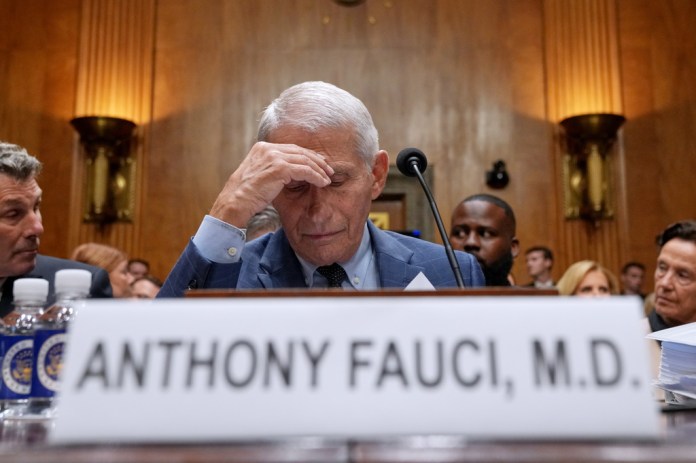
Image via Washington Examiner
Rand Paul’s Committee Votes Fauci in Contempt, and Washington’s Immunity Culture Gets Tested
Sen. Rand Paul’s committee voted to hold Dr. Anthony Fauci in contempt of Congress after a contentious hearing in which Fauci invoked his constitutional right against self-incrimination rather than answer certain questions. The vote is the latest escalation in a long-running oversight fight over pandemic-era decision-making, public messaging, and the lines between science, bureaucracy, and politics.
Contempt votes don’t automatically equal consequences, but they do put pressure where it belongs: on the government’s habit of making life-altering calls and then hiding behind process when citizens ask who signed what, who knew what, and when. For small business owners who watched rules shift by the week, this isn’t abstract. Those mandates changed revenue, staffing, leases, and survival odds, and the people who pushed them shouldn’t get a lifetime hall pass from accountability.
If this moves forward, expect the usual institutional resistance: delays, referrals that go nowhere, and a media chorus calling oversight “harassment.” But the public appetite for straight answers hasn’t gone away, especially among families and entrepreneurs who lived through shutdowns and watched politically connected industries get carve-outs while Main Street bled.
🏛 Wade's Take: When government wields emergency power, it owes the public transparency on the back end. Invoking the Fifth may be a legal right, but it’s also a bright red flag for a public official who spent years talking down to Americans like we weren’t smart enough to read the data. If Washington wants trust back, it starts with sworn answers, clean records, and consequences when officials play cute with the truth.

Image via National Review
Democrats Get Burned by Ranked-Choice Voting, and Suddenly ‘Election Reform’ Isn’t So Cute
A National Review piece highlights a lesson the Democratic National Committee is learning the hard way: ranked-choice voting sounds like a feel-good civic upgrade until it scrambles coalitions, weakens party accountability, and produces outcomes nobody campaigned for. The argument is blunt: the party should come out against ranked-choice voting, not because it’s unfair to Democrats, but because it’s messy for voters and destabilizing for governance.
Conservatives should pay attention because the sales pitch for these reforms is always the same: “more choices,” “less polarization,” “more moderation.” In reality, ranked-choice systems can turn elections into multi-round strategy games run by consultants and activist groups that know how to harvest second- and third-choice votes. That doesn’t empower ordinary citizens; it empowers the people who can afford to model the chessboard.
In business, you don’t change the rules of the lease every month and call it “innovation.” You pick a structure that’s clear, enforceable, and understood by the people who have to live under it. Elections are no different. When the process is confusing, confidence drops, turnout gets weird, and the loudest organized factions gain leverage.
🏛 Wade's Take: If the DNC is finally noticing that ranked-choice voting can produce unaccountable, backdoor outcomes, welcome to the party. The fix isn’t a new gimmick; it’s clean voter rolls, clear precinct procedures, and election rules that ordinary working people can explain at the dinner table. One person, one vote, counted once, with results people can trust.

Image via RedState
Trump Warns Leakers: America’s Ammo Isn’t the Problem, Discipline Is
Former President Trump weighed in on U.S. munitions capacity and, in typical Trump fashion, paired it with a warning shot at leakers inside the national security apparatus. The message: the United States has the industrial capability and military strength to supply itself, but people who treat classified information like gossip are going to find their freedom shrinking.
Behind the rhetoric is a real issue: leaking is not “transparency,” it’s sabotage. It undermines negotiating leverage abroad and confidence at home. It also feeds a permanent bureaucracy culture where policy is shaped by anonymous briefings rather than elected leadership, which is the opposite of democratic accountability.
On the industrial side, the munitions conversation is also an economics story. If America wants reliable defense stockpiles, it means long-term procurement, domestic manufacturing, and a regulatory environment that allows factories to get permitted, staffed, and expanded without a five-year paperwork death march. National security is supply chains, not speeches.
🏛 Wade's Take: I don’t care which party you’re in: if you leak classified material, you should be prosecuted. Full stop. And if we’re serious about readiness, we build and stock what we need here at home, with predictable contracts that let companies invest in capacity the same way any smart operator does. Strength isn’t just missiles; it’s discipline and production.
📎 RedState
Trump Team Backs 15% Polysilicon Tariff to Box Out China, and the Solar Supply Chain Braces
Reuters reports the Trump administration plans to impose a 15% tariff tied to a polysilicon probe aimed at countering China. Polysilicon is a critical input for solar panels, and any tariff signal in that chain ripples through pricing, project timelines, and the broader energy and manufacturing landscape.
For investors and business owners, the immediate question is who eats the cost. Developers with solar-heavy projects may see bids rise. Utilities and large commercial buyers may renegotiate procurement assumptions. Meanwhile, domestic producers and allied-country suppliers could benefit if the policy nudges investment toward non-China capacity.
The bigger picture is that the U.S. has spent years building an economy dependent on geopolitical rivals for strategic inputs, then acting surprised when those rivals use that leverage. Whether you love tariffs or hate them, the direction of travel is clear: de-risking supply chains is now a bipartisan reality, and markets will keep repricing anything exposed to China concentration.
🏛 Wade's Take: I’m not reflexively pro-tariff, because I’ve seen how costs cascade through budgets and hit consumers and builders first. But I am pro-America controlling the inputs that power our grid and our defense-adjacent manufacturing. If Washington is going to do this, pair it with faster permitting and serious domestic production incentives so we’re not just paying more, we’re actually building more.
📎 Reuters

Image via NTD
Los Angeles Homelessness Keeps Rising, and the Blueprint Is a Warning for Every City
A report on Los Angeles’ homelessness crisis focuses on what’s driving the increase, with images and firsthand accounts that make it impossible to dismiss as a talking point. LA remains the case study in how a wealthy region can still fail at basic public order when housing costs soar, addiction and mental illness go untreated, and government programs become an ecosystem instead of an exit ramp.
From a property and neighborhood perspective, this isn’t just compassion versus enforcement. It’s also economics and governance. When streets become unsafe, foot traffic drops, small businesses close, vacancy rises, and property values soften in pockets that used to support tax revenue. Then the city has even less capacity to deliver services, and the spiral tightens.
Every city has hard-luck stories, but LA’s scale reflects policy choices: slow building, hostile permitting, weak consequences for public camping and drug use, and an overreliance on high-cost solutions that don’t produce clean, measurable results. When government can’t keep sidewalks usable, it’s telling you it can’t manage anything else efficiently either.
🏛 Wade's Take: The humane approach is the effective approach, and what LA is doing clearly isn’t working. You need three things at once: real treatment capacity, real enforcement of public space rules, and real housing supply that can be built without ten years of lawsuits and red tape. If your city leaders won’t do all three, they’re not solving homelessness, they’re managing it.
📎 NTD
That’s the read from my desk. Keep your balance sheet strong, your tenants stable, and your politics focused on results, not slogans. See you tomorrow.
— Wade Lawson