Sponsored By:
Oil markets are shifting as Venezuela's disruption removes critical barrels while spare capacity shrinks. Supply pressure is building before headlines catch up — and smart traders are positioning now.
Our exclusive briefing reveals three energy stocks emerging from this supply shock, plus the key signals to monitor as this setup evolves. This is about preparation, not prediction.
Get the Free Oil Trading ReportBy following the links above, you're opting in to receive valuable updates from Wealthiest Investor News plus 2 bonus subscriptions. Your privacy is important to us. You can unsubscribe anytime. See our privacy policy for details.

From Washington’s AI controls to activist politics dressed up as “science,” the common thread is confidence: what citizens, investors, and trading partners believe about American institutions. Lose trust and you lose premiums—in markets, in property values, and in national power.

Image via Washington Examiner
America’s AI Moat Isn’t Chips — It’s Trust, and China Knows It
The Washington Examiner argues America’s true advantage in artificial intelligence isn’t just compute or talent—it’s credibility. When people believe the system is fair, rules are knowable, contracts are enforceable, and products are safer, they adopt faster. That adoption becomes the flywheel: more users, more data, better models, better companies, higher valuations, and a deeper lead.
The piece points to a June 12 directive ordering Anthropic to suspend access to certain advanced model capabilities (Fable 5 and Mythos 5) for any foreign national, whether inside or outside the U.S. That kind of move is meant to protect national security, but it also signals a new era where frontier AI access is treated like a controlled export. Meanwhile, China is betting we’ll fracture our own trust advantage with politicized regulation, inconsistent enforcement, and the kind of rule-by-memo that makes businesses and allies hesitate.
For investors and operators, this is the same lesson as commercial real estate: the building isn’t the only asset—the lease is. Trust is the lease. If Washington turns AI governance into a patchwork of arbitrary restrictions and ideological tests, capital will demand a higher risk premium, startups will move slower, and foreign partners will shop elsewhere.
🏛 Wade's Take: I’m all for protecting crown-jewel tech, but if the rules keep changing based on who’s yelling the loudest that week, we’ll tax our own innovation. The market doesn’t fear regulation as much as it fears unpredictability. America wins when we set clear, enforceable rules that keep us safe without strangling adoption—and we do it with enough integrity that the world still prefers our platforms over Beijing’s.
Maine Democrats Have a Candidate Problem — and a Pattern Problem
Breitbart spotlights the growing controversy around Maine U.S. Senate candidate Graham Platner, who has denied recent sexual assault allegations. The larger point in the story isn’t just the accusations themselves, but the roster of prominent Democrats who boosted Platner through earlier disputes and red flags, treating party advantage like a hall pass.
When a party keeps rewarding the same kind of behavior—or dismissing it until the polling turns—it corrodes public confidence fast. Voters can smell a double standard, and donors can too. In business terms, it’s like management ignoring repeated compliance complaints because the guy brings in revenue—until the lawsuit hits and everybody acts shocked.
Politically, this feeds the broader credibility crisis Democrats are already facing: they want to be the party of standards and accountability, but too often they practice accountability like a weapon, not a principle. That has downstream economic consequences, because credibility is what keeps institutions stable and keeps markets from pricing in chaos.
🏛 Wade's Take: If your party only discovers “values” after the headlines, you don’t have values—you have PR. Conservatives should hammer the double standard without sounding sanctimonious: standards apply to everybody, or they’re not standards. The public is tired of elites protecting their own, and this is exactly how trust in institutions gets burned to the ground.

Image via TheBlaze
FTC Lawsuit Targets Pediatric Gender Medicine Gatekeepers — and the “Settled Science” Sales Pitch
TheBlaze reports on a lawsuit in which the Federal Trade Commission is suing the World Professional Association for Transgender Health (WPATH), challenging sweeping recommendations tied to pediatric gender medicine. The column frames it as a direct strike at the notion that the underlying science is “settled,” arguing that guidelines were treated as unquestionable while dissenting evidence and professional objections were sidelined.
Regardless of where you land emotionally on the issue, the economic and legal implications are huge. Medical guidelines influence insurance coverage, hospital protocols, pharmaceutical demand, and liability exposure. If a central standard-setting body is found to have pushed recommendations in a way that looks coordinated, coercive, or misleading, you can expect a wave of litigation, tighter underwriting, and a major reassessment inside health systems and state Medicaid programs.
This also speaks to a broader national problem: activist certainty replacing scientific humility. When policymakers and agencies treat debate as heresy, they don’t eliminate risk—they stockpile it. And when the bill comes due, it lands on families, taxpayers, and every employer staring at higher premiums.
🏛 Wade's Take: If the science is solid, it can withstand scrutiny in court and in daylight. What I don’t trust is any industry group that acts like questions are hate speech and caution is forbidden. The country needs medical standards built on evidence, transparency, and informed consent—not slogans and career pressure—because when liability explodes, working people pay twice: once in taxes and again in premiums.
📎 TheBlaze

Image via American Thinker
Don’t Laugh Off the DSA — They’re Organizing Like They Mean It
American Thinker argues Republicans shouldn’t treat the Democratic Socialists of America as a fringe curiosity. The piece characterizes the DSA as explicitly revolutionary in posture and disciplined in organizing, especially at the local and municipal levels where policy changes can hit fast: zoning, policing, school curricula, and the regulatory climate for landlords and small business.
This matters because local power is where the cost of living gets set. City councils and county boards can make it impossible to build, punish property owners with punitive fees, and create a permitting maze that only big developers can navigate. That’s how you get higher rents, fewer starter homes, and main streets that hollow out under the weight of good intentions and bad math.
The DSA approach is also built for low-turnout elections: show up, stack meetings, recruit candidates, and normalize policy ideas that would fail in a higher-attention environment. If you own property, employ people, or just want your kids to afford the same town you grew up in, you can’t ignore who’s writing the local rules.
🏛 Wade's Take: A lot of Republicans treat local politics like it’s beneath them, then act stunned when the property tax bill jumps and the city invents a new compliance office. The DSA isn’t beating you on arguments; they’re beating you on attendance. If conservatives want to defend opportunity, they need precinct-level muscle and a pro-growth message that’s specific—permits, policing, schools, taxes—not just vibes.
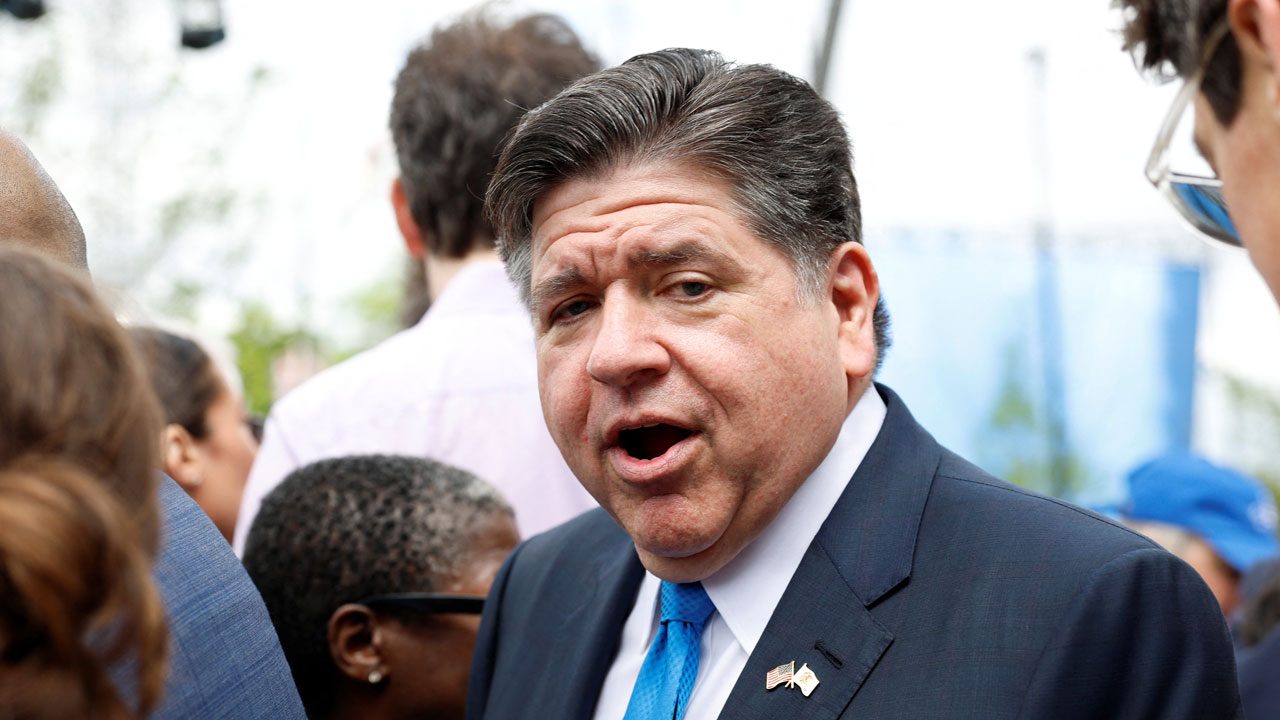
Image via The Daily Signal
Pritzker and Khanna Slam “The Rich” — From the Penthouse
The Daily Signal covers a familiar modern Democratic tension: wealthy politicians criticizing wealth, even as Democratic Socialists notch primary wins and pull the party further left. Illinois Gov. J.B. Pritzker and Rep. Ro Khanna are highlighted as high-profile figures trying to navigate a base that increasingly wants aggressive redistribution and anti-capitalist rhetoric.
This isn’t just culture-war theater; it’s policy risk. When a party’s internal competition becomes a race to promise higher taxes, stricter labor rules, more federal intervention, and more punishment for “profit,” investors price that in. Businesses delay expansion, hiring slows, and capital finds friendlier states—which is exactly why the South keeps winning relocations.
There’s also a sincerity problem. Voters may not love billionaires, but they really don’t love billionaires who built or inherited fortunes under one set of rules and then campaign to close the ladder behind them. That kind of politics doesn’t build a stronger middle class—it builds a bigger government class.
🏛 Wade's Take: I’ve got no issue with someone being rich—I’ve got an issue with rich politicians selling resentment like it’s a jobs program. If you want more prosperity, you protect the conditions that create it: stable rules, reasonable taxes, affordable energy, and safe streets. When the message becomes “anyone doing well is the enemy,” you don’t punish the wealthy; you punish the next generation of builders.
Wade Lawson Editor, The Local Conservative — News For Every Conservative Built in the real world. Written for the real world.
— Wade Lawson