Sponsored By:
JP Morgan just quietly put a $8,000 price target on gold — and they don't publish numbers like this without ironclad data. Gold is already up roughly 80% since the start of 2025, hitting $5,500 while stocks, bonds, real estate, and Bitcoin all stumbled. Central banks now hold more gold than at any point since 1971, and gold has officially overtaken U.S. Treasuries as the world's #1 reserve asset — at the fastest pace in 50 years.
Most Americans are waiting for a pullback, waiting for confirmation, waiting for cable news to say it's safe — while the gap between those who moved first and those who waited keeps widening. You're making a decision today whether you realize it or not. Position before $8,000 prints, or scramble after every news anchor in America is already talking about it.
Get the Free Wealth Preservation GuideThis is an advertisement. If you no longer wish to receive promotional emails for this promotion, please unsubscribe here. Or write to: 5005 Lyndon B. Johnson Fwy. Suite 350, Dallas, TX 75244.

Tuesday, August 25, 2026: Where the money’s moving, who’s getting cover in the courts, and why the next boomtown might be a data center sitting next to a soybean field.
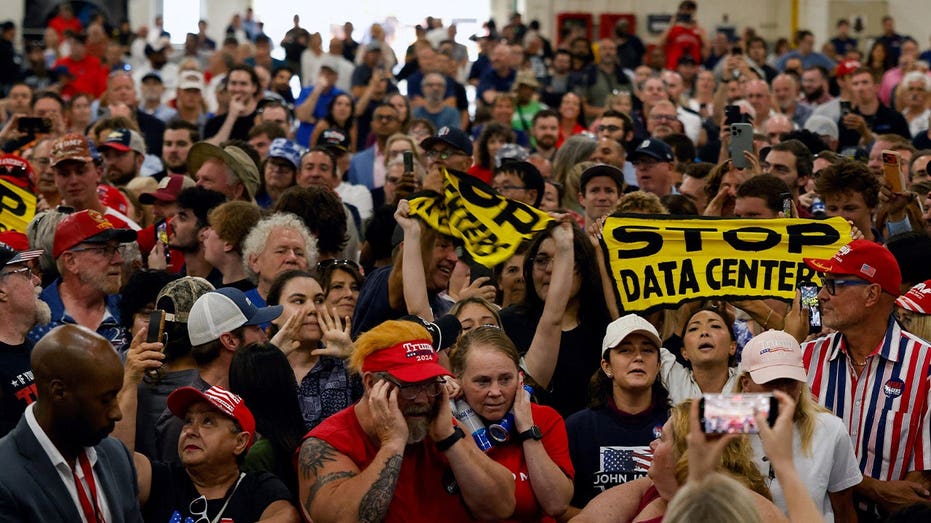
Image via Fox News
AI Data Centers Are Bringing Real Paychecks Back To Small-Town America
Out in places most coastal politicians couldn’t find without GPS, AI data centers are landing like the first good factory deal in a generation: jobs, construction work, steady tax base, and spin-off business for everybody from electricians to diner owners. Towns that have been told for 20 years to “learn to code” are watching the coding economy finally show up with steel, concrete, and payroll.
The dirty secret is these facilities don’t just consume power, they can improve the economics of the local grid when they’re planned right. Big, predictable demand can justify new generation and upgraded transmission, and that can translate into more reliable service and, in some cases, lower bills spread across the community. It’s the opposite of what you hear from the folks who treat every kilowatt like a moral failing.
Democrats love AI when it’s a talking point and a campaign donor, but they get real quiet when AI means rural permitting wins, energy buildout, and communities keeping their kids at home instead of exporting them to Austin and Atlanta. If Washington wants to help the “left behind,” it can start by getting out of the way of private capital that actually shows up with cranes and jobs.
🏛 Wade's Take: I’ve watched what happens to a town when the biggest employer leaves, and I’ve watched what happens when a serious operator moves in and starts writing checks every Friday. If we want opportunity outside the big metros, we need fast permitting, property-tax stability, and energy policy that’s pro-build instead of pro-lecture. Conservatives should treat data centers like we treat ports and interstates: strategic infrastructure that attracts everything else. Source: Fox News
📎 Fox News

Image via The Federalist
The Soft-On-Crime Money Pipeline Is Hitting Red States, Too
The latest reporting lays out an uncomfortable reality: “criminal justice reform” isn’t just a blue-city problem anymore. Networks of left-leaning nonprofits, grant-funded advocacy shops, and ideologically friendly legal players are pushing policies that reduce consequences, widen loopholes, and tilt courtroom incentives away from public safety.
When that model takes root in a red state, the results don’t show up as an abstract debate on cable news. They show up in higher shoplifting losses for local retailers, rising insurance premiums, more security costs for apartment owners and small businesses, and neighborhoods where decent families start thinking about moving. That’s not just crime, that’s an economic toxin.
The political trick is always the same: wrap it in compassion language, then outsource the real costs to working people. The people writing the policy don’t manage a storefront, don’t handle a tenant who’s been burglarized twice, and don’t have to explain to employees why the parking lot isn’t safe after dark.
🏛 Wade's Take: If a policy makes it easier to victimize working people and harder to remove repeat offenders, it’s not “reform,” it’s sabotage dressed up as virtue. Republicans need to stop being polite about the nonprofit-industrial complex and start demanding transparency: who funds it, who benefits, and which judges keep enabling it. Public safety is the foundation under every property value and every local payroll. Source: The Federalist
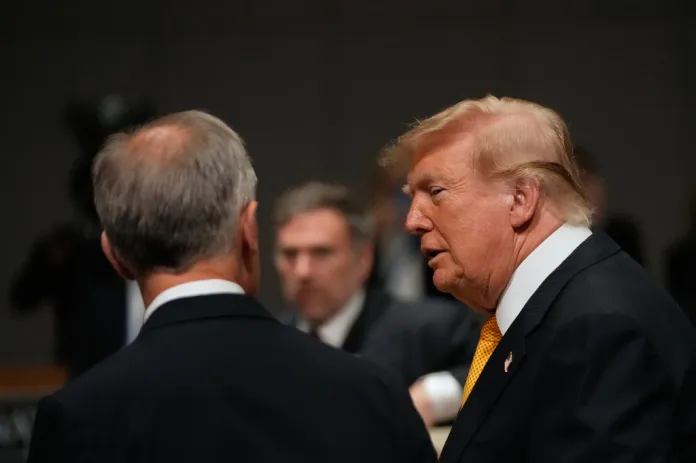
Image via Washington Examiner
Trump Teases “Lake America” As Trade Fights With Canada Heat Up
President Trump tossed a headline-grabber into the mix by floating the idea of renaming Lake Ontario to “Lake America” as U.S.-Canada trade tensions climb. It’s the kind of symbolic punch that travels fast, especially when negotiations are already testy and both sides are posturing for leverage.
Behind the joke-or-not-joke branding play is a real issue: trade friction with Canada hits specific sectors hard, from agriculture and energy to manufacturing supply chains. When cross-border costs rise, businesses don’t absorb it out of kindness; it flows straight into pricing, margin pressure, and investment decisions.
You can laugh at the name idea and still recognize the message: Trump likes visible, national-pride signals while he plays hardball on the deal terms. Whether that strategy yields better outcomes depends on what actually lands in the final agreements, not what gets said on a mic.
🏛 Wade's Take: I don’t invest based on slogans, and I don’t want trade policy run like a bumper sticker contest. But I also know negotiation, and sometimes the point is to set the tone: we’re not showing up apologizing for being America. If this escalates, I’m watching inputs, logistics costs, and any industry that lives on smooth cross-border flow. Source: Washington Examiner
-1.jpg)
Image via Daily Caller
Ex-CIA Crowd Throws A “Deep State” Send-Off Party And Proves The Point
A group of reportedly “purged” CIA officials held what’s described as a resignation-party-style gathering, framed as a “deep state plot” return story, at a gay karaoke bar. The coverage portrays it as half networking, half spectacle, with the kind of self-mythologizing that makes regular Americans roll their eyes.
Regardless of anyone’s personal lifestyle, the bigger concern is cultural: when intelligence officials treat their roles like membership in an elite club with its own politics, it corrodes trust in institutions that are supposed to serve the country, not themselves. If the public believes the national security apparatus is playing factional games, everything from funding to oversight becomes uglier.
For markets and business confidence, institutional credibility matters. When agencies look politicized, it adds risk premium to the whole system, because investors and operators start pricing in arbitrary enforcement, leaks, and internal sabotage.
🏛 Wade's Take: If you want the public to believe you’re an apolitical professional, you don’t hold a theatrical “we’ll be back” party like you’re a campaign staffer. The intelligence community needs adults, tight controls, and consequences for politicized conduct, period. Trust is national infrastructure, and once it’s broken, it’s expensive to rebuild. Source: Daily Caller
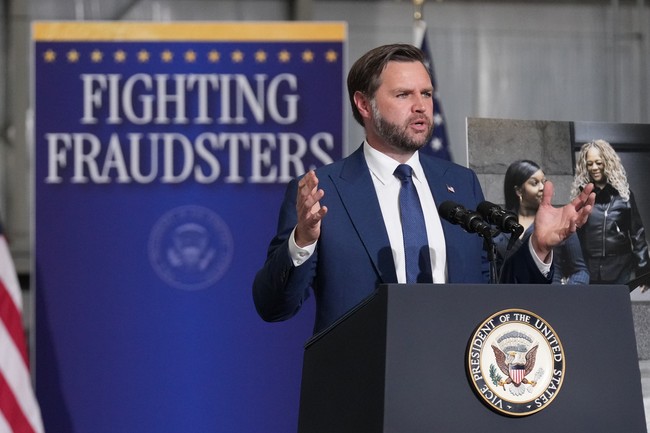
Image via RedState
Vance’s Anti-Fraud Push Gets A Real Tool: DOJ’s National Fraud Detection Center
Sen. JD Vance’s anti-fraud task force is getting new enforcement muscle through the Department of Justice’s National Fraud Detection Center, according to reporting. The aim is to improve coordination and capability in spotting fraud patterns, chasing bad actors, and tightening up cases that previously slipped through cracks between agencies.
Fraud is not a victimless white-collar nuisance. It drives up insurance rates, wrecks small vendors who can’t eat chargebacks, steals taxpayer dollars, and makes every honest business jump through more hoops because a handful of crooks poisoned the well.
If the government is going to be in the business of moving large sums of money, issuing benefits, awarding contracts, and regulating complex markets, then it has a basic duty to be competent at detecting cheating. Better tools and cleaner coordination are overdue, especially as fraudsters now use automation, synthetic IDs, and cross-border networks.
🏛 Wade's Take: I want fraudsters scared again, because every dollar they steal gets made up through higher costs on the rest of us. Do it smart: target real criminals, protect due process, and don’t turn small businesses into collateral damage with sloppy audits and shifting standards. If this center produces convictions and recovered money, it’s one of the rare Washington moves that actually helps Main Street. Source: RedState
📎 RedState
I’m Wade Lawson. Keep your eyes on power, permitting, and public safety — those three decide what your town is worth and whether your kids can build a life there. See you next issue.
— Wade Lawson