Sponsored By:
Forget trendy tech — the biggest income opportunities right now are hiding in plain sight. Our newest research has uncovered three high-yield dividend powerhouses generating billions in free cash flow: an energy infrastructure leader paying a 7.3% yield, a tobacco giant delivering an 8.6% dividend, and a consumer-finance specialist posting a massive 9.2% yield — all with conservative payout ratios built to last.
These cash machines are built to thrive even when markets turn choppy — and smart income investors are positioning right now, before this report goes public. Don't miss your window.
Download Your Free Report NowBy clicking the link above you agree to receive emails from StockEarnings and our affiliates. You can opt out at any time. Privacy Policy.

Today’s roundup is a reminder that national security is local, politics is personal, and every headline has a balance sheet hiding underneath it.
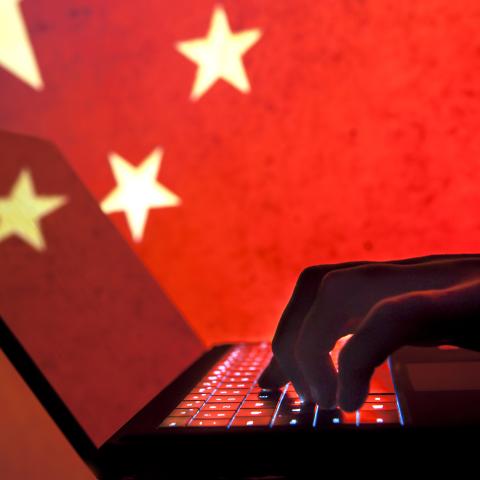
Image via Just the News
Wisconsin to Beijing: When Research Partnerships Turn Into Surveillance Pipelines
A new report says the University of Wisconsin’s partnership with a Chinese school helped strengthen Beijing’s surveillance apparatus, pointing to the Joint Research Institute on Internet of Mobility launched in 2017. The focus area, vehicle-road-cloud development, sounds like a neutral engineering problem until you remember the Chinese Communist Party treats data like a weapon and treats private life like state property.
In plain English, mobility tech is about connected cars, smart roads, traffic systems, sensors, and the cloud infrastructure that stitches it all together. That same toolkit that improves traffic flow can also track citizens, map movement patterns, and build predictive policing at scale. When American institutions hand over know-how, talent, or joint publications that accelerate that machine, it’s not just an academic exercise anymore.
Universities love to talk about openness and global collaboration, but the CCP doesn’t play by the same rules. You don’t get to pretend you’re just doing “research” when your counterpart answers to a one-party state that’s building a digital panopticon and exporting it to the rest of the world.
🏛 Wade's Take: If you want to know what “national security” means for Main Street, start here: the same tech that powers a surveillance state can also shape who wins future industries, who controls standards, and who owns the data. State schools taking taxpayer-backed prestige and feeding it into CCP-aligned programs is a bad deal, full stop. Washington ought to treat sensitive research like critical infrastructure, because economically and strategically, that’s what it is.

Image via The Hill
Tillis to Trump: Don’t Leak My Number, I’ve Got Yours Too
Sen. Thom Tillis warned that he wouldn’t take it lightly if President Trump doxed him, after Trump reportedly leaked another Republican lawmaker’s phone number on social media over the weekend. Tillis’s message was blunt: he’s got Trump’s number too.
This is the kind of schoolyard escalation that might get laughs online, but it’s not cost-free. In politics, personal info becomes leverage, and leverage becomes intimidation. Once elected officials normalize turning private contact details into public weapons, you can bet activists and bad actors will follow the example.
For conservatives who care about free speech, personal privacy, and keeping government from becoming a mob, this is a moment to slow down. If the right wants to be the adult in the room on privacy and security, we can’t cheer behavior that would outrage us if it came from the other side.
🏛 Wade's Take: I’m as tired as anybody of senators clutching pearls, but doxing is gasoline, not strategy. Leaders should win arguments with results and votes, not by putting targets on people’s backs. If Republicans want to run the country like grown-ups, we need discipline, not social-media drive-bys.
📎 The Hill

Image via So Would He Be a Good One?
Fetterman Jokes He’s a Lifelong Republican, Then Walks It Back
Pennsylvania Sen. John Fetterman had a moment onstage in Texas where he told the crowd he was a lifelong Republican, then corrected himself. The clip is making the rounds because it’s funny, awkward, and perfectly tailored for internet dunking.
It’s also not evidence of some secret party switch, and anybody pretending otherwise is selling entertainment as analysis. Fetterman has carved out a brand of unpredictability, and sometimes that looks like candor and sometimes it looks like a gaffe. Either way, the real story isn’t what he accidentally said, it’s what he actually votes for when the cameras aren’t rolling.
And here’s the political reality: Democrats can afford a colorful personality if he still supports the party’s agenda when it counts. Conservatives shouldn’t confuse a viral moment with a shift in policy, especially when the stakes are taxes, energy, and regulation.
🏛 Wade's Take: If you’re investing your emotions in clips, you’re going to get played. Watch the voting record, watch the committee work, and watch where the money flows. A joke doesn’t lower inflation, fix the border, or cut a small business a break.
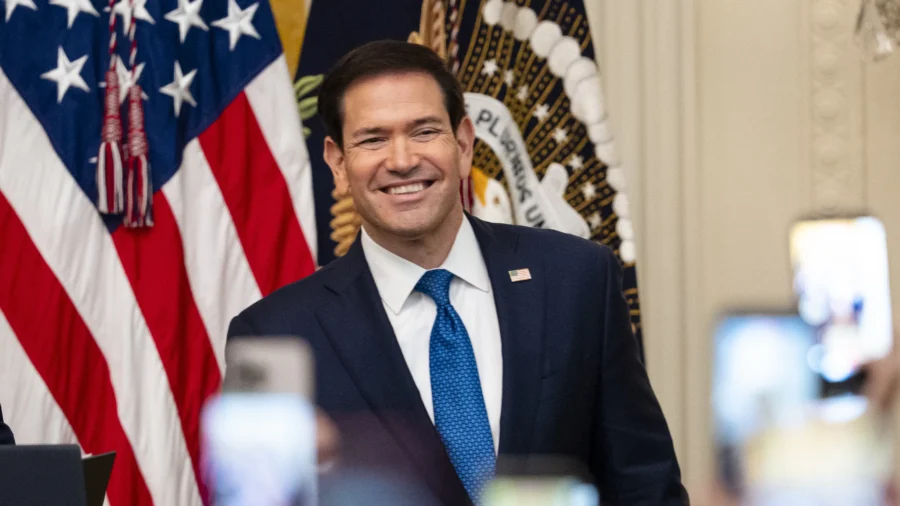
Image via NTD
Rubio and Iceland: The Quiet North Atlantic Matters More Than Folks Think
A replay of Secretary of State Marco Rubio standing with Iceland’s foreign minister highlights a relationship that doesn’t get enough attention from the average American. Iceland isn’t big, but it sits in the middle of the North Atlantic, which makes it strategically valuable for shipping lanes, undersea cables, and NATO posture.
As the Arctic opens up and Russia and China sniff around anything that looks like a new corridor or a new chokepoint, small allies become big pieces on the board. The boring-sounding topics like basing, maritime awareness, and energy security have real consequences for trade stability and, ultimately, for prices back home.
Rubio’s public diplomacy here is a reminder that strength isn’t always loud. Sometimes it’s showing up, locking in cooperation, and keeping adversaries from turning quiet places into future problems.
🏛 Wade's Take: I like seeing American leadership treat alliances like assets, not photo ops. If we keep sea lanes secure and keep NATO serious, it protects commerce, lowers risk premiums, and keeps markets steadier for everybody trying to run a business. The cost of ignoring these relationships always shows up later, and it’s always more expensive.
📎 NTD
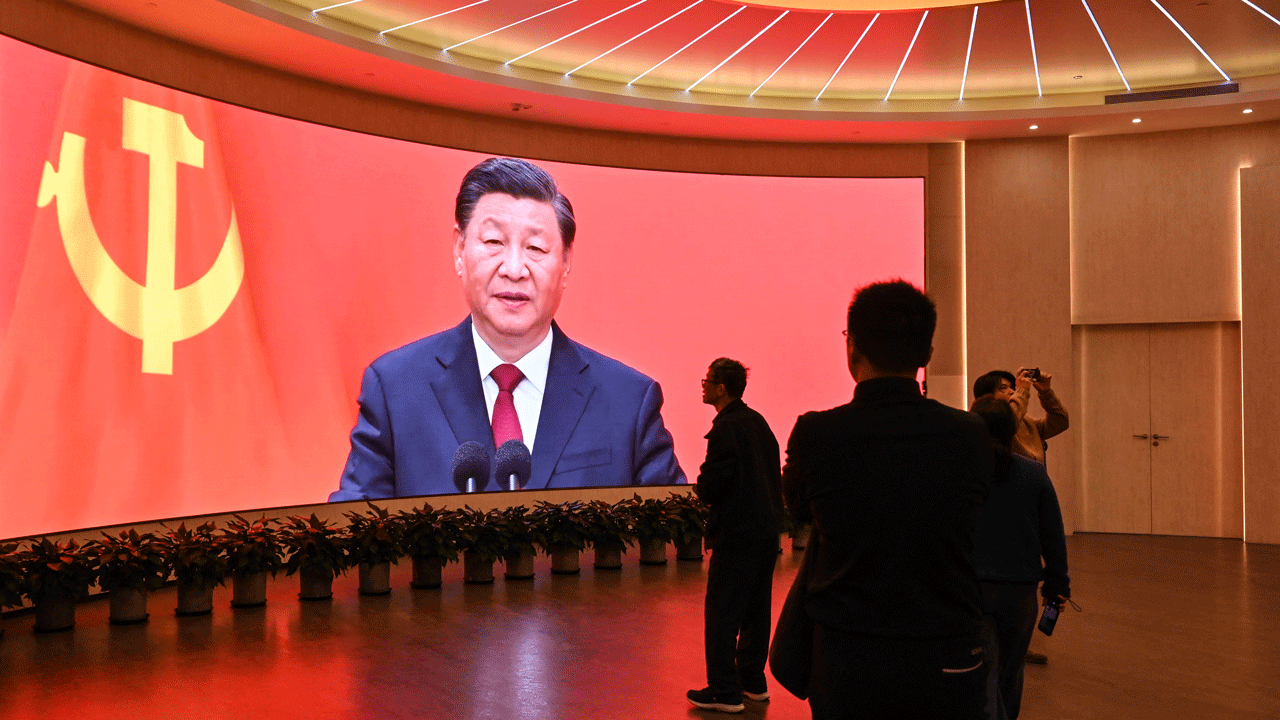
Image via The Daily Signal
Another Alleged Chinese Agent Arrested in California, and It’s Not an Accident
Federal authorities arrested an Irvine, California, woman accused of surveilling the family of Taiwan’s president at the direction of Chinese officials, reportedly taking her into custody at Los Angeles International Airport. The allegation is straightforward: foreign-directed surveillance on U.S. soil tied to Beijing’s interests.
California keeps showing up in these cases for practical reasons. It has massive ports, major universities, a deep tech bench, a huge diaspora population, and nonstop international travel through airports like LAX. If you’re running influence operations, collecting intelligence, or trying to intimidate dissidents, that’s fertile ground.
This isn’t just a spy-versus-spy story. It’s about whether the United States will enforce sovereignty inside its own borders, protect people living here from foreign intimidation, and stop letting adversarial regimes operate in the open while we argue about everything except the point.
🏛 Wade's Take: If a foreign power can run surveillance and intimidation networks here, it’s a direct hit to public trust and national security, and it eventually becomes an economic problem too. Investors don’t like instability, and businesses don’t like operating in places where coercion is tolerated. We need aggressive counterintelligence, real penalties, and a lot less denial about what Beijing is doing in plain sight.
That’s the roundup for Tuesday. Keep your eyes on the money, keep your head on straight, and don’t let the loudest clip distract you from the biggest consequence. Wade Lawson, The Local Conservative
— Wade Lawson