Sponsored By:
One oil market disruption can trigger a chain reaction — tighter supply, shifting routes, and producers scrambling to adapt. Our research team has pinpointed 3 energy stocks uniquely positioned to benefit from this ripple effect, and each one has a distinct edge as the global energy landscape shifts.
These aren't just bets on higher oil prices. Inside Trading the Oil Supply Shock: Top 3 Energy Stocks Emerging From Global Supply Disruptions, we break down exactly what makes each company stand out — and why now could be the moment to pay attention.
Get the Free ReportBy clicking the link above, you're opting in to receive valuable updates from The Investor Newsletter Daily plus 2 bonus subscriptions. Your privacy is important to us. You can unsubscribe anytime. See our privacy policy for details.

From mandatory “anti-hate” trainings to missiles in the Pacific, here’s where the power, money, and risk are moving this week.
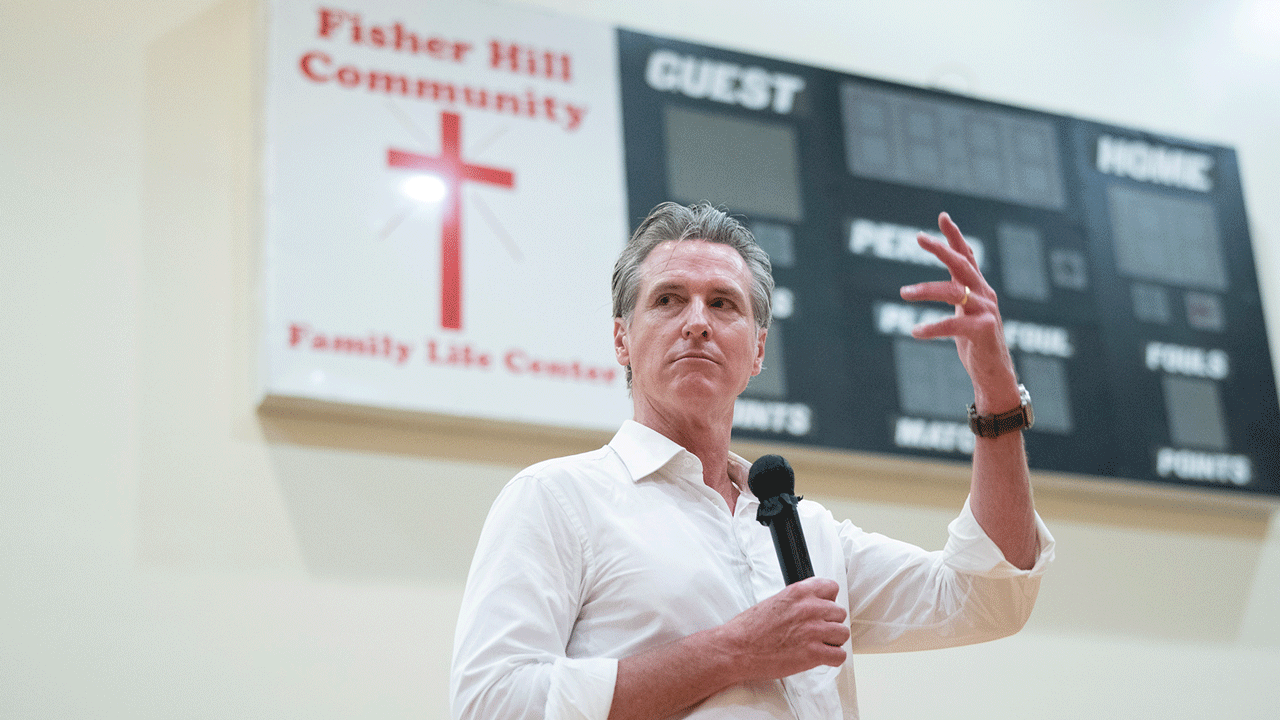
Image via The Daily Signal
California’s New Mandate Puts Churches on the HR Conveyor Belt
California’s newly enacted “anti-hate speech” training requirement is being sold as a workplace standard, but it doesn’t stop at tech firms and chain retailers. By its design and reach, it pulls churches and faith-based employers into state-approved messaging about speech, identity, and what counts as “harm.” Once the state gets to define “hate” in broad, political terms, the training becomes less about preventing harassment and more about enforcing ideological compliance.
For church-run schools, nonprofits, and ministries that employ staff, this is a cost issue and a control issue. Somebody has to administer the training, document compliance, and absorb the legal exposure if a staff member claims the church’s doctrine conflicts with what the state says must be taught. That means more time with lawyers, less time serving your congregation, and another quiet pressure campaign to get religious institutions to self-censor so they don’t end up in court.
🏛 Wade's Take: If a church can’t teach what it believes without a state-approved script running in the background, that’s not “training,” that’s conditioning. This is exactly how governments squeeze dissenting institutions: regulate them like a corporation, then punish them for acting like a church. Conservatives need to treat this as a property-rights and business-rights problem too, because once the compliance machine is built, it never gets smaller.

Image via Daily Caller
Trump Calls an ‘Energy Ceasefire’ in the Russia-Ukraine War
President Trump announced what he called an “energy ceasefire” between Russia and Ukraine, aimed at stopping strikes on energy infrastructure. The message was blunt: don’t break it. Even if the battlefield remains hot, getting both sides to pause attacks on power plants, pipelines, and grids would reduce the risk of winter blackouts, price spikes, and the kind of panic that ripples through global fuel markets.
Energy infrastructure is the economic nervous system of any modern country, and the war has repeatedly threatened supply routes and sentiment. Markets don’t just price barrels and BTUs; they price uncertainty. Any reduction in the odds of escalation tends to calm freight costs, industrial input prices, and the inflation expectations that keep interest rates higher for longer—bad news for small businesses refinancing debt and for commercial real estate valuations already living under tight cap rates.
🏛 Wade's Take: Whether you like Trump’s style or not, this is the kind of leverage play that actually matters to working people: fewer shocks, lower risk premiums, and less inflation pressure. If it holds, it’s good for Main Street financing conditions and good for anyone trying to keep payroll steady in a high-rate world. The key is enforcement—if the ceasefire is just words, markets will sniff that out fast.
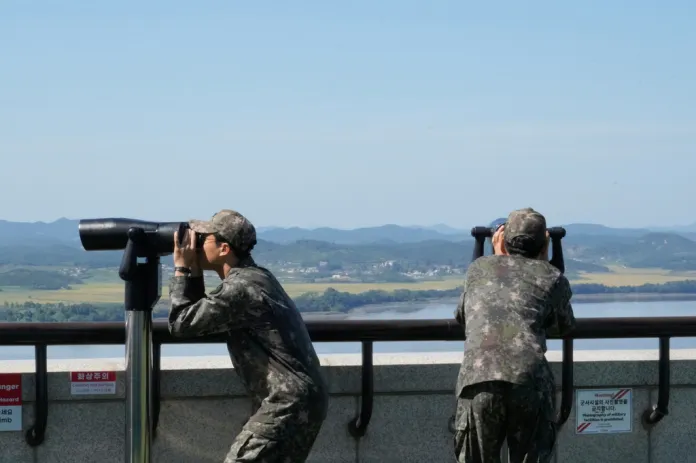
Image via Washington Examiner
North Korea Fires More Missiles, and the World Pretends It’s Normal
North Korea launched several ballistic missiles off its eastern coastline, according to regional officials. The pattern is familiar: test, provoke, measure response, then test again. Each launch is a message not just to South Korea and Japan, but to the United States and the broader alliance structure in the Pacific.
The business angle is simple: risk raises costs. When the Pacific gets twitchy, insurers reprice, shipping lanes get scrutinized, defense spending accelerates, and supply chains that were already re-routed post-COVID become even more expensive. If you own industrial property tied to logistics or you invest in manufacturers dependent on Asian inputs, geopolitical volatility isn’t a headline—it’s margin compression.
🏛 Wade's Take: We’ve normalized behavior that would’ve been treated as a major crisis in any other era. Deterrence only works when the other side believes you mean it, and right now our enemies see too much hesitation and too much politics. Peace through strength isn’t a slogan; it’s the cheapest national security policy you’ll ever buy, because the alternative shows up as higher prices and higher danger.

Image via NTD
Houthi Attack Sparks Warnings Around a Major Saudi Airport
The U.S., U.K., and Canada urged citizens to avoid King Khalid International Airport in Riyadh after a Houthi terror attack, with footage showing smoke and fire at the scene. Airports are not just travel hubs—they’re economic arteries. When a major airport is perceived as a target, it immediately changes security posture, flight routing, cargo timing, and business travel behavior.
For energy markets and global commerce, this matters because the Gulf region is a keystone. Even if oil production isn’t directly hit, the perception of widening threat raises risk premiums across shipping, aviation, and insurance. Those costs don’t stay “over there.” They show up in everything from jet fuel surcharges to higher delivered costs on imported goods, and that filters into inflation and consumer spending back home.
🏛 Wade's Take: You don’t have to be a foreign policy genius to see the pattern: terrorist proxies test boundaries, then expand the map. The correct response is targeted strength that makes attacks costly, not hand-wringing that invites the next one. Every time the world gets less secure, small businesses pay for it first—through higher costs, slower demand, and tighter credit.
📎 NTD

Image via The Hill
Trouble in Athens: Trump Team Weighs Replacing Ambassador Guilfoyle
Reports say President Trump and Secretary of State Marco Rubio are considering firing U.S. Ambassador to Greece Kimberly Guilfoyle after a string of damaging allegations. Ambassadors aren’t just ceremonial; they’re relationship managers for trade, security coordination, and diplomatic bandwidth. When the person in that seat becomes the story, attention shifts from national interest to internal cleanup.
Greece sits in a strategic neighborhood—energy routes, NATO posture, Eastern Mediterranean tensions, and broader European politics. Any distraction at that level can complicate coordination and slow down the quiet work that keeps markets and alliances stable. From an investor’s standpoint, instability in key diplomatic posts doesn’t usually move stocks in a day, but it adds friction to a world already full of it.
🏛 Wade's Take: If the allegations are credible, you cut it clean and move on—government isn’t a reality show, and taxpayers don’t fund embarrassments. Conservatives should demand competence, discipline, and results from our own side, because credibility is a form of power. When we look unserious, we negotiate from weakness, and weakness is expensive.
📎 The Hill
That’s the Monday tape. Stay grounded, watch the incentives, and never let politics distract you from the cash flows.
— Wade Lawson