Sponsored By:
Market sectors are quietly shifting. While some previously hot areas slow down, overlooked sectors from late last year are showing renewed activity through subtle changes in participation and volume patterns.
Our new Early-Year Market Activity Report reveals developing signals, a simple filtering framework, and specific sectors gaining momentum before broader attention follows. These early transitions often happen quietly at first.
Get the Free Report*We encourage readers to perform their own research and due diligence on any information we provide. By clicking the link you will automatically be subscribed to the Market Pulse Today Newsletter. Privacy Policy

From Kentucky fan backlash to court scrutiny of abortion-pill profit motives, plus Trump–Xi trade stakes, the case against globalism’s hollowing-out effect, and a Trump warning to Iran—how politics, incentives, and leverage hit markets and Main Street.
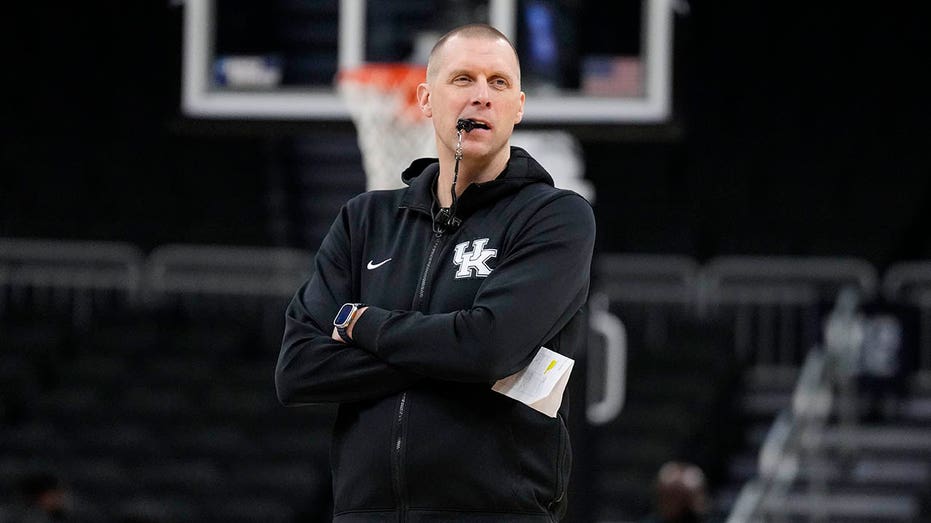
Image via Fox News (OutKick)
Kentucky Coach Mark Pope Finds Out What “Engagement” Really Means
Kentucky coach Mark Pope jumped on X for a public Q&A and got a full dose of Big Blue frustration. Fans didn’t come with softballs — they came with receipts: transfer-portal misses, recruiting worries, and a general sense that Kentucky basketball shouldn’t be “rebuilding” in the middle of the sport’s most cutthroat talent marketplace.
What made it blow up is what makes every business negotiation go sideways: expectations weren’t aligned. In today’s NIL/portal era, fans act less like spectators and more like shareholders — and they want quarterly results. Pope’s mistake wasn’t talking to the public; it was opening the floor without controlling the agenda in a moment when the program’s “numbers” (wins, commits, roster stability) are what everybody’s watching.
✍ My Take: In business, you don’t call a town hall right after you lose your top producers unless you’re ready to lay out a plan and a timeline. College sports is a labor market now — pretend it’s still 1998 and you’ll get steamrolled. If Kentucky wants to win, it has to recruit and retain like a Fortune 500, not a nostalgia club.

Image via The Federalist
Abortion Pill Makers Tell the Court the Quiet Part Out Loud: It’s About Profit
A court weighed in on mifepristone and noted something the corporate PR teams never want front-page: the manufacturers’ “potential financial losses” don’t outweigh the public interest in not exposing women to unsafe medical procedures. That’s a blunt statement in legal language — and it hits the nerve of the whole debate around chemical abortion: who bears the risk, who collects the revenue, and who gets stuck with the consequences when something goes wrong.
This is the same playbook we’ve seen in plenty of industries: socialize the downside, privatize the upside. If complications rise, it’s the healthcare system, families, and local communities dealing with it — while the companies insist on the broadest distribution possible and the loosest oversight they can lobby for.
✍ My Take: I’m pro-business, but I’m not pro-corporation when the business model depends on dodging accountability. If a product carries real medical risk, the answer isn’t more marketing — it’s transparency, supervision, and responsibility. Conservatives should be clear-eyed: this isn’t “health care,” it’s an aggressive profit strategy wrapped in activism.

Image via National Review
Trump–Xi Summit: Taiwan’s the Headline, Money and Supply Chains Are the Meeting
National Review argues the upcoming Trump–Xi summit will be about far more than Taiwan. Taiwan will always be in the room — it’s the geopolitical tripwire — but the real bargaining tends to happen in trade terms: tariffs, technology controls, investment access, and the rules of the road for critical supply chains.
For investors and business owners, this is where the “politics” becomes pricing. When Washington tightens screws on semiconductors, rare earths, shipping, or finance channels, it doesn’t stay in a press release — it shows up in construction costs, equipment lead times, capex decisions, and market multiples. If there’s any thaw, you’ll feel it first in freight, manufacturing inputs, and risk appetite in equities.
✍ My Take: The smart way to watch this summit is simple: what gets cheaper, what gets harder to source, and who gets regulatory permission to do business. If Trump can push China toward fairer terms without surrendering leverage, markets will like it — but don’t confuse a photo-op with a permanent deal. I’m positioning like volatility stays elevated: quality cash-flow businesses, some hard assets, and no blind faith in “global stability.”

Image via American Thinker
The American System Built Prosperity — And Globalism Wants the Controls
American Thinker makes the case that the “American System” reshaped the world — a blend of national development, productive industry, internal improvements, and policies aimed at building domestic strength. The piece argues globalism works in the opposite direction: weakening national sovereignty, hollowing out domestic production, and shifting decision-making from voters to international bodies and multinational gatekeepers.
You don’t have to be a historian to see the practical impact. When a country quits prioritizing its own industrial base, you end up importing not just goods, but vulnerability — and you pay for it in job quality, community stability, and national security. The U.S. can’t remain prosperous on financial engineering alone; at some point you have to make real things, move them efficiently, and defend the system that lets private enterprise thrive.
✍ My Take: I’ve watched “global efficiency” turn into local decay — empty strips, weaker wages, and dependency on far-off suppliers who don’t share our interests. America should trade, yes — but from strength, not surrender. If we want property values, small businesses, and working families to hold up, we need policies that reward production and punish the outsourcing of our backbone.

Image via Just the News
Trump Warns Iran: No Peace Deal, Bombings Resume
Just the News reports President Trump is threatening to resume bombings if Iran won’t agree to a peace deal. The administration is reportedly seeking commitments tied to Iran never obtaining a nuclear weapon and reducing its ballistic missile arsenal, while Iranian leadership publicly resists.
Geopolitics hits Main Street faster than people admit, especially through energy markets and risk premiums. The moment the Middle East heats up, you’ll see it in oil, shipping insurance, defense names, and a general “risk-off” mood that tightens financial conditions. For small businesses, that means higher fuel costs, more expensive materials, and less consumer confidence — a nasty combo when rates are already a factor.
✍ My Take: Peace through strength is cheaper than war through hesitation, but only if the threats are credible and the objectives are clear. Iran understands leverage; they don’t respect speeches. If this posture prevents a nuclear Iran and stabilizes energy routes, it’s bullish for the U.S. economy — but if it drifts into open-ended conflict, everybody pays at the pump and in the markets.
I’m Wade Lawson — build something real, invest like it matters, and don’t let Washington spend your future.
— Wade Lawson