Sponsored By:
A little-known force is now controlling the S&P's price action — and most traders have no idea it exists. A former VP of a trillion-dollar firm has spent years cracking it, and the results speak for themselves: a 79.4% win rate with same-day returns like 176% and 75.4% — up or down market, it doesn't matter.
This isn't mainstream. It won't be on CNBC. But right now, you can get the full breakdown — including how to use this force to target double- and triple-digit moves today. Don't sit this one out.
Get the Free Breakdown NowWe develop tools and strategies to the best of our ability, but we can't guarantee the future. In LIVE trading alerts in real time from 08/23/24 to 3/28/26, the strategy is 54-14, with an overall win rate of 79.4% and an average return (winners and losers included) of 59.3%, with an average winner of 86.8% over a 1-day hold time. Trade at your own risk. By clicking the link above you agree to periodic updates from The TradingPub and its partners. Privacy Policy.

Friday, July 17, 2026 | The Local Conservative. Five stories that matter if you make payroll, own property, and invest like your retirement depends on it.
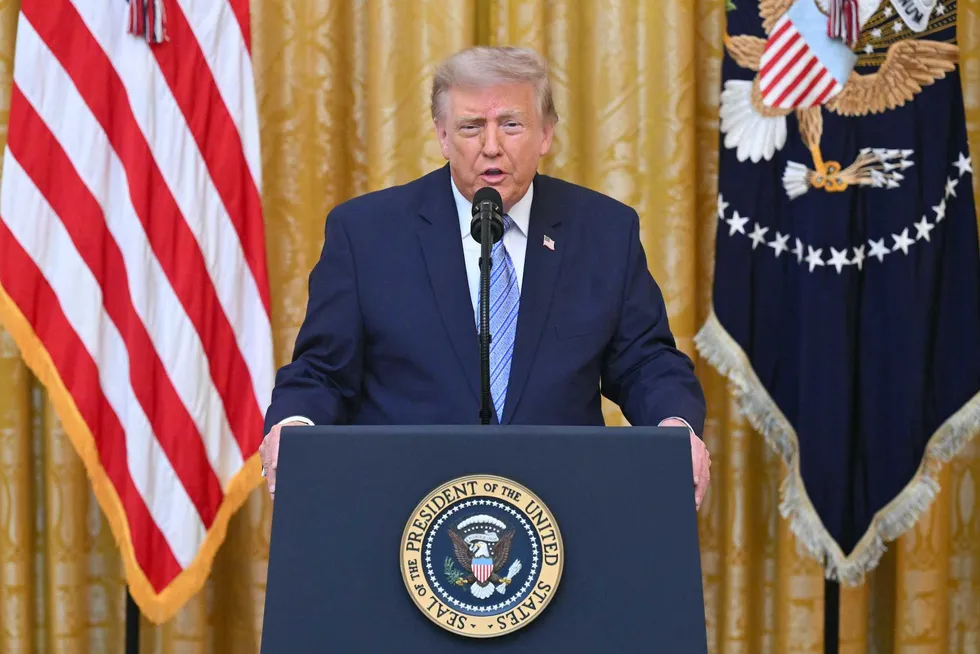
Image via TheBlaze
Trump Says China Got Into Voter Data And The Bureaucrats Sat On It
President Trump addressed the country from the White House and said the Chinese government interfered in American elections and gained access to sensitive voter data, and that elements inside the federal apparatus kept key information from reaching him when it mattered. The claim isn’t just about politics; it’s about a national security breach with a dollar sign on it. If a foreign adversary can touch voter systems or datasets, they can also map communities, pressure individuals, and run influence operations with the same precision that private equity uses to target acquisitions.
For small business owners and investors, the bigger point is institutional trust. When agencies decide what elected leadership can and can’t know, the risk premium on America goes up. That shows up in higher borrowing costs, weaker consumer confidence, and more capital sitting on the sidelines because nobody knows if the rules are real or just selectively enforced.
The practical question now is whether we get hard evidence, clean timelines, and consequences, or whether this turns into another round of headlines with no operational reform. Real reform would mean transparent chain-of-custody for election-related cyber incidents, mandatory rapid disclosure to Congress and the public, and penalties when bureaucrats bury material facts.
🏛 Wade's Take: If China touched sensitive voter data, it’s not a talking point, it’s an attack on the foundation of our republic and the stability that makes investing here attractive. I’ve lived through enough crises to know this: markets can price bad news, but they hate hidden news. If the federal machine withheld material intelligence from an elected president, that’s not “process,” that’s power without accountability, and it needs daylight and prosecutions where warranted.
📎 TheBlaze
Shutdown Chicken Is Back, And September Is When Businesses Pay The Bill
A new standoff is building ahead of September as President Trump and Democrats angle toward another potential government shutdown. The political class treats shutdowns like a messaging tool, but on Main Street it’s an operations problem: delayed permits, stalled contract payments, disrupted loan underwriting, and families who tighten spending because they’re nervous.
In commercial real estate and property management, uncertainty is the enemy. Tenants don’t expand when they think the economy’s about to lurch. Lenders get cautious, appraisals get conservative, and deals that should close in 30 days drag to 90 because somebody is waiting for “clarity.” That lag alone can wipe out a year’s worth of margin for a small operator.
Investors should also watch the secondary effects: Treasury market volatility, short-term funding stress, and the way shutdown drama can become an excuse to bury real negotiations on spending restraint. The easiest thing for Washington is to kick the can. The hardest thing is to cut a budget like a household that actually has to balance it.
🏛 Wade's Take: Shutdowns are a tax on competent people and a subsidy for chaos. If Washington wants to fight, fine, but do it with a real budget, real priorities, and real accountability instead of playing chicken with the parts of government that touch paychecks and permits. I want spending cuts, but I also want adults in the room, because uncertainty is how you kill investment without ever passing a single new regulation.
📎 Newsmax
Image via American Thinker
The ‘Trump Accounts’ Sound Good, But Inflation Will Eat Anything Not Built Right
American Thinker takes a hard look at the new “Trump accounts” concept and asks whether the structure is fatally flawed in an inflationary environment. The core challenge is simple: if you’re trying to help families build savings, the account can’t be a feel-good program that gets outpaced by rising prices and fees. A savings vehicle that doesn’t beat inflation is just a slow leak disguised as a lifeboat.
Design details matter. Contribution limits, withdrawal rules, portability, and investment options decide whether this becomes a real wealth-building tool or another Washington-branded product that looks great in a press conference and underperforms in real life. If these accounts default into low-yield instruments, the government can claim success on participation while families lose purchasing power year after year.
There’s also the issue of incentives. If the policy crowds out private saving or becomes a backdoor entitlement, it can worsen the very inflation it’s supposed to help people survive. A pro-growth, pro-family tool should encourage ownership, investment, and responsibility, not dependency and bureaucratic micromanagement.
🏛 Wade's Take: Any account meant to help working families has to be built to outrun inflation, not just “feel” helpful. Give people low fees, real investment choice, and rules that reward long-term discipline, and you’ll see actual wealth formation. If it’s designed like another government savings gimmick, the only winners will be the administrators and the politicians collecting ribbon-cutting photos.

Image via NTD
U.S. Expands Iran Campaign: Ports, Bridges, And The Price At The Pump
NTD reports the U.S. struck bridges and collapsed a tower at a key port as the Iran campaign expands, signaling deeper operational pressure on Iranian military logistics and coastal capabilities. Whatever you think of the strategy, escalation in that region has a predictable ripple: shipping risk goes up, insurance costs rise, and energy markets start building a fear premium.
For regular Americans, that shows up fast in diesel, gasoline, and freight. Diesel is the hidden tax that touches everything on a shelf and every material on a jobsite. When freight costs jump, small businesses can’t negotiate like mega-retailers can, so margins get squeezed first on Main Street, not Wall Street.
Investors should watch how this impacts inflation expectations and rates. If energy spikes, the Federal Reserve’s job gets harder, bond yields get jumpy, and rate-sensitive assets like real estate take another hit. War risk doesn’t stay “over there” when our economy runs on global shipping lanes and dollar-denominated energy trade.
🏛 Wade's Take: I want a strong America that hits our enemies hard, but I also want leaders who tell the public the truth about cost and timeline. If we expand this campaign, we need a clear objective and an exit ramp, because “open-ended” is how you get oil shocks and another round of inflation that punishes working families. From an investing standpoint, higher geopolitical risk means you keep some dry powder, respect energy exposure, and don’t pretend rate cuts are guaranteed.
📎 NTD

Image via The Federalist
Democrats Suddenly Hate Partisanship When It Isn’t Their Guy Holding The Gavel
The Federalist argues that Todd Blanche is being attacked as a partisan figure in a way that ignores how Democrats celebrated and protected Attorney General Eric Holder during the Obama years. The comparison matters because it exposes Washington’s real standard: it’s not about neutrality, it’s about whether the institution serves their coalition.
For business owners, this is not inside-baseball. The Justice Department sets enforcement tone across the economy, from how aggressively it pursues white-collar cases to how it interprets regulatory authority and settlement leverage. When the department becomes a political weapon, the cost of compliance rises, the risk of arbitrary enforcement grows, and confidence in the rule of law declines.
Markets run on predictable rules. If prosecutors and regulators are seen as political actors, entrepreneurs invest less, lenders underwrite more conservatively, and capital migrates to “safe” incumbents instead of new challengers. That’s the opposite of what built American prosperity.
🏛 Wade's Take: The same people who cheered Eric Holder’s bare-knuckle politics don’t get to clutch pearls now. I don’t need a DOJ that’s “Republican,” I need a DOJ that’s disciplined, transparent, and allergic to selective enforcement. If Blanche can help restore equal treatment under the law, that’s pro-growth, pro-investment, and pro-America in a way Washington rarely admits out loud.
That’s the round-up. Keep your balance sheet clean, your leases tight, and your investing decisions rooted in reality, not headlines.
— Wade Lawson