Sponsored By:
Most retail traders are getting chopped up in 0DTE SPX options — not because they lack effort, but because they have no rules-based system. Pro trader Michael Love has taught 15,000+ traders his "Convert The Vert" method: one strategy, one ticker, and about a week of practice. He's breaking it all down — including his Time Of Day Secret and the Holy Shift pivot signal — in a completely free live webclass.
Michael demonstrates the entire approach live, so you see it working in real time — not just on a slide deck. Seats are limited and it costs you nothing to show up. If SPX options have ever felt chaotic or unpredictable, this is the session that changes that.
Reserve My Free Seat NowRisk Disclosure: Trading options involves substantial risk and is not suitable for all investors. You can lose some or all of your invested capital, and certain strategies can result in losses exceeding the initial investment. 0DTE options carry heightened risk due to rapid price movement and time decay, and positions can lose their entire value within a single session. Before trading options, read the OCC's Characteristics and Risks of Standardized Options at theocc.com. This webclass is for educational purposes only and is not investment, financial, or trading advice. Trade With Me Now is not a registered investment adviser or broker-dealer. Past performance is not indicative of future results. Examples are for illustration only. Testimonials reflect individual experiences and are not typical; results will vary. Never trade with money you cannot afford to lose. This is an advertisement for Trade With Me Now. Privacy Policy

Today’s lineup is a reminder that institutions don’t drift left by accident. They do it because there’s rarely a price for bad behavior, and because too many leaders forget that affordability, accountability, and free speech are the backbone of a stable country and a stable market.

Image via Daily Caller
Comey Indicted: The Leak Culture Comes Home to Roost
Former FBI Director James Comey was indicted over an alleged national security leak to a reporter, a development that lands like a thunderclap in a town that has treated leaking as a networking strategy for years. If the allegations are accurate, this isn’t some harmless inside-baseball scoop. It’s the government’s most serious obligation, safeguarding sensitive information, getting treated like a political tool.
For regular Americans, this matters beyond the personalities and cable-news screaming. Leaks shape markets, policy outcomes, and public trust, and when the people charged with enforcing the law start playing favorites with information, you get a two-tier system that poisons everything downstream. Businesses don’t invest into uncertainty, and citizens don’t respect institutions that operate like partisan shops.
The indictment also raises the obvious question: will we finally apply the same standards to the powerful that the rest of us live under every day? If a contractor on one of my properties mishandles sensitive client information, they’re gone and they may face legal consequences. Washington has to relearn that basic rule.
🏛 Wade's Take: I don’t care who you voted for: leaking national security information is not “good trouble,” it’s a breach of duty. If the facts prove out, Comey should face the same kind of consequences any other employee would face for mishandling protected information, only more so because of the damage potential. A country that can’t keep secrets can’t deter adversaries, and a market that can’t trust institutions gets jittery fast.

Image via RedState
Ethanol Mandate Reality Check: You Can’t Subsidize Your Way to Cheap Gas
A growing chorus on the right is calling on the EPA and Congress to put affordability ahead of the ethanol mandate, arguing the policy has failed the very people it was sold to help. The mandate, pushed for years as an energy and farm-state win-win, has morphed into a political sacred cow that distorts fuel markets and complicates refinery operations, especially for smaller players.
Here’s the practical problem: mandates don’t create abundance, they force compliance. Compliance costs get baked into the system, passed through supply chains, and show up as higher prices somewhere, whether at the pump, in grocery aisles, or in the form of hidden regulatory burdens. When Washington picks winners, it rarely stops at the first intervention; it becomes a permanent lobbying ecosystem.
On the investing side, policy-driven markets can be tradable, but they’re not healthy. Predictable, simple rules beat complicated carve-outs every time. If the goal is affordable energy, the path is straightforward: reliable domestic production, streamlined permitting, and regulations that focus on actual environmental outcomes rather than political quotas.
🏛 Wade's Take: I’ve watched “mandates” in real estate too, and they always read the same: good intentions, bad math, and somebody else stuck with the bill. If ethanol can compete on price and performance, it doesn’t need Washington’s thumb on the scale. Congress ought to stop treating family budgets like a rounding error and start treating affordability like a national priority.
📎 RedState

Image via National Review
Academia’s Plagiarism Problem: The Cover-Up Is the Curriculum
National Review spotlights what it calls “The Big Scholarly Lie,” describing how parts of academia are committed to clearing Jason Arday of plagiarism despite what the piece argues is overwhelming evidence. The core allegation isn’t just that plagiarism happened, but that the professional class is more interested in protecting reputations and ideological narratives than enforcing basic standards.
This hits a nerve because plagiarism is not a complicated concept. In the real world, if you lift someone else’s work and pass it off as your own, you don’t get a committee to redefine theft. You get fired, sued, or both. Yet universities often operate like closed guilds, where accountability depends less on facts and more on who’s connected and which political boxes get checked.
Economically, this is more than a campus soap opera. Parents and students are financing these institutions with tuition, debt, taxes, and endowment support, expecting excellence and integrity. If universities won’t enforce standards, their “credentials” become inflated currency, and employers will keep shifting toward skills-based hiring, apprenticeships, and private certification. That’s not a threat; it’s the market correcting a credibility deficit.
🏛 Wade's Take: When an institution can’t tell the truth about something as plain as plagiarism, it’s not confused, it’s compromised. Universities are burning their own brand equity, and once trust is gone, it doesn’t come back with a press release. If academia wants respect, it needs to start acting like integrity matters more than ideological protection.

Image via Washington Examiner
Israel’s Election Stakes: High Turnout, Higher Consequences
Israeli Prime Minister Benjamin Netanyahu warned of high turnout in what he described as “the Left’s strongholds,” calling the moment an “emergency hour” as voters headed to the polls. Whatever you think of Netanyahu personally, the language tells you the race is tight and the political temperature is high.
For Americans watching from the outside, Israel’s elections aren’t just foreign drama. Government direction in Israel affects regional security, energy infrastructure, trade routes, and the broader stability that global markets quietly depend on. When the Middle East tilts toward chaos, you don’t just see it on the news; you see it in oil risk premiums, defense spending cycles, and capital flows away from uncertainty.
For conservative voters here at home, there’s also a bigger lesson: turnout isn’t a slogan, it’s the whole ballgame. Policy isn’t decided by who complains the loudest. It’s decided by who shows up, organizes, and votes like their family’s future depends on it, because it does.
🏛 Wade's Take: I’m pro-America first, and part of that is understanding that global stability affects our costs at home. If Israel heads toward weaker security posture or perpetual coalition dysfunction, markets will price that risk, and regular folks will feel it in energy and inflation. Conservatives should treat turnout like a habit, not a panic button you hit every four years.
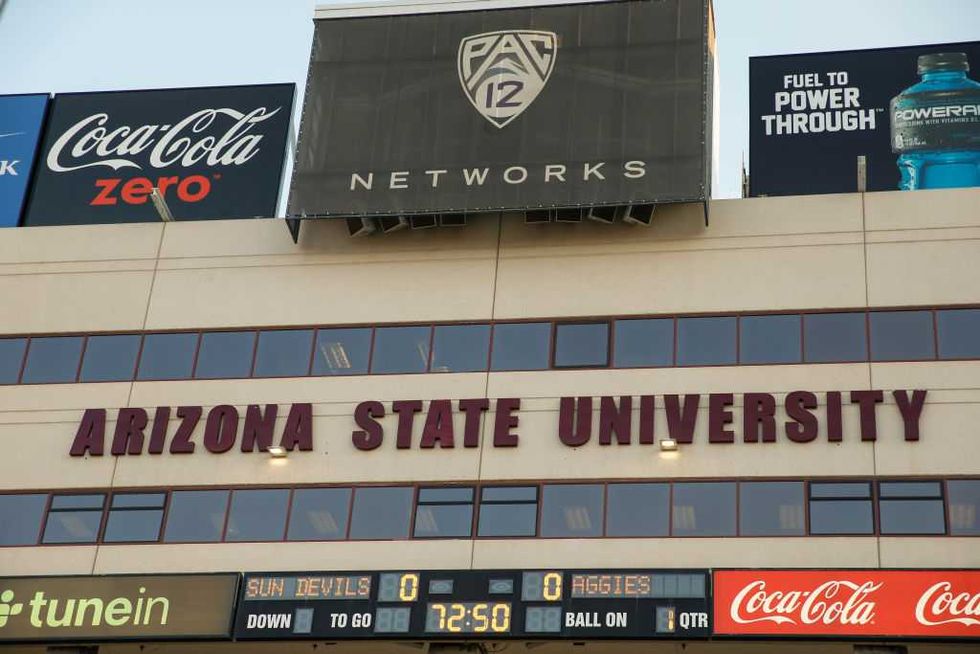
Image via TheBlaze
ASU and the War on Faith: Tenure Doesn’t Mean Much If Belief Is “Misconduct”
A tenured Christian professor at Arizona State University says the school has taken the first step toward terminating him for being “too Christian,” raising serious questions about viewpoint discrimination on campus. The claim, as presented, is that his openly Christian convictions and expression are being treated as a professional liability rather than a protected part of his identity.
Whether every detail breaks his way or not, this is the environment higher education has cultivated for years: speech codes, ideological conformity, and HR processes that can be weaponized. Tenure was supposed to protect academic freedom. Instead, many universities now use administrative pressure, investigations, and reputational smears to achieve the same end without saying the quiet part out loud.
There’s an economic consequence here, too. Universities rely on public funding, tuition dollars, and donor goodwill. When parents see that a professor can be targeted for traditional religious beliefs, they don’t just get angry, they make different decisions about where to send their kids and where to invest their money. Institutions that punish faith shouldn’t be shocked when the public stops treating them like neutral civic assets.
🏛 Wade's Take: If a public-facing institution can push out a tenured professor over orthodox Christian beliefs, then “diversity” has become a marketing slogan, not a principle. I want my tax dollars and tuition dollars going to schools that protect open inquiry, not police it. The fastest way for universities to lose legitimacy is to treat faith like a firing offense and call it progress.
📎 TheBlaze
That’s the roundup. Keep your eyes on the incentives, follow the money, and don’t let anybody tell you character and accountability don’t matter in markets or in government. See you tomorrow. Wade Lawson
— Wade Lawson