Sponsored By:
While other sectors stall, AI investment is accelerating — showing up in earnings calls, corporate budgets, and real-world deployment. Capital is quietly concentrating around companies with clear demand and long-term relevance, and selective opportunities are forming right now.
A new research brief identifies 2 AI stocks trading under $15 that may be positioned for the next phase of growth — including key developments that could move these names in the months ahead.
Get the Free AI Stocks ReportBy following the link above, you're choosing to opt in to receive insightful updates from Investing Ideas Daily + 2 free bonus subscriptions! Your privacy is important to us. You can unsubscribe anytime. See our privacy policy for details.

Five stories that all point to the same question: who’s really calling the shots in America—our voters and entrepreneurs, or foreign cash, unelected technocrats, and procedural games in the Senate?

Image via Fox News
Harvard’s $4.5 Billion Foreign Cash Pipeline Draws Cotton’s Fire
If you want to understand why everyday Americans feel like the system is rigged, start with this: Harvard has reportedly hauled in nearly $4.5 billion in foreign funding, more than any other U.S. college. Senator Tom Cotton is pushing the Education Department to investigate, with a focus on whether Chinese-linked money is being properly disclosed and what influence it buys.
This isn’t just a campus story. Universities are major economic engines in their regions—massive real estate owners, major employers, and a magnet for government contracts and philanthropy. When foreign money flows in at that scale, it affects everything from research priorities to public policy narratives, and it can distort local markets the same way subsidized capital distorts a commercial deal.
Higher ed loves to lecture the country about transparency and ethics. But when the cash comes with a foreign flag on it, we’re supposed to look away and pretend it’s all academic and harmless. In the real world, money has terms—even when they’re not written in the lease.
🏛 Wade's Take: If a bank wired my company billions from overseas, I’d have auditors in my office before lunch. Harvard and every other elite institution should be held to at least the same standard as a small business trying to make payroll. If China is buying access, influence, or research leverage through university channels, that’s not education—that’s national security.
📎 Fox News
Netanyahu Heads to Trump With Iran at the Top of the List
Israeli Prime Minister Benjamin Netanyahu is signaling that his top priority going into a meeting with President Trump is Iran—the regime, its regional aggression, and the long-running threat picture that hangs over the Middle East like storm clouds. The wider backdrop includes rising tension inside Iran itself, with protests and public anger aimed at the ayatollah-led system.
For markets, Iran is never just a foreign-policy headline. It’s oil prices, shipping risk, defense spending, and the overall level of volatility investors have to price into everything from airline stocks to industrial inputs. For small businesses, it becomes fuel surcharges, higher logistics costs, and inflation pressure that sneaks in the back door when Washington starts printing words instead of enforcing deterrence.
A Trump-Netanyahu alignment on Iran also sends a message to allies and adversaries about what kind of American leadership is back on the field: predictable strength instead of foggy diplomacy. Whether you love or hate foreign entanglements, instability over there has a way of landing right here in the form of higher costs and shakier confidence.
🏛 Wade's Take: I don’t want endless wars, but I also don’t want endless weakness. The cheapest conflict is the one you prevent, and deterrence is a lot less expensive than cleaning up a regional explosion that spikes energy and hammers the middle class. If Iran’s rulers are wobbling, that’s not the time to get sentimental—it’s the time to get clear-eyed.
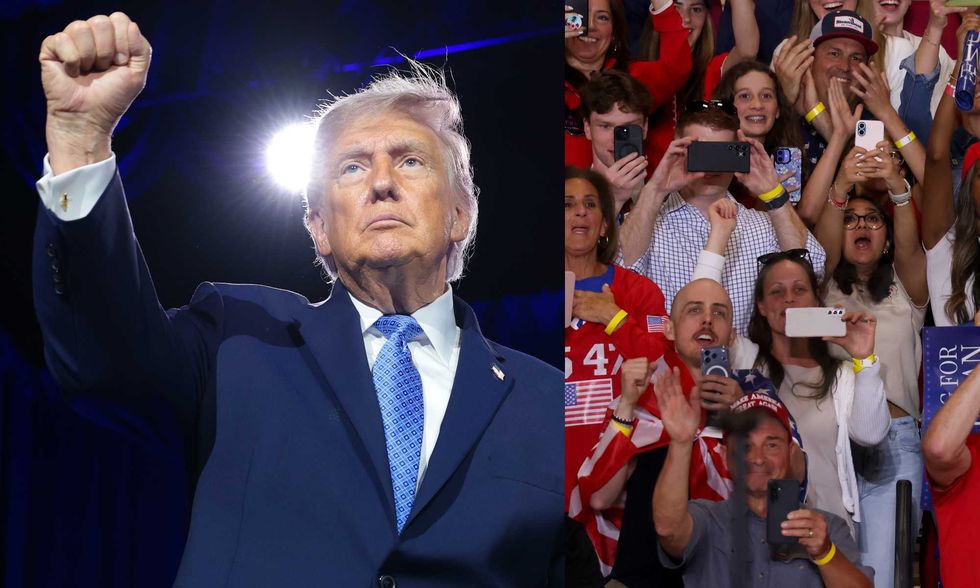
Image via TheBlaze
A Poll Swing in Trump’s Favor Has Wall Street Paying Attention Again
A new national poll from RMS Research is showing President Trump with a stronger net approval picture than many commentators expected, and that matters beyond the horse race. Approval ratings are a rough proxy for political oxygen—and political oxygen is what drives whether a president can actually move policy, bend Congress, and set the tone for regulators.
Investors care about momentum. When a president’s standing improves, businesses start making plans with a little more confidence because they can see a clearer runway: taxes, permitting, energy policy, and enforcement priorities. In commercial real estate, confidence is the difference between renewing a tenant for five years or watching them go month-to-month because they’re spooked about the next wave of rules.
This doesn’t mean the economy magically fixes itself because of a poll. But it does mean the political market is repricing the odds of Trump having the leverage to push his agenda—and that repricing shows up in capital allocation faster than most people realize.
🏛 Wade's Take: Approval isn’t a trophy; it’s working capital for a president. If Trump has more room to operate, you’ll see it first in animal spirits: hiring, risk-taking, and deals that were sitting on the fence finally getting signed. The key is converting popularity into durable policy that survives the next election cycle.
📎 TheBlaze

Image via Washington Examiner
Trump to Thune: No August Vacation Until the SAVE America Act Gets Done
President Trump is urging Senate Majority Leader John Thune to cancel the August recess unless the Senate passes the SAVE America Act, legislation aimed at tightening voter eligibility rules by requiring proof of citizenship for federal elections. The message is simple: stop leaving town until a core integrity issue is settled.
Procedurally, August recess is where Washington goes to cool off, fundraise, and pretend it’s listening to constituents. Practically, it’s also where big problems get kicked down the road while the country keeps paying interest on the debt and small businesses keep operating under uncertainty. If the Senate believes election trust is foundational, then it ought to treat it like a deadline-driven project—not a talking point.
There’s also a broader signal here about Republican governance: are they willing to use their calendar power the way Democrats do, or are they going to keep acting like the referee while the other side plays full-contact? Time is leverage in Washington, and recess is the opposite of leverage.
🏛 Wade's Take: If you can’t run a clean election, you can’t run a serious economy. Confidence matters—in markets, in contracts, and in ballots. Cancel the recess, pass the bill, and prove to working Americans that the Senate can still do hard, basic things without hiding behind procedure.

Image via National Review
The Fed’s Free-Style Era Is a Bad Business Model
National Review is making the case that it’s time to reexamine monetary policy rules—because pure discretion, applied unpredictably, is a lousy way to run an economy. The argument is that when central bankers improvise too much, they create uncertainty that shows up as higher risk premiums, distorted investment signals, and policy whiplash.
From where I sit, monetary policy isn’t an academic debate. It’s the monthly payment on a property note, the cap rate a buyer demands, and the refinance that either pencils or doesn’t. When rate policy feels like a mood swing instead of a framework, lenders tighten up, deals die in committee, and otherwise healthy businesses start managing for survival instead of growth.
Rules don’t guarantee perfection, but they do create expectations. If the country wants productive investment instead of speculation, we need monetary governance that businesses can plan around—not a press conference roulette wheel that moves trillions with a phrase.
🏛 Wade's Take: In my world, predictability is value. The Fed doesn’t need to promise cheap money forever—it needs to promise a clear, disciplined framework that doesn’t change every time the politics get hot. If we want more factories, more housing, and more real jobs, we need stable signals, not central-bank improvisation.
I’m Wade Lawson. Work hard, read the fine print, and remember: in business and in politics, whoever controls the incentives usually controls the outcome. See you tomorrow.
— Wade Lawson