Sponsored By:
Three under-the-radar small-cap stocks are showing early signs of unusual market activity. Our research team has identified emerging changes in volume patterns and momentum that typically precede broader market attention.
These lightly covered companies are just starting to appear on institutional watchlists. Get our complete analysis covering where the activity is happening, what's driving participation, and our criteria for tracking these emerging setups — releasing in the next 24-48 hours.
Get the Free Research UpdateThis material is shared strictly for educational and informational purposes. We encourage readers to perform their own research and due diligence. By clicking the link you will automatically be subscribed to the Stock News Trends Newsletter. Privacy Policy

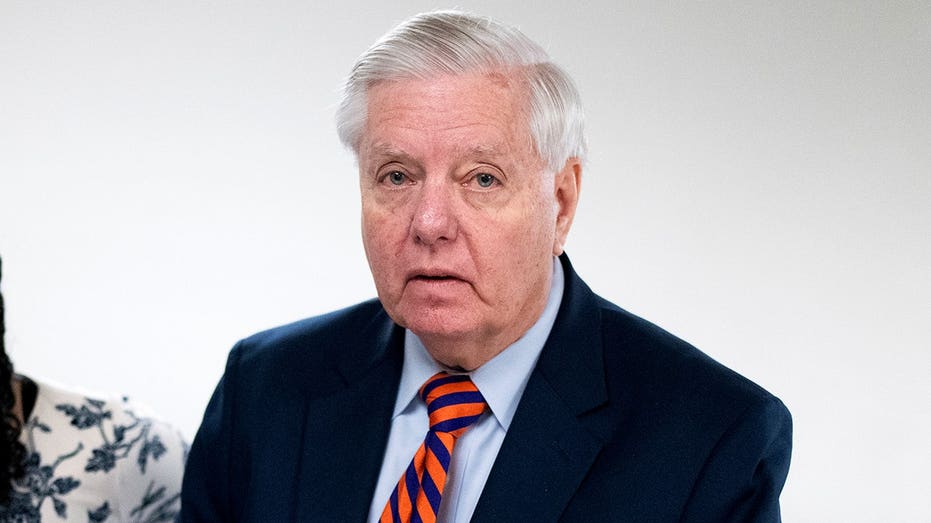
Image via Fox News
Graham Floats “Second Amendment Solution” for Iran — Arm Civilians, Topple the Regime
Sen. Lindsey Graham is catching heat (and drawing cheers) after arguing the U.S. and Israel should help arm Iranian civilians as a “Second Amendment solution” to overthrow the Islamic regime. His point is simple: if Iran’s rulers are willing to choke the region with terror, missiles, and hostage economics, then the fastest way to change the behavior is to change the government.
It’s the kind of talk that sounds like a clean solution on cable news, but the real world is messy. Flooding weapons into any country with multiple factions, informants, and black markets doesn’t just empower “freedom fighters”—it can empower whoever’s best positioned to seize control after the first brick comes loose. And markets don’t price in “good intentions,” they price in chaos, retaliation, and supply shocks.
✍ My Take: I understand the instinct, because we’re all tired of watching Iran light fires while the West writes strongly-worded memos. But arming civilians isn’t a slogan—it’s a long-term commitment with blowback risk, and investors should assume oil volatility and higher security costs if Washington talks like regime change is around the corner. If we want to pressure Iran, start with enforcing sanctions hard, choking off cash, and securing shipping lanes like grown-ups.
📎 Fox News

Image via The Federalist
A Republican Has a Pulse in L.A. — Spencer Pratt Tests the Limits of One-Party Failure
The Federalist argues Republican Spencer Pratt has a real shot in Los Angeles after decades of Democratic dominance and decline. The piece frames it as a predictable machine response: label the Republican as “Orange Man Jr.” and hope voters ignore what’s happening on the ground—crime, disorder, cost of living, and the basic breakdown of competence.
What’s interesting isn’t the personalities—it’s the math. When a city becomes unlivable for working families and unworkable for employers, the tax base erodes, the middle class leaves, and commercial corridors hollow out. That turns into weaker property values, worse municipal finances, and eventually a doom loop where leadership keeps raising taxes to cover the losses they created.
✍ My Take: If L.A. voters finally decide to try something different, it won’t be because they “became conservative.” It’ll be because they got tired of paying luxury prices for third-world governance. Any Republican who wants to win there should talk less ideology and more outcomes: safe streets, permits that don’t take a year, and budgets that don’t treat small business like an ATM.

Image via The Blaze
SCOTUS Louisiana Redistricting Fight — Alito vs. Jackson and the Real Stakes
The Blaze spotlights Justice Samuel Alito’s sharp rebuttal of Justice Ketanji Brown Jackson’s dissent in a fast-moving Louisiana redistricting case. The broader dispute: how courts should treat claims of racial gerrymandering and what “fair” representation means under federal law, with the Supreme Court stepping in aggressively.
To most folks, this sounds like inside-baseball for lawyers. But redistricting drives who writes tax policy, who oversees regulations, and who decides what happens to energy projects, ports, and infrastructure—especially in a state like Louisiana where industry, shipping, and petrochemicals aren’t academic topics. Political maps become economic maps when they shape committee chairs, appropriations, and the regulatory appetite in Washington.
✍ My Take: I’m tired of judges acting like politics is their personal drafting table. The country needs clear rules, consistently applied, not last-minute court mandates that scramble elections and invite more lawsuits. Stability matters—business can plan around tough rules, but it can’t plan around constantly changing rules.

Image via NTD
Quantum Computing Is Coming for Your Passwords — Don’t Wait to Get Robbed
NTD is sounding the alarm that quantum computing could eventually crack widely used encryption methods, putting today’s passwords—and even some “secure” systems—at risk. The practical advice is straightforward: move to passphrases, use hardware security keys, and prepare for “post-quantum” security standards as they roll out.
Even if the quantum “break everything” moment isn’t tomorrow, criminals don’t wait. The real threat is “harvest now, decrypt later”—stealing encrypted data today and cracking it when computing catches up. For small businesses, property managers, and anyone handling tenant data, banking info, or investor records, that’s not a tech problem—it’s a liability problem.
✍ My Take: If your security plan is “a strong password and a prayer,” you’re behind. Use a password manager, turn on multi-factor authentication everywhere, and get hardware keys for financial and email accounts—email is the skeleton key to your whole life. The cheapest cybersecurity upgrade is the one you do before the breach, not after your lawyer gets involved.
📎 NTD

Image via Just the News
Hormuz Isn’t “Over” — Hegseth Says U.S. Guidance of Ships Is a Temporary Fix
Just the News reports Secretary of War Pete Hegseth says the Iran ceasefire situation is “not over,” and that U.S. efforts guiding ships through the Strait of Hormuz are a “temporary solution.” Translation: the world’s most important chokepoint is still a live wire, and the U.S. is actively trying to keep commerce moving while Iran tests limits.
If you run a business that touches fuel, freight, chemicals, plastics, building materials, or anything that rides a truck, you already know what this means. Even the hint of disruption adds a risk premium to energy—then it cascades into everything from asphalt costs to HVAC equipment lead times. Markets hate uncertainty, and Hormuz uncertainty is the kind that shows up in invoices fast.
✍ My Take: Keeping ships moving is necessary, but “temporary solution” is government-speak for “brace yourself.” If Washington wants to protect American households and businesses, it should pair naval strength with energy strength: more domestic production, faster permits, and a strategic posture that doesn’t flinch every time Tehran rattles a cage. The best inflation policy is not letting foreign chokepoints set your price floor.
I’m Wade Lawson — keep your head on a swivel, your balance sheet clean, and don’t let Washington gamble with the paycheck you built.
— Wade Lawson