Sponsored By:
The Fed held rates, CPI came in at 2.4%, and analysts still expect 12.5% Q1 earnings growth — but estimates have already been cut across nine sectors and the S&P 500 is stretched above its 5- and 10-year average forward P/E. Trading earnings on headlines alone in this environment is a costly mistake.
The free Earnings Season eBook breaks down the exact pre-report checklist, how to weigh guidance and expectations, and how to read the first reaction after numbers hit — so you're never improvising after the move already started.
Get the Free Earnings PlaybookBy clicking the link above, you will receive this free report and a free subscription to the StockEarnings daily email newsletter. You are also agreeing to the terms of our Privacy Policy. Unsubscribe at any time.

Five stories today that all point to the same question: do we still believe in constitutional limits, competent governance, and a country safe enough to build a business in?
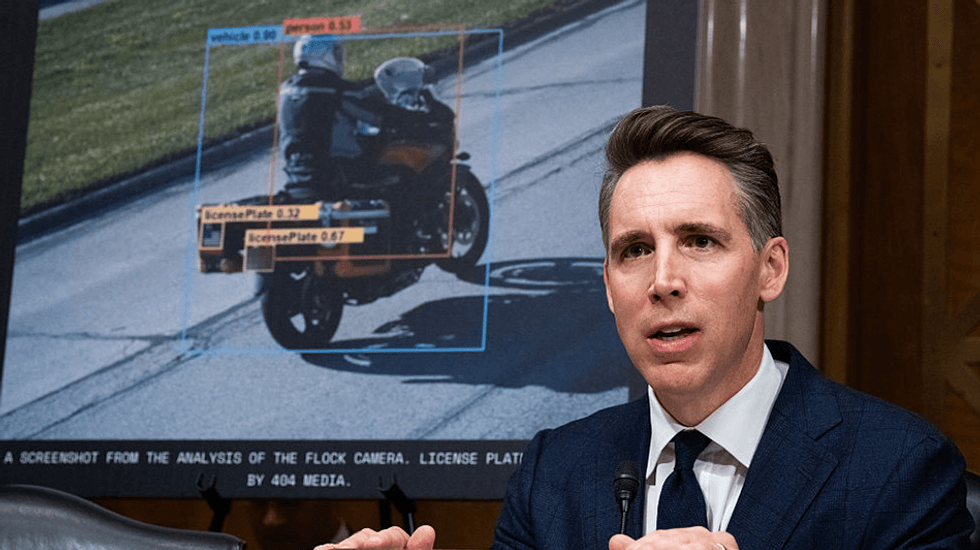
Image via TheBlaze
Hawley Takes a Sledgehammer to License-Plate Surveillance
Sen. Josh Hawley rolled out sweeping legislation aimed at automated license plate reader firms like Flock Safety, and if it passes, it will change how these companies collect, store, and share data. The basic argument is simple: when you can track everyday Americans by the cars they drive and the routes they take, you are one policy change away from turning “public safety” into a permanent surveillance grid.
This debate lands differently depending on where you sit. On the one hand, property owners and shopping-center managers want tools that reduce theft, car break-ins, and organized retail crime. On the other hand, centralized databases of vehicle location history create a temptation for fishing expeditions, political targeting, and data breaches that end up hurting regular folks who have done nothing wrong.
From a business angle, the compliance wave matters too. If Washington imposes strict limits on retention, warrants, data sales, and third-party sharing, vendors will pass costs downstream to cities, HOAs, and private property owners. That means higher contract prices, more legal review, and another layer of liability for the very people trying to keep their parking lots from becoming crime scenes.
🏛 Wade's Take: I’m for law and order, but I’m not for building an American version of “papers, please” that runs 24/7 in the cloud. If these systems are going to exist, they need tight rules: short retention, real warrants, real penalties for misuse, and no backdoor data marketplaces. Conservatives should be the adults here: protect public safety without creating the infrastructure for future political abuse.
📎 TheBlaze
Bessent Says Iran Hits Zero Oil Revenue: Markets Hear “Supply Risk” Loud and Clear
Treasury Secretary Scott Bessent says Iran is facing zero oil revenue this week, calling it a first-of-its-kind squeeze as enforcement tightens and shipments reportedly stall. Tehran, meanwhile, is warning of an economic crisis, which is exactly what sanctions are designed to trigger when a regime funds trouble abroad while its people pay the price at home.
The immediate question for American wallets is oil price volatility. Anytime the market thinks a producer is getting choked off, traders start gaming the “what if” scenarios: retaliation, regional escalation, shipping lane disruptions, and sudden supply shifts. Even if actual barrels still move around through gray channels, perception alone can move crude, and crude moves everything from trucking costs to grocery bills.
For investors and small businesses, this is the kind of geopolitical headline that feeds inflationary flare-ups just when you think price pressure is calming down. Higher fuel hits contractors, delivery routes, HVAC service calls, and every tenant’s operating budget. It also influences the Fed narrative, which rolls right into cap rates and financing costs for anyone in commercial real estate.
🏛 Wade's Take: I’m fine with maximum pressure on Iran, but Washington owes the American people two things: consistency and competence. If you’re going to squeeze a major oil player, you’d better have a serious plan to keep energy affordable at home, because small businesses can’t run on press releases. Energy independence isn’t a slogan; it’s national security and cost control in one package.
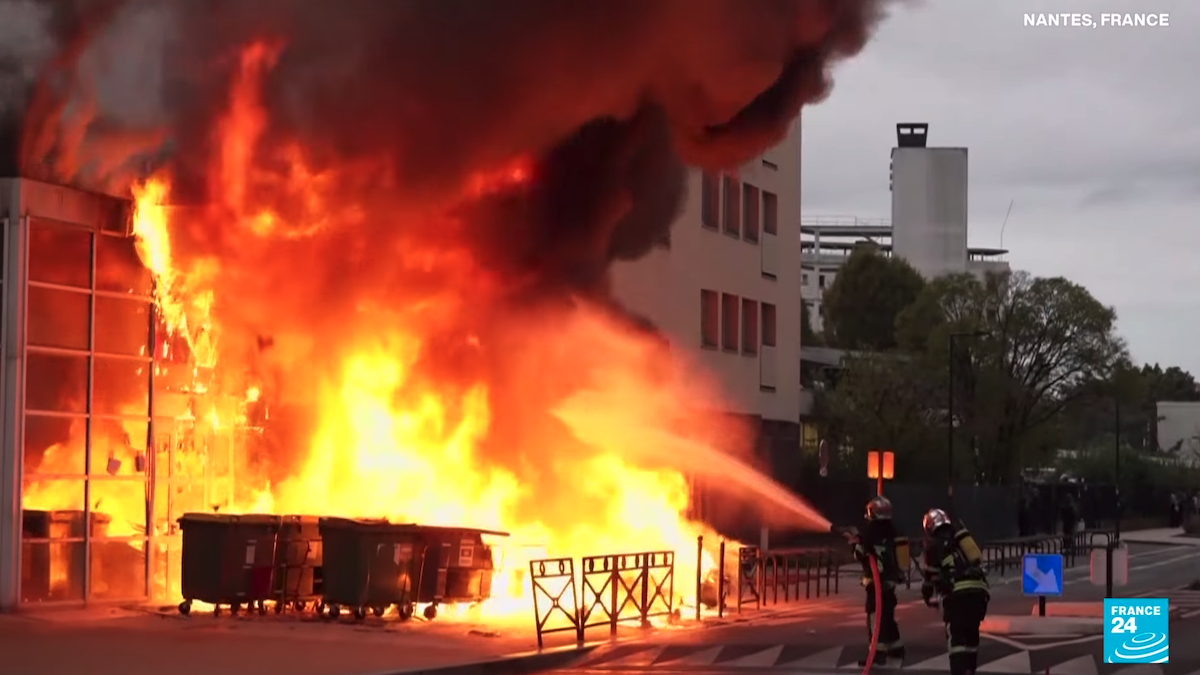
Image via The Federalist
France’s Street Riots: A Preview of What Weak Borders and Weak Prosecutors Buy You
Riots in France are being framed as more than random unrest: a political and cultural show of force, with authorities struggling to maintain control. The warning for Americans isn’t that we’ll copy France’s exact politics, but that social cohesion breaks down fast when government signals it won’t enforce baseline rules evenly.
Once a country normalizes disorder, businesses adjust in the worst ways. Retailers close earlier, hire private security, lock up merchandise, and eventually leave certain neighborhoods entirely. Property insurers price in the risk, lenders get skittish, and what was once a working commercial corridor turns into boarded windows and “for lease” signs that sit for months.
And here’s what never gets said loudly enough: the middle class pays twice. First through taxes that fund systems that don’t deliver public safety, and then through higher costs and declining property values when the market finally votes with its feet.
🏛 Wade's Take: A conservative society is not one that’s perfect; it’s one that enforces rules before everything turns into a political tug-of-war. If you want to prevent “French-style” instability, you start with secure borders, real assimilation, and prosecutors who treat rioting like a crime instead of a talking point. Investors should read street disorder the same way we read a tenant’s financials: it’s a risk signal, and ignoring it is expensive.

Image via Daily Caller
Alito Says COVID Exposed an Ugly Truth: Rights Get “Flexible” When Bureaucrats Panic
Justice Samuel Alito says America’s COVID-19 response put constitutional rights through a stress test and revealed an ugly truth about our dedication to those rights. In plain English: a whole lot of leaders found it easy to suspend liberty when fear was high, information was imperfect, and the incentives rewarded control over restraint.
If you ran a business during that period, you don’t need a legal seminar to remember it. Rules changed overnight, enforcement was inconsistent, and “essential” often meant politically favored. Commercial leases, staffing, supply chains, and basic planning got smashed because government treated private enterprise like a light switch.
The longer-term damage is trust. When citizens believe constitutional rights are optional in an emergency, they start expecting the next emergency to be used the same way. That uncertainty has a cost, and markets hate uncertainty as much as small business owners do.
🏛 Wade's Take: Alito’s right, and conservatives need to say it plainly: constitutional rights aren’t seasonal. We should write emergency powers tighter, demand transparency on data and models, and punish agencies that make rules without accountability. If the next crisis comes, I want government that informs adults, not one that governs by coercion and exemption lists.

Image via The Hill
Suspected Plague Outbreak in Russia: Public Health Risk Meets Geopolitical Reality
Officials are monitoring a possible pneumonic plague outbreak in Russia after a laboratory worker reportedly died of an undisclosed illness, raising concerns about what exactly happened and how contained it is. Pneumonic plague is rare, but the seriousness comes from transmission potential and the speed at which fear travels faster than facts.
For Americans, the first-order concern is public health preparedness: detection, honest reporting, and rapid containment. The second-order concern is what happens economically when governments and corporations overreact or underreact. Travel policies, supply chains, and workplace rules can change quickly, and we’ve all seen how “temporary” measures can stick around.
From an investor’s standpoint, this is the kind of headline that can move defense, healthcare, and biotech sentiment, while also injecting volatility into broader markets if it starts triggering cross-border restrictions. From a small business standpoint, it’s another reminder to keep contingency planning real: cash reserves, flexible staffing, and contracts that don’t leave you naked if the world gets weird again.
🏛 Wade's Take: I don’t do panic, but I also don’t do denial. We need clear-eyed monitoring, fast transparency, and strong borders that can actually function during a health scare without turning into a rights-violating circus. If leadership learned anything from 2020, it should be that trust is the most valuable asset in a crisis, and once you burn it, the economy pays the interest for years.
📎 The Hill
That’s the roundup for Monday. Keep your head on straight, keep your powder dry, and remember: liberty and solvency both disappear when government makes fear a business model. Wade Lawson, The Local Conservative
— Wade Lawson