Sponsored By:
Policy shifts are already moving markets in 2026 — trade enforcement, regulatory changes, and tax positioning are redirecting capital flows right now. The stocks benefiting from these trends are showing momentum early, and institutional money is already repositioning.
Our latest research brief breaks down the 5 Best Stocks to Buy Under the Current Administration — including the sectors leading this rotation and a clear framework for acting before the crowd catches on. Markets don't wait for certainty. Don't get left behind.
Get the Free ReportBy clicking the link above, you're choosing to opt in to receive insightful updates from The Investment News Daily + 2 free bonus subscriptions. Your privacy is important to us. You can unsubscribe anytime. See our privacy policy for details.

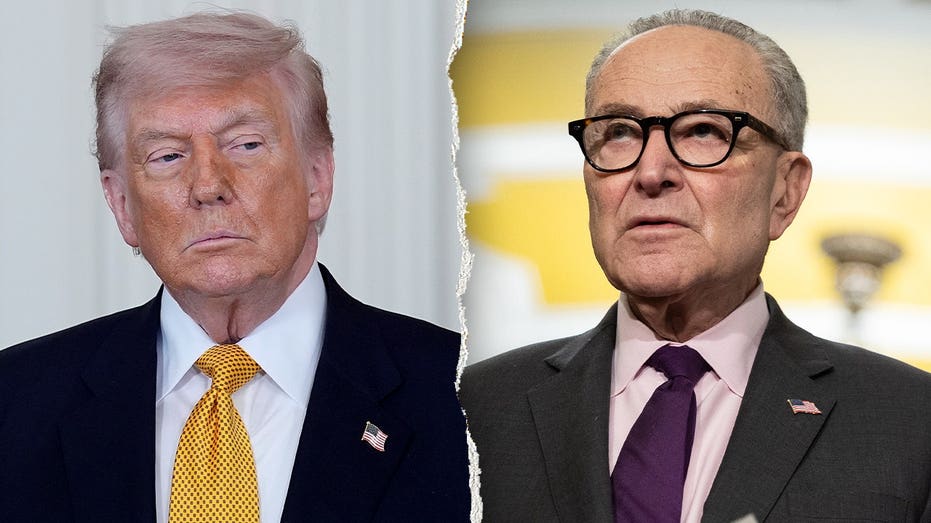
Image via Fox News
Trump to Schumer: “Stop Trying to Tilt the Field”
Sen. Chuck Schumer is rolling out a new Democrat “free and fair elections” task force while accusing Republicans of doing “nefarious things” to overturn legitimate outcomes. Former President Trump fired back, saying Schumer’s latest push is really an attempt to “interfere in our elections,” not protect them.
This is the same old Washington pattern: one side labels itself the guardian of “democracy,” then uses that label to justify federalizing rules, pressuring platforms, and treating normal election-law debates like criminal conspiracies. The market angle here isn’t theoretical—whenever D.C. picks an election fight, it drags policy into uncertainty: taxes, regulation, energy, healthcare, you name it.
For small business owners and investors, stability matters. If the rules of the game are going to change every cycle—ballot handling, ID requirements, litigation standards—capital gets cautious. And when capital gets cautious, hiring slows, deals pause, and growth takes a back seat to “wait and see.”
✍ My Take: Schumer’s “task force” reads like a preemptive PR weapon: declare the other side “nefarious,” then call anything you do “protecting democracy.” If Democrats want trust, start with clean voter rolls, transparent counting, and rules that don’t change midstream. You don’t restore confidence by demonizing half the country—you restore it with sunlight and uniform standards.
📎 Fox News
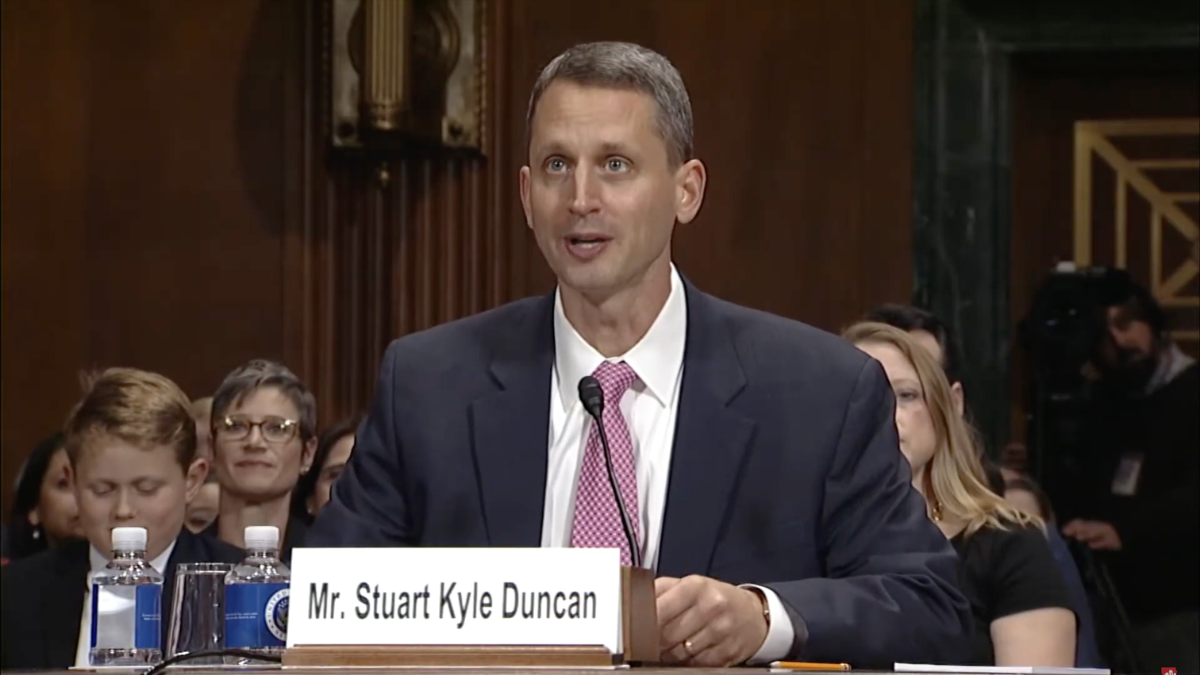
Image via The Federalist
A 5th Circuit Reminder: The Law Still Matters
A piece highlighting 5th Circuit Judge Stuart Kyle Duncan argues he’s the kind of jurist Americans should celebrate: intellectually serious, faithful to the text, and not auditioning for cable news. In an era where courts are treated like legislative bodies, the article frames Duncan as a model of restraint and reasoning.
That matters more than most people realize. Investors price in legal predictability the same way lenders price risk. When courts act like politics by other means—creating new rules from the bench—businesses can’t plan, developers can’t underwrite, and compliance costs metastasize.
In the property world, I’ve watched entire projects get shelved because a single regulatory interpretation became a moving target. A judge who sticks to the law isn’t “cold”—he’s stabilizing the operating environment for everyone trying to build something real.
✍ My Take: We don’t need judges who “feel” their way to outcomes—we need judges who read what’s written and apply it evenly. Predictable law is pro-worker, pro-business, and pro-growth because it keeps the game honest. If you want lower costs and more investment, start by rewarding institutions that stay in their lane.

Image via Washington Examiner
DOL’s New PBM Rule: More Paperwork, Higher Bills
The Department of Labor is proposing a rule aimed at pharmacy benefit managers (PBMs), focusing on fee disclosure and compliance declarations. Supporters pitch it as transparency. Critics argue it’s poorly drafted and will make healthcare less competitive and more expensive by layering on burdens that ultimately get passed along.
Here’s the practical problem: complexity is a hidden tax. Big incumbents hire teams of lawyers and compliance officers; smaller plans, employers, and innovative administrators eat the cost or exit the field. That’s how “transparency” becomes consolidation—and consolidation becomes higher prices.
Healthcare is already a paperwork economy. If DOL wants to help, it should target outright self-dealing and fraud with clear definitions and safe harbors—not write rules that turn every transaction into a legal risk event.
✍ My Take: Every time Washington “fixes” healthcare, somebody’s premium goes up—usually the people who actually work for a living. If the rule can’t be understood by a mid-sized employer and implemented without a compliance department, it’s not reform—it’s bureaucracy. Shine light on PBMs, sure, but don’t build a maze that only the biggest players can navigate.
The Pratt Political Project: A Local Test With National Ambition
The American Conservative spotlights what it calls “The Pratt Political Project,” described as a test run in Louisiana that could scale into something bigger. The theme is familiar: build influence locally, prove the model, then take it statewide or beyond.
Whatever your take on the personalities involved, the strategy is smart. Politics—like business—responds to repeatable systems: candidate recruitment, donor alignment, turnout operations, messaging discipline. The left has done this for decades through nonprofits, unions, and “community” orgs that are political machines in everything but name.
Local pilots matter because that’s where policy becomes real: zoning, policing, schools, insurance regulation, permitting, taxes. If conservatives want durable wins, they’ve got to stop treating local races like warm-ups and start treating them like the main event.
✍ My Take: I’ll take a disciplined local blueprint over another national “movement” that disappears after Election Day. If conservatives want to protect families, property rights, and small business, it starts at city hall and the statehouse—not just in D.C. Prove it in Louisiana, then scale what works and drop what doesn’t.
Hormuz Stays Hot, Oil Pops—And Inflation Risk Creeps Back In
Reuters reports that Trump dismissed an Iranian offer as oil prices rose, with the Strait of Hormuz disruption persisting. When Hormuz is unstable, everything connected to energy gets repriced: fuel, freight, plastics, fertilizer, and ultimately food.
For markets, this is the kind of external shock that can undo “progress” on inflation fast. Energy is the original input cost. If crude stays elevated, it filters through the economy in weeks—not years—and the Fed ends up stuck choosing between growth and price stability all over again.
For real estate and small business, higher energy doesn’t just raise operating costs—it hits consumer sentiment and discretionary spending. That’s how you get a quiet slowdown: fewer restaurant nights, fewer retail trips, delayed home upgrades, and tighter margins everywhere.
✍ My Take: We can talk all day about foreign policy, but the paycheck reality is gasoline and groceries. The U.S. needs energy independence that’s real—not slogan-deep—because global chokepoints will keep getting exploited. If Hormuz stays constrained, expect inflation pressure to reappear and rate-cut dreams to get pushed down the road.
📎 Reuters
I’m Wade Lawson — keep your head on a swivel, your powder dry, and your money working in things that hold value when Washington starts playing games.
— Wade Lawson