Sponsored By:
Most traders ignore flat, quiet charts — but one trader hunts for them. He waits for four specific indicators to align, then strikes. Using that method, a $10,000 practice account reportedly grew to $46,479 in just a few months — no new capital, no exotic leverage.
Jim Archer has pulled together the free report that breaks down exactly how it works — the four indicators, the chart setup, and when to pull the trigger. It's yours at no cost, delivered straight to your inbox.
Get the Free ReportPaid advertisement for TradeWins Publishing. By clicking above, you're opting in to free updates from Jim Archer Breakout Alerts; the report is delivered by TradeWins. Results described are the trader's own claims from a practice account. They are not typical and include losing trades. Trading involves risk and you may lose money. Nothing here is investment advice. Unsubscribe any time. See our privacy policy for details.

Five stories today that all point to the same question: Who’s steering the country and the markets, and who’s just riding in the back seat complaining?

Image via The Federalist
The Vance Iran Tweet Still Matters Because It Exposed Who’s Bluffing
Thanksgiving pieces usually lean soft, but this one lands a punch: that now-famous J.D. Vance tweet about Iran is being treated as a litmus test for whether Republicans are serious about America-first realism or still addicted to legacy talking points. The argument is less about one tweet and more about the tell it provided: who’s willing to say out loud that endless entanglements don’t help the working family, the small employer, or the national balance sheet.
What’s interesting is how the author frames it as a honesty check inside the party. If you’ve been around business long enough, you know the people who won’t confront a bad deal early are the same ones who end up signing the personal guarantee at the worst possible moment. Foreign policy isn’t separate from economics; it’s a spending pipeline, an energy market lever, and a confidence game for investors watching U.S. risk appetite.
The deeper point is that Democrats don’t have to win the argument if Republicans refuse to have one. When a party can’t articulate what it’s for besides “not them,” you get drift, you get bureaucrats making policy by default, and you get voters who stop believing anyone’s minding the store.
🏛 Wade's Take: I read this the way I’d read a partnership dispute: the tweet wasn’t the issue, it was the reaction that exposed who panics when the script changes. Conservatives should be able to say two things at once: keep America strong, and stop writing blank checks that don’t make us safer or richer. If we can’t connect foreign policy to energy prices, inflation, and debt service, we’ll keep losing the kitchen-table vote to people promising free stuff.

Image via Washington Examiner
Ukraine’s War Just Touched Libya, and That’s How Conflicts Spread
Libya’s eastern-based military leadership is threatening reprisals after two of its officers were killed during a Ukrainian drone strike targeting a Russian warship at a naval base in Benghazi. That’s a sentence that ought to make every American sit up straight, because it shows how quickly a regional war turns into a roaming set of score-settling operations across third countries.
When fighting starts spilling into places like Libya, the risk isn’t just “more headlines.” The risk is shipping instability, insurance costs, and energy jitters. If you’ve got tenants trying to renew industrial space, or a small manufacturer who lives and dies by freight costs, this is how a foreign situation becomes a local payroll problem.
And politically, it’s the kind of escalation that creates pressure for the U.S. to take sides in ways that aren’t clearly tied to national interest. When multiple actors start making threats, it’s easier for Washington to sleepwalk into commitments, sanctions, and spending with no clear exit ramp.
🏛 Wade's Take: Every time a war gains a new geography, markets price in uncertainty, and small businesses pay for it before Wall Street even updates the model. The right approach is disciplined: defend core interests, demand accountability for where our support goes, and avoid getting dragged into somebody else’s vendetta map. If Libya becomes another theater, you can bet energy volatility and shipping costs won’t stay “over there.”
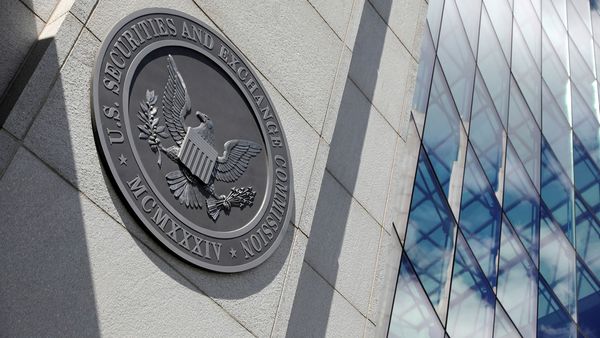
Image via National Review
SEC Wants to Rein In Shareholder Gamesmanship, and It’s About Time
The SEC is proposing reforms aimed at “shareholder democracy,” and the pitch is that the system has drifted into a weird place where a small group of activists and intermediaries can steer big corporations with outsized influence. National Review frames it as a win for restraint and federalism, suggesting the rules should stop incentivizing nationalized, one-size-fits-all corporate politicking.
If you own stocks directly, or you run a retirement plan for employees, you’ve felt this trend: corporate decisions getting shaped by proxy advisers and activist campaigns that don’t always track to shareholder value. On paper it’s “engagement.” In practice it can be a tax on management attention, legal budgets, and capital allocation.
For the real economy, governance rules matter because they influence where investment goes. If companies are pushed to chase political checklists instead of cash-flow reality, you get less expansion, less hiring, and fewer dividends and buybacks. That’s not ideology; that’s math.
🏛 Wade's Take: I’m for shareholder rights, but I’m not for shareholder theater. When a tiny minority can hijack agendas, it’s the everyday investor and the small-business 401(k) that eats the cost. The SEC should be making it easier for capital to flow into productive growth, not into endless proxy fights that enrich consultants and activists.

Image via Western Journal
Self-Deportation Is the Clearest Proof Enforcement Works
Western Journal reports that Kilmar Abrego Garcia, an illegal alien the Trump administration had been trying to deport for over a year, voluntarily left the U.S. for Europe on his own dime. The key detail isn’t the destination; it’s that the system finally created enough pressure and clarity that the individual chose to comply without taxpayers footing the bill.
That’s the part Washington never wants to talk about. When rules are predictable and consequences are real, you don’t need endless new programs, and you don’t need to turn every case into a bureaucratic soap opera. You get voluntary compliance, which is cheaper, faster, and more humane than years of limbo.
There’s also a community impact angle that gets ignored: local services, housing availability, school capacity, and wage pressure at the low end. These aren’t abstract concerns. They show up in municipal budgets, rent growth in working-class neighborhoods, and the strain on law enforcement and courts.
🏛 Wade's Take: A border policy that’s actually enforced reduces chaos for everyone, including legal immigrants who played by the rules. When people start self-deporting, that tells you the incentive structure changed, and that’s what policy is supposed to do. For taxpayers and small employers, predictable enforcement beats never-ending litigation and political grandstanding every single time.
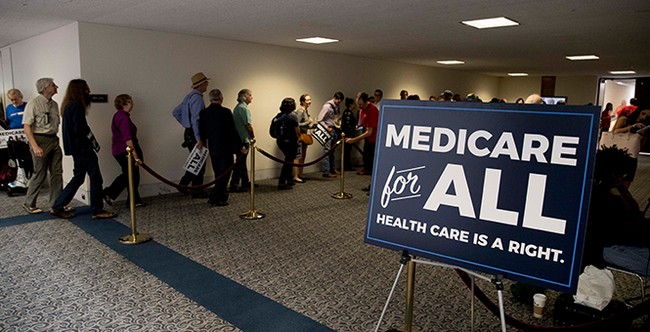
Image via PJ Media
El-Sayed’s Playbook: Cover One Failure by Selling a Bigger One
PJ Media takes aim at Abdul El-Sayed, arguing he’s using a recent large-scale failure as a springboard to push another expansive government idea. The critique is familiar: when an intervention underperforms, the answer from the same crowd is rarely to adjust expectations or return authority closer to families and local institutions; it’s to demand more money, more centralized control, and fewer dissenting voices.
From a business perspective, this is the oldest trick in the book: blame execution, not the model. But if the model keeps producing cost overruns, worse outcomes, and layers of management that can’t be fired, at some point you’re not looking at a glitch. You’re looking at a system designed to protect itself.
Politically, it’s also a branding exercise. If you can wrap a new program in the language of compassion and urgency, you can often outrun the audit trail long enough to get it funded. The people stuck with the bill are taxpayers, employers, and the next generation trying to buy a home under higher debt and higher rates.
🏛 Wade's Take: If a policy fails, the answer isn’t automatically a larger version of the same policy with a prettier logo. In my world, when something doesn’t pencil, you don’t double the budget and call it progress; you redesign it or you walk away. Conservatives should keep hammering the same point: accountability, measurable outcomes, and local control beat permanent bureaucracy every day of the week.
📎 PJ Media
That’s the Wednesday rundown. Be thankful, stay sharp, and remember: in politics like business, incentives drive outcomes whether we admit it or not. Wade Lawson, The Local Conservative
— Wade Lawson