Sponsored By:
America's national debt has blown past $40 trillion — and we're adding another trillion every five months. Interest payments alone now top $1 trillion a year, meaning borrowed money is paying interest on borrowed money. Economists call this a debt death spiral, and your retirement savings could be caught in the middle.
A new free report reveals the three ways governments escape a debt spiral, how purchasing power quietly erodes, and exactly how to move a portion of your savings into a financial safe haven before it's too late. No cost. No obligation. Delivered to your inbox in minutes.
Get the Free Debt Death Spiral ReportThis is an advertisement from American Alternative Assets. If you no longer wish to receive these promotions, unsubscribe here. American Alternative Assets | 21700 W Oxnard St, Suite 850, Woodland Hills, CA 91367.

Five stories that matter if you run a business, own property, or invest for a living: what conservatives are planning next, what a strong jobs print really means, why gold is acting like a pressure gauge, how foreign bank failures travel, and why campaign-season foreign policy flip-flops cost credibility.

Image via The Daily Signal
Bessent Headlining Forum 2026: Conservatives Signal the Next Economic Fight
Days after the midterms, The Forum 2026 is setting up shop just outside Washington with a familiar goal: define what the conservative movement is actually going to do with power, not just what it says on cable news. Treasury Secretary Scott Bessent is slated to speak, and that alone tells you the conversation is going to revolve around debt, deficits, growth policy, and the price of capital in the real world.
I’ve sat in enough lender meetings to know this: the economy doesn’t respond to slogans, it responds to rules, taxes, interest rates, and confidence. If conservatives want to rebuild credibility with small business owners and investors, they’ve got to offer more than anger and vibes. They need a governing plan that brings inflation down, stabilizes the bond market, and cuts the regulatory drag that’s smothering new projects and hiring.
The timing matters. Post-election windows are when coalitions fight over priorities, and business owners should pay attention to whether the movement is serious about pro-growth basics or still chasing shiny objects that don’t move GDP, wages, or productivity.
🏛 Wade's Take: If Bessent is smart, he’ll talk less about political theater and more about the cost of money, the deficit math, and how to unlock investment without lighting inflation back up. Conservatives win when we sound like adults who understand balance sheets. Give me a tax-and-regulatory agenda that pencils out for the next five years, not another season of applause lines.
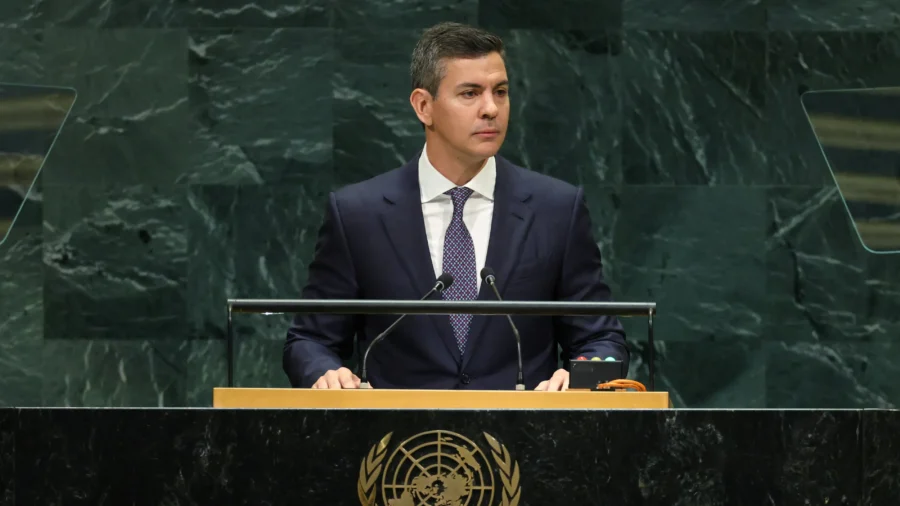
Image via NTD
Paraguay’s Bank Collapse Turns Political: A Reminder That Financial Contagion Starts Locally
Paraguay is sliding into a political crisis after a bank collapse, with President Santiago Peña resigning amid the fallout. When a banking system cracks, it stops being an “economic story” and becomes an everything story: jobs, savings, pensions, street stability, and who controls the next set of emergency powers.
From an investor’s standpoint, the lesson is simple and repeatable. Bank failures don’t just wreck depositors; they freeze credit and force asset sales at the worst possible time. That can slam local real estate markets, hit commodity and currency channels, and push risk premiums higher across a whole region as investors decide they don’t have time to sort “safe” from “unsafe.”
For American businesses, it’s also a supply-chain and export reminder. Trouble in smaller markets can still ripple into agriculture pricing, regional trade, and the cost of doing business with counterparties that suddenly can’t finance inventory or pay on time.
🏛 Wade's Take: This is why I keep a hard line between “growth investing” and “sleep-at-night money.” Political risk is real, and banking risk shows up fast when confidence breaks. If you’re investing internationally, don’t just chase yield; demand transparency, insist on margin of safety, and remember that liquidity disappears right when you need it most.
📎 NTD
Gold Slips on the Day, Still Wins the Week: What the Market’s Nervous System Is Saying
Gold dipped in the latest session but stayed on track for its best week in more than two months. That pattern usually tells you something important: traders are taking profits short-term, but the bigger bid underneath is still there.
Gold doesn’t move like a normal “product,” it moves like a referendum on confidence. When rates, inflation expectations, and geopolitical risk get noisy, gold becomes a portfolio pressure valve. If you’re seeing strength over a week even while prices sag in a single day, it often means institutional money is still buying dips, not abandoning the hedge.
For folks like me who own real estate and also run equity exposure, gold is less about getting rich and more about staying solvent through policy mistakes. It’s the part of the portfolio that tends to work when the headlines get ugly and the bond market starts acting squirrelly.
🏛 Wade's Take: I’m not a gold maximalist, but I respect what it’s telling you: uncertainty is still being priced. A modest allocation makes sense when Washington can’t quit spending and the world can’t quit picking fights. If you’re all-in on risk assets with no hedge, you’re one policy blunder away from learning a hard lesson.
📎 Reuters
DeSantis and Iran: Voters Can Smell a Script Rewrite
A new critique argues Florida Governor Ron DeSantis is trying to reposition himself on Iran, but the shift doesn’t hold up against his own long paper trail of hawkish statements. That’s the problem with foreign policy when it’s used like a campaign prop: there are receipts, and the world doesn’t pause while you workshop new talking points.
Iran policy isn’t an academic debate. It touches energy markets, shipping lanes, regional war risk, and the general cost of doing business when volatility spikes. If a leader wants to move from hawk to cautious realist, fine, but he needs to show his math: objectives, tradeoffs, and an endgame that doesn’t land American taxpayers in another trillion-dollar mess.
For conservatives, credibility is currency. A candidate who looks like he’s triangulating on Iran will struggle to convince markets, allies, and voters that he’ll be steady when a real crisis hits.
🏛 Wade's Take: If you’re going to change your posture on Iran, do it plainly and explain why, because “trust me” doesn’t cut it anymore. I want toughness paired with discipline: protect American interests, avoid forever wars, and don’t set oil markets on fire for ego. Flip-flops signal weakness, and weakness gets expensive fast.

Image via Washington Examiner
October Jobs Were Stronger Than They Looked: Good News With a Rate-Cycle Catch
October’s jobs report came in at a solid 165,000 payroll gains, and the deeper details looked even stronger than the headline suggests. That matters because the composition of job growth often tells you more than the top-line number: where the hiring is, whether hours are holding up, and whether wages are still pushing inflation.
For small businesses, a strong labor market is a double-edged blade. Customers with paychecks spend money, which helps main street. But tight labor also means higher wages, more competition for reliable employees, and less pricing power if consumers start feeling squeezed by inflation and higher borrowing costs.
For investors, this kind of strength complicates the outlook on interest rates. Strong jobs can keep the Federal Reserve cautious about cutting, which impacts cap rates, refinancing risk, and equity valuations. If you own property with debt rolling in the next 12 to 24 months, you should be paying close attention.
🏛 Wade's Take: I like strong jobs because I like thriving communities and tenants who can pay rent. But don’t kid yourself: strong employment can keep rates higher for longer, and that hits real estate values through the cap-rate channel. If you’ve got floating-rate exposure or a maturity wall coming, now is the time to renegotiate, de-risk, and get your balance sheet positioned for patience.
That’s the roundup. Build your week around what’s real: cash flow, credit conditions, and policy that hits the economy where it lives. See you next issue. Wade Lawson, The Local Conservative
— Wade Lawson