Sponsored By:
Tax season quietly reshapes where capital flows — refunds hit accounts, portfolios get rebalanced, and positions get liquidated to cover obligations. That creates unusual early movement in small-cap stocks that has nothing to do with company fundamentals. Right now, certain names are already showing structural signals most investors will miss entirely.
We've put together a free Market Structure Guide breaking down how tax season shifts market activity, why some small-cap profiles move unexpectedly in March and April, and three companies already showing early breakout signals. The window to act before broader attention arrives is narrow — don't wait.
Get the Free Market Structure Guide*We encourage readers to perform their own research and due diligence on any information we provide. By clicking the link you will automatically be subscribed to the Fierce Investor Newsletter. Privacy Policy

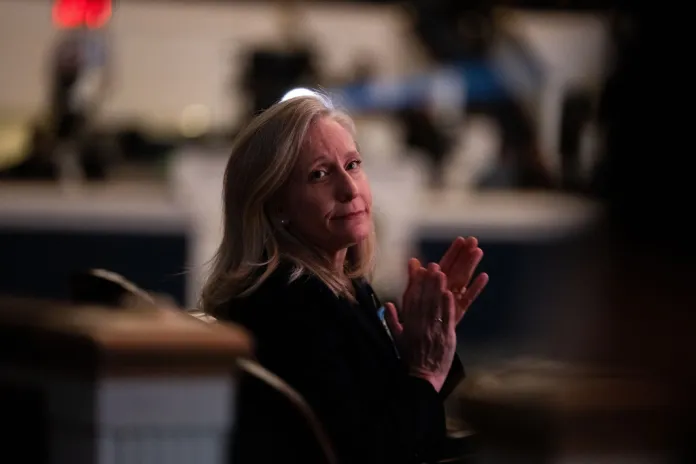
Image via Washington Examiner
Redistricting Reality Check: Democrats Finally Admit the Map Matters
Democrats are quietly coming to grips with what every campaign veteran already knows: you can’t “message” your way out of a bad map. In Virginia, Gov. Abigail Spanberger’s redistricting posture has turned into a political headache—especially after earlier assurances to voters about not pushing to redraw congressional lines. Now the party’s staring down the hard math of seats, turnout, and district composition heading into the next cycle.
What’s happening isn’t just a Virginia story—it’s the national pattern. Courts, commissions, and state legislatures are the real battlefield, and Democrats are learning (again) that procedural power beats cable-news outrage. When you lose the redistricting fight, you don’t just lose an argument—you lose a decade of leverage.
🏛 Wade's Take: In business, you don’t complain about the lease terms after you sign them—you negotiate them up front. Republicans have treated redistricting like infrastructure: boring, essential, and worth investing in. Democrats bet on vibes and lawsuits, and now they’re shocked the scoreboard doesn’t care about their feelings.

Image via National Review
Mamdani Wants to “Fix” Housing by Breaking the Market
New York City’s mayor is pushing a vision that amounts to socializing housing—using government muscle to dominate the real estate market under the banner of affordability. The pitch is familiar: more control, more public ownership, more mandates, and supposedly lower costs for regular people.
But real estate doesn’t run on slogans—it runs on financing, risk, and predictable rules. When government signals it intends to “conquer” the market, capital doesn’t debate morality; it leaves. Development slows, maintenance gets deferred, smaller landlords sell or fold, and the quality of the housing stock declines. That’s how you end up with a city full of “affordable” units nobody wants to live in.
🏛 Wade's Take: If you want less housing, politicize it. If you want higher rents long-term, scare off builders and lenders today. Every time New York treats landlords and developers like public enemies, the bill lands on tenants—just a few years later, with extra zeros attached.

Image via RedState
Bezos Rocket Goes Up in Flames, and Musk Says the Quiet Part Out Loud
A Jeff Bezos-backed launch vehicle suffered a dramatic explosion—one of those “gargantuan fireball” moments that reminds the public space isn’t a TED Talk, it’s heavy industry. Elon Musk reacted with a simple truth: rockets are hard. That line sounds like a dunk, but it’s also the most honest thing said in the aftermath.
The commercial space race is still a high-burn, high-capex business where mistakes are expensive and progress is uneven. The upside is enormous—launch services, satellite networks, defense contracts, and eventually manufacturing and logistics beyond Earth—but the path there is paved with blown engines and wrecked test stands. Investors and taxpayers alike should remember: failure is common, but learning is the asset.
🏛 Wade's Take: I respect anybody spending their own money pushing the frontier—because this country used to celebrate builders. But don’t confuse headline fireworks with business fundamentals: the winners are the ones who iterate fast, keep costs down, and actually deliver payloads on schedule. Space may be the future, but it still has to pencil out.
📎 RedState

Image via American Thinker
The State vs. Private Enterprise: Same Old Fight, Higher Stakes
A new argument making the rounds lays out the classic divide: do we trust private enterprise—powered by deregulation, tax cuts, and incentives—or do we trust the state to plan outcomes and micromanage markets? The piece frames the issue as more than ideology: it’s about whether societies grow through freedom and competition, or stagnate through control and compliance.
For small business owners, this isn’t abstract. It shows up as permitting delays, unpredictable rulemaking, higher labor overhead, higher energy costs, and the constant sense that you’re one new regulation away from rewriting your entire operating model. In real estate, especially, the “state-first” mentality translates into slower projects, higher financing costs, and fewer deals that actually get to closing.
🏛 Wade's Take: The state doesn’t create wealth—it redistributes what private enterprise produces, and it takes a cut on the way through. I’ve never met a regulator who could make payroll or lease up a half-empty building in a downturn, but I’ve met plenty who think they can “manage” the economy. Conservatives should keep saying it plainly: prosperity requires freedom, not permission slips.
“CEOs Should Fry”: The Left’s New Mask-Off Moment
A far-left Pennsylvania House candidate backed by AOC-aligned figures and online influencers reportedly said corporate CEOs “should fry,” and even floated “frequent and swift” death penalties for “CEO gangs.” That rhetoric isn’t just overheated—it’s the language of political intimidation, aimed at normalizing the idea that running a company is criminal by nature.
This is where the populist left keeps drifting: from “tax the rich” to “punish the builders.” And it matters beyond one candidate, because the cultural message travels. When politics paints business leadership as deserving violence, you don’t just chill speech—you chill investment, job creation, and entrepreneurship. People with options will take their capital, their headquarters, and their talent elsewhere.
🏛 Wade's Take: You can disagree with corporate America without flirting with execution talk like we’re in some third-world revolution. If Democrats won’t clearly condemn this stuff, they’re telling every employer and investor exactly how they feel about private enterprise. A country that treats job creators like villains eventually runs out of jobs.
I’m Wade Lawson — keep your head on a swivel, your expenses tight, and your convictions tighter.
— Wade Lawson