Sponsored By:
History shows a clear pattern: the investors who recognized the exact inflection point in the dot-com boom pocketed 400–800% gains in 18 months. Those who spotted the same moment in cloud computing saw 300–600% returns. Based on 50 years of market data, that same moment is happening right now — and the acceleration phase has already begun.
This free 7-page report reveals where we are in the current megatrend cycle, why the next 18 months are critical, and how to position yourself before the window closes. Don't be the investor who enters too late.
Get the Free ReportBy clicking 'Get the Free Report' you are automatically subscribing to Darwin Investor Network and will receive a free subscription to the Chaikin PowerFeed newsletter. Unsubscribing is easy. Privacy Policy

Five stories today with one common thread: who gets to write the rules, who gets to pick the winners, and who ends up footing the bill.
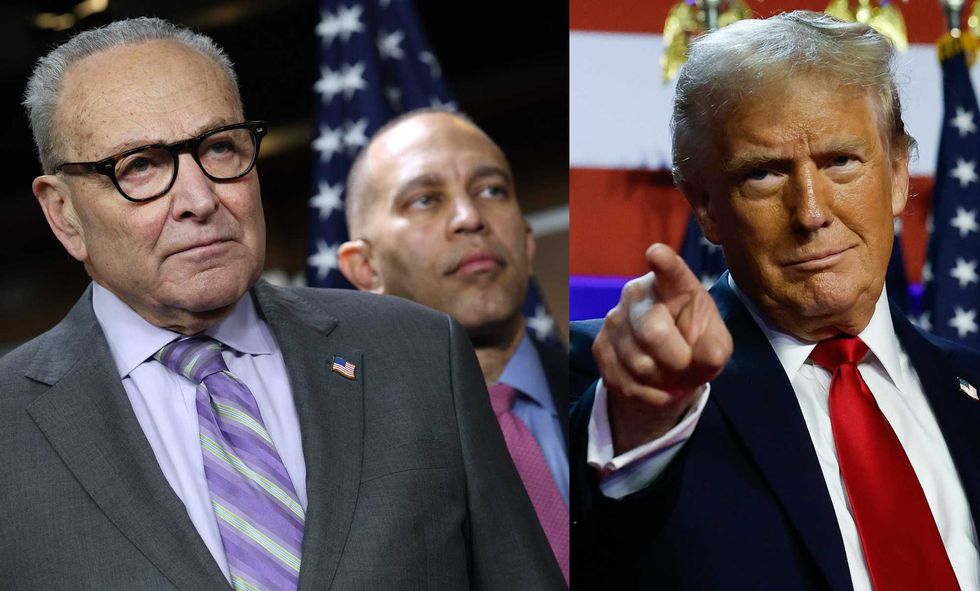
Image via TheBlaze
Court Slams the Brakes on a 3-Seat Power Grab
Democrats just watched a plan to squeeze out three extra congressional seats get stopped cold after a state supreme court blocked a redistricting push. This wasn’t about “fairness” — it was about engineering outcomes in a year when control of Congress is a knife fight.
For folks who don’t live and breathe politics, here’s why it matters: when politicians pick their voters, the rest of us get stuck with unaccountable lawmakers who don’t have to listen to homeowners, employers, or taxpayers. The result is more extreme agendas, more spending, and more regulatory mischief that shows up in your insurance premiums, your payroll costs, and the value of your property.
The bigger point is that both parties will grab the mapmaking pen when they can. The difference is conservatives are finally learning we can’t be polite about hardball. If you want a sane business climate, you need sane representation — and you don’t get that from backroom cartography.
🏛 Wade's Take: I run a business in the real world, and I can tell you this: when someone tries to rig the rules, the market always pays for it. Gerrymandering isn’t a “process story” — it’s the front end of higher spending, heavier regulation, and weaker accountability. Courts should enforce clear rules, and states should move toward transparent, compact districts that pass the smell test.
📎 TheBlaze

Image via Washington Examiner
Independence Day Should Mean Independence from Europe’s Regulatory Empire
An argument making the rounds is that America needs to declare independence from Europe again — not from armies and navies this time, but from the regulatory state that seeps across borders through standards, trade pressure, and bureaucracy-by-consensus.
Europe’s model is simple: regulate first, grow later (maybe). It’s heavy on climate mandates, labor restrictions, speech policing dressed up as “safety,” and a general suspicion of private enterprise. Those rules don’t stay over there. U.S. companies get pushed into European-style compliance because it’s cheaper to build one global rulebook than fight a thousand lawsuits and agency edicts.
If you’re a small business owner, this isn’t abstract. It means more reporting, more consultants, more HR landmines, and less time doing the work that actually creates jobs. For investors, it’s margin compression and slower growth — the exact opposite of what we should be chasing heading into America’s 250th birthday.
🏛 Wade's Take: I’m all for trade, travel, and alliance — but I’m not interested in importing Europe’s anti-growth mindset. America wins when we reward production, protect property rights, and keep regulators on a short leash. If Washington wants to celebrate 1776, it can start by rejecting foreign-born compliance creep that strangles our entrepreneurs.

Image via National Review
Iran Isn’t Misunderstood — It’s Committed
A clear-eyed reminder today: the Iranian regime’s ideology is ruthless, coherent, and not mysterious. It’s been documented for decades, and it doesn’t change because Western diplomats want a “breakthrough” headline or a temporary pause in the bad behavior.
The regime’s worldview blends religious authoritarianism with an export strategy: fund proxies, destabilize neighbors, threaten shipping lanes, and leverage hostage diplomacy and terrorism as tools of statecraft. When you see attacks on commerce or pressure on energy infrastructure, that’s not a misunderstanding — that’s policy.
This matters to every American wallet. Energy volatility is a tax on working families and a cost input for every business, from trucking to construction materials. It also distorts markets: higher risk premiums, defense spending spikes, and a constant drumbeat of uncertainty that makes long-term investment harder than it has to be.
🏛 Wade's Take: I don’t invest based on wishful thinking, and I don’t think foreign policy should be run that way either. Deterrence works when it’s credible, and credibility requires consequences that are real, fast, and painful to the aggressor. If we want stable energy prices and safer trade routes, we have to stop treating Iran like a misunderstood partner and start treating it like what it is: a hostile regime with a mission.

Image via RedState
Trump’s Labor Pick: A Signal to Employers Who’ve Been Getting Kneecapped
President Trump has nominated Keith Sonderling for Secretary of Labor, and conservatives are celebrating the choice as a pro-worker, pro-growth move. Labor policy sounds wonky until you’ve signed the front of a paycheck and had to figure out how to stay compliant while still expanding.
The Department of Labor has enormous leverage over the real economy: overtime rules, independent contractor standards, wage-and-hour enforcement, and the regulatory posture that determines whether employers are treated like partners in growth or presumptive criminals. In the last decade, that pendulum has swung hard toward paperwork, penalties, and uncertainty — which pushes hiring decisions onto pause.
If Sonderling is serious about modernizing and clarifying the rules, that could matter for everyone from restaurants to homebuilders to property managers trying to staff maintenance teams. Predictable labor rules don’t just help employers — they help workers by encouraging hiring, training, and capital investment instead of legal defensiveness.
🏛 Wade's Take: The best jobs program isn’t a press conference — it’s a business owner confident enough to hire. Labor policy should protect workers without turning every entrepreneur into a target for bureaucrats and trial lawyers. If this nomination signals clearer definitions and less regulatory whiplash, markets will like it and Main Street will feel it.
📎 RedState
Susan Collins Still Defies the Polls — and That’s a Warning to the Pollsters
In Maine, Sen. Susan Collins is reportedly running ahead of where public polling had her during her 2020 reelection campaign, even as new surveys measure her current matchup against Democrat Graham Platner. If you remember 2020, the polling had Collins in trouble — and then Election Day told a different story.
Collins has a brand that doesn’t always show up cleanly in generic party models: strong retail politics, a track record of constituent work, and crossover appeal that can survive rough national environments. Pollsters struggle with turnout assumptions, shy voters, and late-breaking decision-makers — especially in races where personality and incumbency matter as much as ideology.
For investors and business owners, Senate control isn’t just cable-news theater. It determines tax policy, confirmations, the regulatory climate, and the appetite for spending packages that feed inflation and higher interest rates. If Collins is outperforming expectations again, it’s another reminder not to trade markets — or plan your business — on polling vibes.
🏛 Wade's Take: I’ve negotiated enough leases to know this: what people say on the phone isn’t always what they do when it’s time to sign. Polls are data, not destiny, and smart operators price in uncertainty. If Collins is running stronger than the pundits think, Washington should take note — and Republicans should treat every race like it’s winnable by showing up and earning votes.
That’s the rundown. Keep your eyes on the rules, because the rules decide the winners — and on Main Street, we’re done letting Washington write them without a fight. — Wade Lawson, The Local Conservative
— Wade Lawson