Sponsored By:
September is packed with catalysts — earnings, FDA decisions, AI breakthroughs, commodity moves — and for small-cap investors, a single one can change everything. RushTheStreet tracks AI disruptors, biotech companies nearing major inflection points, gold & silver explorers, and emerging small caps the mainstream market is still sleeping on.
No crowded mega-cap watchlists. No waiting for the headlines. Just high-potential opportunities before they become impossible to ignore. September has 30 days. The next market mover only needs one of them.
Join RushTheStreet FreeBy clicking the link above, you agree to receive emails from rushthestreet.com. You can opt out at any time. — Privacy Policy

Monday’s roundup is a reminder that power protects itself, states still matter, and markets hate uncertainty — especially when it’s manufactured.

Image via The Federalist
Photos Reportedly Show Two-Tier Justice in Classified Docs Handling
The Federalist reports that more than 70 photos obtained by The Oversight Project show the FBI handling President Biden’s classified documents matter with unusually careful, almost delicate treatment — what the outlet calls “kid gloves.” The point isn’t the photography itself; it’s what the images are meant to prove: process and posture can change depending on who’s under the microscope.
If you’ve ever negotiated a commercial lease, you know the real game is in the details. Who gets the benefit of the doubt? Who gets the surprise inspection? Who gets the phone call first, and who gets the raid on camera? When law enforcement looks different from one case to the next, it erodes confidence — and when confidence erodes, everything gets a risk premium: elections, institutions, and yes, markets.
This matters beyond politics. Investors price in stability. Business owners make long-term bets based on rules being applied consistently. When the public thinks the rulebook changes for the connected, it pushes people toward cynicism, capital flight, and a colder, more transactional America.
🏛 Wade's Take: If the FBI can’t convince the average taxpayer it enforces the law the same way for a Democrat president and a Republican president, it’s not just a PR problem — it’s an institutional one. Two-tier enforcement is gasoline on social division and it quietly raises the cost of doing business, because uncertainty is expensive. Equal treatment under the law isn’t a slogan; it’s the foundation of a country you can invest in.
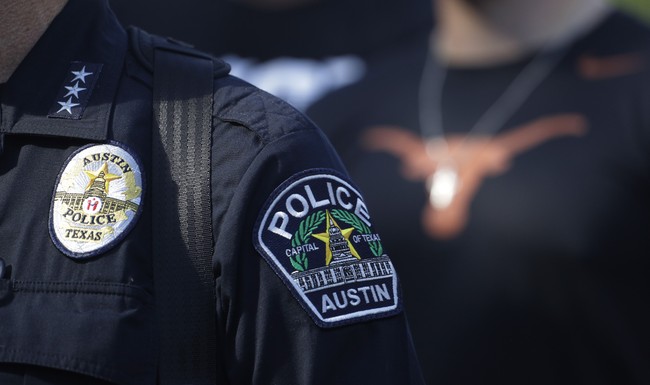
Image via RedState
Texas Sends a Message After an ICE Shooting: Disorder Isn’t a Political Hobby
RedState reports that after an ICE-related shooting, anti-ICE agitators in Texas ran into a reality check: state troopers and local law enforcement don’t treat public safety like a campus debate. The article frames the response as swift and serious, signaling that Texas intends to keep a hard line when protests tip into intimidation, obstruction, or violence.
Here’s what folks in the media don’t get: “public order” isn’t an abstract concept. It’s whether your employees feel safe driving to work, whether customers will visit your shopping center after dark, and whether a new tenant signs a five-year lease or decides to build somewhere else. When disorder rises, cap rates rise, insurance rises, and neighborhoods decline.
Immigration enforcement is a federal responsibility, but states live with the consequences day-to-day — on schools, hospitals, housing demand, and wages in certain trades. If Washington won’t enforce the border consistently, you’re going to see states assert themselves more aggressively, because their voters and their balance sheets demand it.
🏛 Wade's Take: Texas is doing what adults do: prioritizing safety and the rule of law over viral theater. You want to protest? Fine. But the minute it turns into threatening officers or escalating toward violence, it stops being “activism” and becomes a public safety problem. No thriving local economy is built on chaos — it’s built on order, predictable rules, and consequences.
📎 RedState

Image via Just the News
Banned From the White House, Big Media Goes to Court — and Calls It Free Speech
Just the News reports that MS Now, CNN, and Politico plan to sue President Trump to overturn a ban that keeps those outlets from the White House. The lawsuit argues the ban is a direct assault on the First Amendment and a violation of constitutional principles, framing access as a press freedom issue rather than a credentialing and conduct issue.
There’s a real debate here: the public benefits when journalists can ask hard questions, and government should not blacklist reporters simply for being unfriendly. But the other side is also real: the White House is not a public sidewalk, and access is a privilege managed through rules, security protocols, and standards of behavior. Every private building owner understands that credentials can be revoked when there’s repeated disruption, misrepresentation, or refusal to follow policies.
Politically, this lawsuit is also a business play. Outrage drives clicks, clicks drive ads, and being “banned” is an attention multiplier. The downside is that it deepens mistrust and keeps the country in a permanent shouting match — which is terrible for consumer confidence and long-term investment planning.
🏛 Wade's Take: The First Amendment protects the press from government punishment for speech; it doesn’t guarantee premium seating in the briefing room. If the White House is banning outlets for viewpoints alone, that’s wrong and should lose in court. But if it’s about repeated bad-faith conduct, then the media companies should stop pretending this is a holy war and start acting like professionals who want access back.
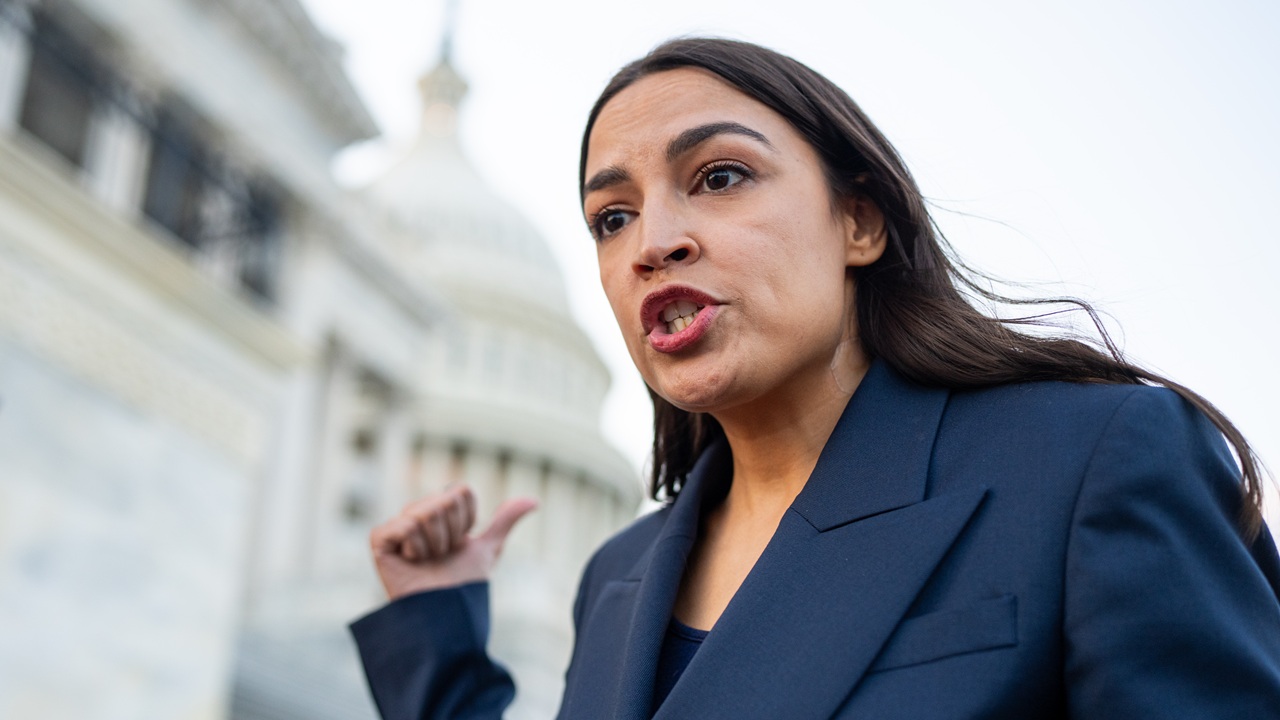
Image via The Daily Signal
The ‘Modern-Day Lynching’ Panic Collapses — and Nobody Wants to Talk About Why
The Daily Signal revisits a sensational claim pushed by nearly 60 Democrat members of Congress, warning of Black Americans being found hanging in a wave of possible “modern-day lynchings.” The piece argues that the narrative was promoted as an alarm bell for racial terror, but subsequent scrutiny pointed to a hoax-driven or misrepresented picture — with important context missing from the original political messaging.
This is what happens when politics becomes a content machine: tragedy gets packaged into a storyline before facts are locked down. And once the claim is out, the correction never travels as far as the accusation. That has real-world consequences: it inflames communities, pressures law enforcement to react to headlines, and leaves regular citizens more suspicious of their neighbors.
Economically, fear is a tax. It depresses investment in affected areas, drives businesses to relocate, and increases security costs. If lawmakers want to help communities, they should start by being careful with the truth — because trust is a form of capital, and we’re burning it down.
🏛 Wade's Take: When elected officials amplify the most explosive interpretation before the facts are in, they’re not protecting anyone — they’re trading stability for headlines. If you’re wrong, you should say so as loudly as you accused. We cannot build safe neighborhoods, strong schools, and rising property values on narratives that fall apart under daylight.
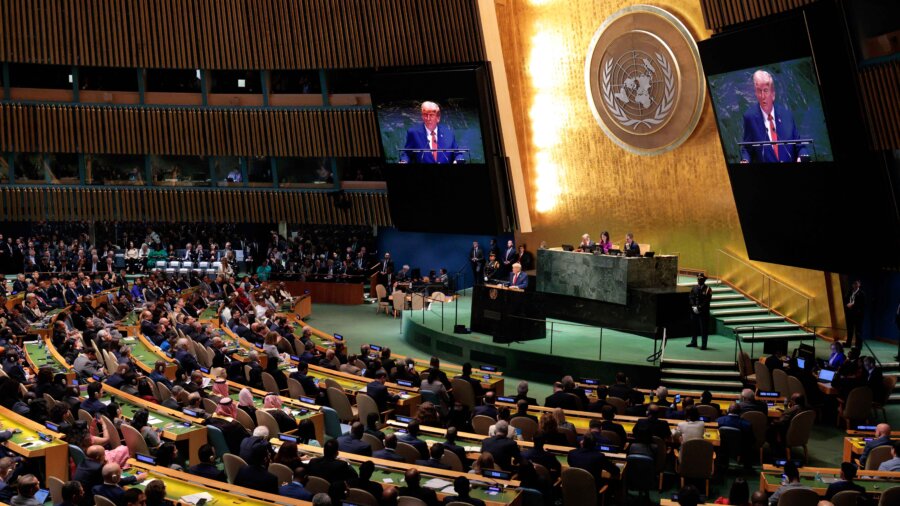
Image via NTD
Trump Heads to the UN to Talk Ukraine, Trade, and Iran — While Markets Watch the Details
NTD reports President Trump is heading to the United Nations General Assembly with meetings expected to cover Ukraine, trade, Iran, and other major issues. UN weeks are often heavy on speeches and light on outcomes, but the side meetings matter — that’s where leverage gets tested and where signals are sent to allies, adversaries, and global capital.
For investors and business owners, the key isn’t the optics; it’s the trajectory. On Ukraine, markets look for clarity on funding, escalation risk, and Europe’s burden-sharing. On trade, they look for tariff posture, enforcement, and whether supply chains will face new friction. On Iran, energy markets watch for sanctions enforcement and any hint of detente or confrontation.
If the administration can project credible strength and predictable terms, that stabilizes risk and supports investment. If it turns into vague promises or public feuds, volatility follows — and volatility is where payroll gets harder and borrowing gets tighter, especially for small and mid-sized operators.
🏛 Wade's Take: I don’t need pretty speeches at the UN; I need outcomes that reduce risk and protect American leverage. Peace through strength is not a slogan — it’s a pricing mechanism for oil, shipping, and interest rates. If Trump can force allies to carry more weight and make adversaries think twice, that’s good for Main Street and the markets.
📎 NTD
That’s the Monday read. Keep your head on a swivel, your expenses tight, and your investments diversified — because politics is noisy, but cash flow is real.
— Wade Lawson