Sponsored By:
November is moving fast — and the biggest opportunities rarely make the front page. RushTheStreet is tracking small-cap movers, AI plays, gold & silver exploration, biotech catalysts, and key earnings announcements you can't afford to miss this month.
Don't just follow the headlines. Know what's happening across the entire market — before everyone else does. Sign up now and get RushTheStreet's latest insights delivered straight to your inbox.
Sign Up for RushTheStreet FreeBy clicking the link above, you agree to receive emails from rushthestreet.com. You can opt out at any time. — Privacy Policy

Five stories shaping how money, power, and risk move in America right now — and what it means for conservatives who actually sign the front of the check.

Image via Fox News
Republicans Don’t Need a Reinvention — They Need a Memory
Fox’s argument is simple: after an election setback, Republicans can’t sit around licking wounds or auditioning for cable hits. The party has to remember what it has been at its best — a coalition that wins by offering a governing agenda, not just grievance — and it needs leaders who can translate that into action.
The piece puts Speaker politics front and center, urging Rep. Jim Jordan to act like the next Speaker and start driving solutions now, not later. Underneath the personality and process talk is a real warning: if Republicans don’t show competence in the House and discipline in message, donors get cautious, independents drift, and the party turns its own brand into a discount label.
From a dollars-and-cents standpoint, the “post-defeat” period is when parties either build credibility or burn it. Businesses, markets, and local investors don’t demand perfection — but they do demand predictability, basic seriousness, and a sense that grown-ups are steering the ship.
🏛 Wade's Take: If Republicans want to climb back, they’ve got to stop confusing noise for leverage. A House majority is a tool, not a trophy — use it to pass clear bills, force clean contrasts, and prove you can manage the place. In business, when you lose a quarter, you tighten execution and go win the next one; you don’t call a committee to debate your “identity.”
📎 Fox News

Image via The Federalist
Medicare-for-All Sounds Compassionate Until You Read the Invoice
The Federalist makes the case that Medicare-for-All isn’t just expensive — it’s structurally unworkable at the scale Democrats pitch. The article argues that if Washington promises everything to everyone, the math forces rationing, delays, and a two-tier system where the well-connected still get care while everyone else waits.
The warning is that cost doesn’t disappear because politicians rename it “coverage.” It shifts into taxes, provider shortages, lower reimbursement, and administrative control — the kind of control that squeezes hospitals, independent practices, and rural healthcare first. If you’ve ever watched a small business die under a new compliance regime, you understand how a “free” program can quietly choke supply.
Economically, this is also about national competitiveness. A government-run healthcare monopoly would be another massive entitlement layered on top of debt, higher rates, and a slowing growth picture — and markets don’t ignore that kind of promise when it’s unfunded.
🏛 Wade's Take: Healthcare needs reform, not a federal takeover that turns every doctor into a subcontractor for Washington. You can’t bankrupt the country and call it compassion — the bill always comes due, and it hits working families through taxes, inflation, and fewer options. Fix pricing transparency, competition, and incentives, and let states experiment; don’t light the whole system on fire because activists want a slogan.

Image via Washington Examiner
China’s Spies Aren’t a Movie Plot — They’re a Business Plan
The Washington Examiner’s point is that Beijing treats espionage as a normal instrument of state power, not an occasional scandal. The piece frames today’s spy threat as deeply connected to the technologies that will define the next decade — AI, chips, data, and the people and companies building them.
It argues we’re at risk of underestimating how patient and systematic the Chinese Communist Party can be: recruiting sources, exploiting academic openness, leaning on diaspora networks, and harvesting data at scale. When you combine that with an AI arms race, the payoff isn’t just military — it’s economic: intellectual property, market advantage, and leverage over supply chains.
For American investors and operators, this isn’t abstract. If your region has research hospitals, engineering programs, defense contractors, logistics hubs, or a growing startup scene, then counterintelligence is local business hygiene. One breach can wreck a firm’s valuation, kill an acquisition, or invite federal scrutiny that freezes deals.
🏛 Wade's Take: If you’re building anything valuable — code, chemicals, components, or customer data — you need to act like espionage is part of the cost of doing business now. Washington should harden screening, punish theft, and stop pretending every global partnership is a peace project. The conservative answer is strong borders, strong enforcement, and a pro-American industrial strategy that doesn’t hand our crown jewels to an adversary for “collaboration points.”
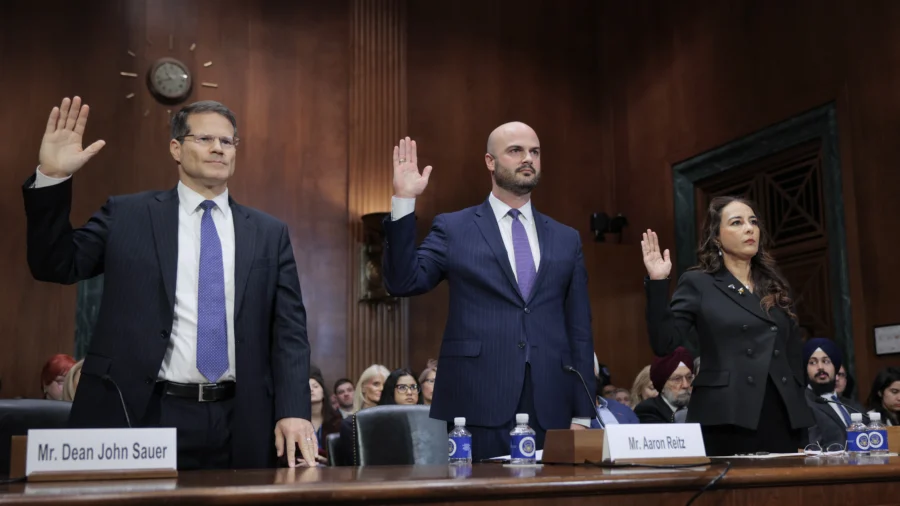
Image via NTD
When Politics Tries to Run Prosecutions, the Country Pays the Price
NTD reports on a warning from a U.S. attorney directed at Sen. Elizabeth Warren, centered on concerns about targeting Trump associates. The broader theme is familiar by now: accusations that political figures are pressuring the justice system to pursue outcomes that look more like score-settling than neutral enforcement.
Whatever your view of Trump-era personalities, the precedent is the real story. When elected officials publicly lean on prosecutors, it poisons confidence in institutions that have to function for everyone — investors, employers, and everyday citizens. It also invites retaliation when power flips, which turns the justice system into a political pendulum.
This kind of instability has a real economic cost. Businesses don’t expand in jurisdictions where rules are selectively enforced, and capital doesn’t like environments where legal risk depends on your political zip code or donor list.
🏛 Wade's Take: I’m all for law and order — but it has to be law, not politics dressed up as law. If Warren or anyone else is trying to steer prosecutions, that’s a bright red line, because the moment justice becomes a campaign tool, trust collapses. And once trust collapses, investment dries up and communities pay for it long after the politicians move on to their next headline.
📎 NTD

Image via PJ Media
Democrats Talk Impeachment of RFK Jr. — But the Bar Is Higher Than a Press Release
PJ Media says Democrats are floating impeachment talk against RFK Jr., but running into a basic problem: impeachment isn’t a social media trend, it’s a constitutional process with specific thresholds and political math. The piece suggests the push looks more like a messaging weapon than a serious, winnable effort.
Impeachment requires more than “we don’t like him” or “our base demands it.” It demands credible claims, evidence that holds up outside friendly TV studios, and ultimately votes that are hard to assemble when the country is exhausted by constant political warfare. In a divided government, it often turns into theater that crowds out actual governing.
For markets and local businesses, impeachment chatter is another uncertainty tax. It consumes bandwidth, stalls agency leadership, slows regulatory clarity, and keeps Washington focused on drama instead of the boring work that actually affects costs, permitting, and growth.
🏛 Wade's Take: If Democrats have real evidence of high crimes, put it on the table and make the case — but this constant impeachment culture is turning serious constitutional tools into partisan confetti. Investors and employers don’t need another year of made-for-TV chaos; they need stable rules and predictable leadership. A country that can’t prioritize governance over vendettas is a country that gets poorer, not fairer.
📎 PJ Media
That’s the rundown. Keep your head on a swivel, your balance sheet conservative, and your politics grounded in what actually works in the real economy. Wade Lawson, The Local Conservative
— Wade Lawson