Sponsored By:
The Fed held rates, CPI came in at 2.4%, and analysts still expect 12.5% Q1 earnings growth — but estimates have already been cut across nine sectors and the S&P 500 is stretched above its 5- and 10-year average forward P/E. Trading earnings on headlines alone in this environment is a costly mistake.
The free Earnings Season eBook breaks down the exact pre-report checklist, how to weigh guidance and expectations, and how to read the first reaction after numbers hit — so you're never improvising after the move already started.
Get the Free Earnings PlaybookBy clicking the link above, you will receive this free report and a free subscription to the StockEarnings daily email newsletter. You are also agreeing to the terms of our Privacy Policy. Unsubscribe at any time.

Today’s roundup runs from a federal judge freezing election rules to the self-inflicted housing mess in New York, a cultural case study up north, a 9/11 anniversary appearance, and a deadly flood threat on the Nepal-China border. As always, I’m looking at incentives, accountability, and the downstream costs for working families and small businesses.
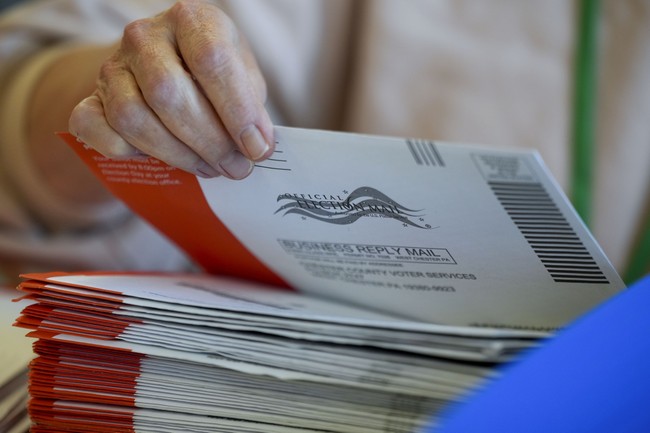
Image via RedState
Federal Judge Freezes Trump’s Mail-Ballot Postal Rules After SCOTUS Green Light
A federal judge in Massachusetts moved to block parts of the Trump administration’s new USPS-related rules for handling mail-in ballots, throwing another legal wrench into election administration just days after a Supreme Court decision had been treated as a win for the administration’s approach. The ruling effectively pauses implementation while litigation continues, keeping the status quo in place in the short run.
For everyday voters, this is one more round of confusion: rules announced, rules challenged, rules blocked, and then everyone pretends the public is the problem for not “trusting the process.” For states, counties, and postal operations, it means planning whiplash and compliance costs that always land on taxpayers. And for markets, it’s the same old uncertainty premium: elections that look less settled invite more volatility, more legal spend, and more distrust in institutions that already can’t afford another hit.
🏛 Wade's Take: If you want confidence in elections, you don’t get there by letting a patchwork of judges rewrite the operating rules midstream. The real issue isn’t whether one side “wins” a court round; it’s whether we can have clear, uniform, enforceable standards that don’t change every time a new lawsuit gets filed. Stable rules are the cheapest form of security, and right now we’re paying for instability on purpose.
📎 RedState

Image via American Thinker
New York’s Housing Crisis Isn’t a Mystery: It’s the Business Model of Control
New York City’s housing squeeze keeps getting sold as a story about greedy landlords and “not enough compassion,” but the deeper driver is policy: heavy-handed regulation, politicized permitting, and a mindset that treats private capital like an enemy instead of the engine that builds and maintains housing. When government decides it can freeze prices, dictate terms, and delay projects indefinitely, you get exactly what you’d expect in any market: less supply, higher costs, and quality that deteriorates.
Anyone who has actually operated real estate knows the math. If your costs rise with labor, insurance, taxes, compliance, and interest rates, but your revenue is capped or your ability to reposition an asset is blocked, you stop investing. Buildings age, upgrades get deferred, and the best operators avoid the market entirely. The end result is a city that prices out young families and small businesses, then blames “capitalism” for the consequences of anti-capitalist policy.
🏛 Wade's Take: You can’t regulate your way to abundance. If New York wants more affordable housing, it needs to make it legal and profitable to build and renovate again, period. The conservative answer isn’t cruelty; it’s supply, speed, property rights, and predictable rules so capital shows up and stays.
Quebec Shows What Happens When a People Defend Culture With Policy
Quebec offers a living case study in cultural preservation: a French-speaking society inside a larger English-speaking continent that has used law, education, and public policy to protect language and identity. The approach has had real successes in keeping a distinct culture intact, but it has also produced tensions around individual freedom, minority rights, and economic openness.
For American conservatives, the lesson isn’t “copy Quebec,” but “pay attention to incentives.” A society can absolutely shape its future through institutions, schooling, family formation, and a common civic story. But once the state is empowered to police identity, it rarely stops at the parts you like. The line between stewardship and coercion gets thin fast, and the economic costs show up when talent, capital, or entrepreneurship feels unwelcome or boxed in.
🏛 Wade's Take: Culture matters, and pretending it doesn’t is how you wake up in a country you don’t recognize. But I don’t want a government strong enough to micromanage identity; I want communities strong enough to pass on faith, language, history, and standards without needing a bureaucrat’s permission slip. The best conservative cultural strategy is strong families, local institutions, and a confident mainstream that doesn’t apologize for existing.
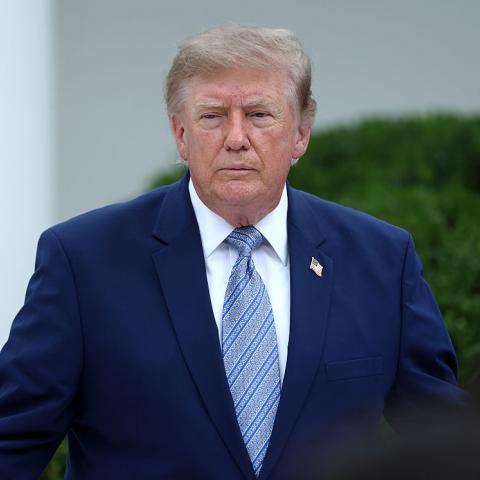
Image via Just the News
Trump to Attend Pentagon 9/11 Memorial Again as 25th Anniversary Nears
President Trump plans to attend this year’s 9/11 memorial event at the Pentagon, marking a quarter century since the attacks that killed nearly 3,000 Americans and changed the country’s security posture, foreign policy, and national psyche. The Pentagon ceremony remains one of the most solemn observances, anchored in remembrance of the dead and recognition of those who ran toward danger.
The 25th anniversary lands at a time when a lot of Americans feel like the country has drifted from the unity that followed 9/11 into something colder and more fragmented. Memorial events can’t fix that by themselves, but they do serve as a national checkpoint: what did we learn, what did we protect, and what have we let slip? For business owners and investors, the post-9/11 era also reminds you how fast risk can reprice overnight, and how much the country depends on competent leadership when it does.
🏛 Wade's Take: Showing up matters, but what matters more is whether our leaders can honor sacrifice with seriousness instead of slogans. Remembering 9/11 should renew a commitment to strong borders, strong intelligence, and a government that takes threats seriously before they become funerals. Unity isn’t a hashtag; it’s shared duty and a country worth uniting around.
Nepal-China Border Disaster Worsens as Flood Threat Looms Over Fragile Region
A major disaster along the Nepal-China border has driven the death toll higher as authorities warn of ongoing danger tied to water buildup and the risk of additional flooding. Reports describe a volatile situation where a lake and unstable terrain could trigger new surges, complicating rescue and recovery efforts and putting downstream communities on edge.
When you see a tragedy like this, the first takeaway is human: families missing, livelihoods erased, and responders working against terrain and time. The second takeaway is structural: disasters expose what’s strong and what’s brittle in infrastructure, emergency coordination, and basic public readiness. Regions with limited resources face the hardest reality, because one event can wipe out roads, power, commerce, and access to medical care in a matter of hours.
🏛 Wade's Take: This is one of those moments that should cut through politics and remind us how thin the line is between normal life and catastrophe. It also reinforces a practical truth: resilient infrastructure and competent emergency planning aren’t luxuries, they’re survival tools. If you want to help, look for reputable aid channels and don’t forget the recovery phase after the cameras move on.
That’s the week’s scoreboard. Keep your head on a swivel, your balance sheet clean, and your convictions rooted in something deeper than the news cycle. See you next issue. Wade Lawson Editor, The Local Conservative
— Wade Lawson