Sponsored By:
The midterms are over — but is your portfolio actually protected? Five tickers can share one hidden risk, and a long-term plan won't save you if several holdings depend on the same economic factors. Now is the time to stress-test your mix before the next headline does it for you.
Our free five-stock portfolio-resilience report gives you concrete ideas to compare your holdings, spot concentrated exposures, and question your current positions. Don't wait for a loss to start asking the right questions.
Get the Free ReportBy clicking this link you agree to receive emails from StockEarnings and our affiliates. You can opt out at any time. Privacy Policy.

Friday’s roundup tracks where power, profits, and property risk are shifting: Washington’s AI posture, a shaky Democratic leadership picture, a messy mega-IPO, a new cyber czar after outages, and a federal court reminding California it doesn’t run immigration law.

Image via Fox News
America Can Have AI Progress Without Stealing the Work Product
The Justice Department’s posture on "fair use" for AI training is turning into a green light that’s a little too convenient for the biggest players in tech. That matters because the White House has been talking out of both sides of its mouth: pushing an AI framework that nods at creators, while the legal momentum quietly tilts toward the model-builders who want to ingest everything and sort it out later.
If you’re a publisher, a songwriter, or any business that survives on owned content, this isn’t some abstract culture-war scuffle. It’s basic property rights, the same principle that says your tenant can’t "innovate" their way out of paying rent. The market result is predictable: bigger margins for AI platforms, weaker bargaining power for creators, and a licensing landscape that stays murky long enough for the biggest balance sheets to win.
The clean solution isn’t a ban on training or pretending AI isn’t happening. It’s clear rules and paid licensing pathways that let training happen legally, predictably, and at scale, with price signals that reward original work instead of treating it like free gravel on the side of the road.
🏛 Wade's Take: Conservatives should be the first ones defending copyright the same way we defend land titles and contract law. If Washington blesses "fair use" as a blanket excuse, you’re going to see wealth transfer from creators and local businesses to a handful of tech monopolies. Build the licensing market, enforce property rights, and let AI compete honestly instead of on stolen inputs.
📎 Fox News

Image via Washington Examiner
Schumer’s Leadership Questions Aren’t Just Gossip — They’re a Market Signal
Chuck Schumer may hold the title, but the story out of Washington is that Democratic leadership unity is getting thin. When the top Senate Democrat starts looking like he’s fighting for his own perch, donors, activists, and would-be successors don’t sit still. They reposition, and that repositioning changes what gets prioritized in the next legislative cycle.
For investors and business owners, leadership instability isn’t entertainment — it’s policy risk. Committee agendas, deal-making bandwidth, and the odds of last-minute "must-pass" add-ons all shift when leadership is distracted. If you’ve got exposure to regulated sectors like banking, energy, healthcare, or big tech, internal party friction can mean sudden pivots, symbolic votes that still move stocks, and a lot more noise around taxes and spending.
The bigger picture: when parties feel vulnerable, they often reach for populist economics. That can show up as anti-merger muscle, windfall-profit talk, or new mandates that sound good in a press release but land like a tax on payroll and expansion.
🏛 Wade's Take: When leadership gets wobbly, the base demands louder promises, and small business ends up footing the bill. If Schumer’s grip weakens, expect Democrats to audition for the microphone with more aggressive regulatory and tax rhetoric. That’s not a reason to panic, but it is a reason to keep dry powder, stay diversified, and watch who’s writing the talking points — because today’s soundbite becomes tomorrow’s bill.

Image via Daily Caller
Anthropic’s IPO Pop Looked Great — Unless You Bought It the Wrong Way
Anthropic’s stock jumping hard out of the gate makes for a shiny headline, but the day’s split outcome is a reminder that IPO mechanics can punish regular folks even when the ticker looks like it "won." If you got in at the offering price, you may be sitting pretty. If you chased the opening surge like it was a sure thing, you can end the same day holding a loss while the narrative still says "stock jumped."
That’s not just trading drama; it’s structure. Allocation favors institutions, momentum punishes late buyers, and the spread between the story and your account balance can be brutal. Add in what the company’s filing reportedly shows about economics — revenue growth paired with heavy compute costs — and you’ve got the classic AI question: is this a software margin machine, or a capital-intensive utility wearing a software hat?
For markets, this is the tell: AI is real, but not all AI business models are equal. The winners won’t just be the smartest models; they’ll be the ones who can control costs, lock in enterprise contracts, and keep dilution from eating shareholders alive.
🏛 Wade's Take: I love innovation, but I don’t buy hype at retail prices. If an IPO is so good, you shouldn’t have to sprint into the opening spike to make money — and if compute costs rise as fast as revenue, your "growth" can be a treadmill. Treat hot AI IPOs like beachfront property in a hurricane zone: you can make money, but only if you respect the risk and don’t overpay.
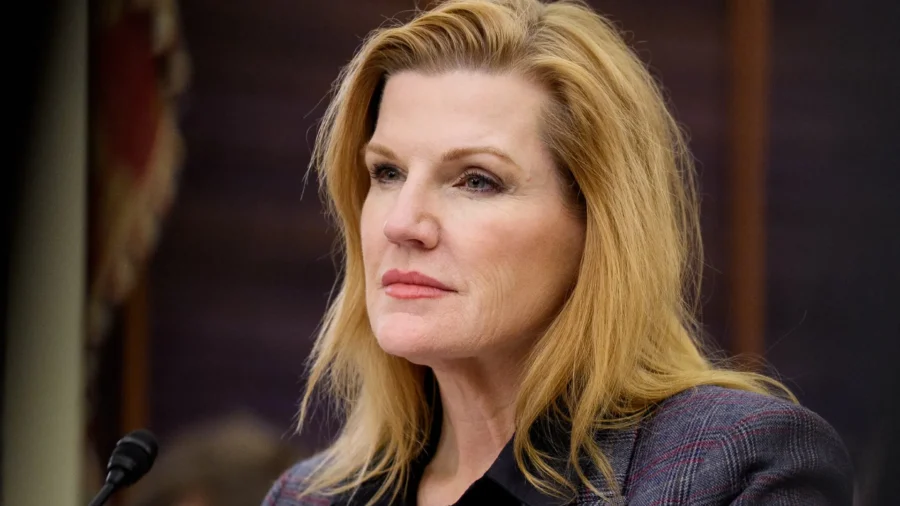
Image via NTD
After the Outages, the White House Picks a Cyber Chief — Now Show Us the Plan
The White House tapping Kirsten Davies as cyber chief comes after tech outages that reminded everyone how fragile modern life can get when systems wobble. Whether it’s payment rails, logistics, cloud platforms, or government networks, we’ve built an economy where uptime is as essential as electricity. When outages hit, it doesn’t just inconvenience people — it hits sales, payroll processing, supply chains, and confidence.
From a business owner’s view, cyber leadership isn’t about speeches and buzzwords. It’s about standards, accountability, and real coordination with state and local entities, utilities, and private operators. If the federal government wants credibility here, it needs to stop treating cybersecurity as a compliance binder and start treating it as operational readiness.
The investment angle is straightforward: cyber spend is not going away, and resilience is becoming a competitive edge. Companies that can prove continuity will win contracts, while those that can’t will pay in higher insurance, higher financing costs, and lost customers.
🏛 Wade's Take: Appointing a cyber chief is fine, but the country needs measurable results: fewer outages, faster recovery, and clear responsibility when vendors fail. If Washington wants businesses to invest in resilience, it should lead by example — secure its own systems, streamline procurement, and stop burying operators under contradictory mandates. Reliability is an economic issue, not a partisan one.
📎 NTD
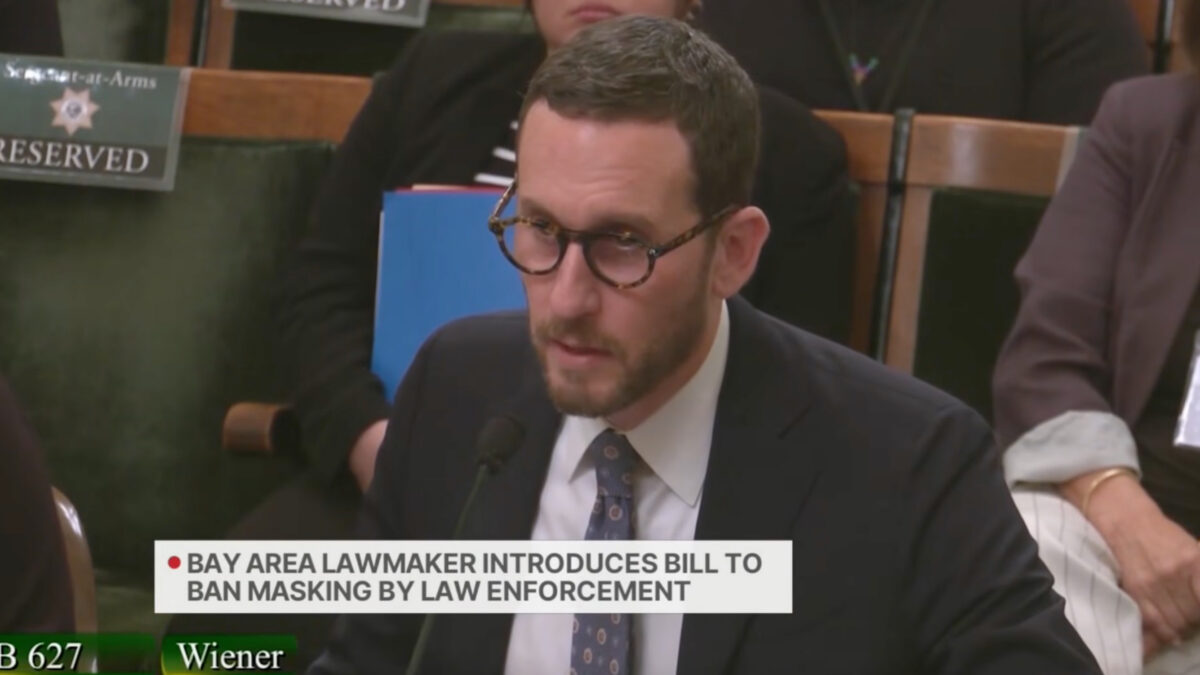
Image via The Federalist
Federal Court Reminds California: You Don’t Get to Nullify Immigration Enforcement
A federal court injunction against parts of California’s anti-ICE approach is a blunt reminder that states can’t obstruct federal law enforcement just because they don’t like the policy. The Justice Department’s point was simple: federal officers have missions to carry out, and states don’t get to rig the playing field with interference dressed up as "protection."
This isn’t just a border argument — it’s a rule-of-law argument with real economic consequences. When enforcement becomes a patchwork, communities get uncertainty and businesses get volatility: labor markets distort, housing pressures rise unevenly, and local services strain. Property owners and employers end up navigating a mess where the legal environment depends on the zip code and the politics of the statehouse.
A functioning system needs clear laws, predictable enforcement, and a serious legal immigration process that serves the national interest. What we can’t afford is state-level resistance theater that creates chaos and then sends the bill to taxpayers and local communities.
🏛 Wade's Take: You can’t run a country on selective compliance, and you sure can’t run an economy that way. California’s approach has been a long-running lesson in how ideology turns into disorder, and disorder always gets expensive. Enforce the law, fix the legal pipeline, and stop pretending obstruction is compassion.
That’s the read from my desk. Keep your contracts tight, your debt laddered, and your eyes open — politics is just cash flow with better lighting. Wade Lawson, The Local Conservative
— Wade Lawson