Sponsored By:
It's not gas, groceries, or Medicare premiums. The fastest-rising cost quietly draining American retirees is housing — and Social Security's COLA isn't keeping up. The 2027 adjustment is projected at just 3.9% ($81/month), while rent, property taxes, insurance, and maintenance have surged by hundreds in just two years. Even if your home is paid off, you're still getting squeezed. The Senior Citizens League confirms it: every dollar of Social Security today is worth only 86.3 cents compared to 2016.
Central banks have already responded — buying one specific asset at the fastest pace in 50 years, with JP Morgan forecasting it hits $8,000. Disciplined retirees are making the same move now to protect what they've saved. You're making a decision today whether you realize it or not. Don't leave it to chance.
Get the Free Wealth Preservation GuideThis is an advertisement. If you no longer wish to receive our promotions, please unsubscribe here. Or write to: 5005 Lyndon B. Johnson Fwy. Suite 350, Dallas, TX 75244.

Five stories today with one common thread: character matters, incentives matter, and when America gets clear-eyed, results show up fast.

Image via Fox News
A Year After Charlie Kirk’s Assassination, Republicans in Dallas Turn Grief Into Resolve
At the GOP midterm convention in Dallas, attendees marked the one-year anniversary of Charlie Kirk’s assassination with tributes that sounded less like political theater and more like a family remembering one of their own. The common refrain wasn’t just that he was influential, but that he made politics feel personal to a generation that’s tired of being lectured by bureaucrats and “experts” who never risk anything.
Kirk’s death still hangs over the movement because it wasn’t just a loss of a loud voice, it was a warning shot aimed at civic life itself. When political violence becomes a tool, everybody’s business gets affected: the college event circuit, security costs for gatherings, and the willingness of normal Americans to show up in public and say what they believe.
In the hallways, the talk wasn’t only about mourning. It was about recruiting precinct workers, funding campus chapters, and staying visible instead of retreating. That’s a healthy instinct. A free country can’t run on fear, and a conservative movement that wants to govern has to prove it can protect both public safety and open debate.
🏛 Wade's Take: When violence enters politics, the first casualty is trust, and the second is investment. If you want calmer streets and a healthier economy, you don’t excuse intimidation from “your side” or the other side, period. Honor Kirk by rebuilding the habits of a stable republic: lawful consequences, real security, and a refusal to let activists bully regular people into silence.
📎 Fox News

Image via National Review
On 9/11, the Question Isn’t What We Remember — It’s What We’ve Neglected
Twenty-five years later, the 9/11 anniversary still has the power to stop a nation in its tracks, but this year’s reflection carries a sharper edge: the victims and their families were owed more than speeches and ceremonies. The piece argues that on an anniversary like this, the country gets a chance to choose again what kind of seriousness we’re willing to live with.
That seriousness includes the nuts and bolts that don’t fit on a commemorative poster: long-term care for first responders, honest accounting of policy failures, and a government that treats promises like contracts instead of campaign slogans. If we can mobilize trillions for one agenda after another, we can manage the basic moral obligation to take care of the people who carried the load when the country was hit.
There’s also an uncomfortable truth for the markets and for Main Street: national security is economic security. When leadership drifts, instability shows up in shipping lanes, insurance pricing, fuel costs, and the simple ability of families to plan a future without wondering what tomorrow’s headline will do to their paycheck.
🏛 Wade's Take: A country that can’t keep faith with its heroes won’t keep faith with its creditors, its workers, or its small businesses. If Washington wants to rebuild trust, start with the people who paid the price in real lungs and real funerals, not just in talking points. Honor 9/11 with competence and follow-through, because “never forget” isn’t a slogan—it’s an invoice.
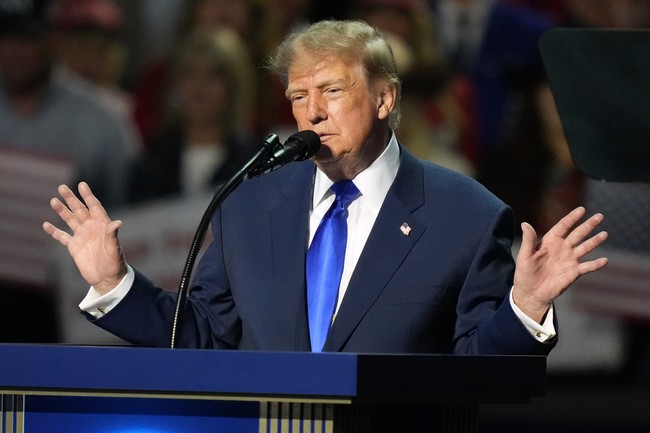
Image via RedState
The ‘Trump Dividend’ Promise: A $5,000 Check Sounds Great — Now Show the Math
The President lit up a friendly crowd with a new promise being called the “Trump Dividend,” pitched as a way for Americans to score a $5,000 payment. The rollout has the familiar political electricity: big number, simple message, and the implication that prosperity can be mailed out like a rebate.
Any plan like this lives or dies on details: who qualifies, whether it’s universal or means-tested, and most importantly what funds it. If it’s financed by real savings from shrinking government, cutting fraud, or monetizing assets responsibly, it’s a different conversation than if it’s just another deficit-financed check that ends up bidding up groceries, rent, and insurance.
For investors, the second-order effects matter more than the applause line. A large cash distribution can spike consumption for a quarter or two, but it can also keep rates higher for longer if inflation expectations jump. And for property owners and small businesses, higher rates aren’t theory—they’re your renewal notes, your cap rates, your construction loans, and whether you can expand or you just hang on.
🏛 Wade's Take: I love putting money back in taxpayers’ hands, but I’m not interested in a sugar high that turns into another round of inflation and higher borrowing costs. If this dividend is real, it should be tied to real structural cuts and pro-growth reform, not printed convenience. Show me a plan that lowers the cost of living permanently and I’m listening; show me another check funded by debt and I’ll tell you exactly where it ends up: in the price of everything.
📎 RedState

Image via The Hill
Army Lasers at the Border: Cartel Drone Traffic Reportedly Drops 75 Percent
CBP sources say suspected cartel drone traffic is down roughly 75 percent after the Army began using high-energy laser systems, with about 100 drones reportedly taken out since the program started in August. That’s the kind of statistic that gets my attention, not because it’s flashy, but because it’s measurable.
Cartel drones aren’t a gimmick; they’re a logistics tool for smuggling and surveillance. When you disrupt that pipeline, you disrupt the cartel’s business model, and that has ripple effects: fewer drugs moving means less local crime pressure, less strain on emergency services, and fewer families living under the shadow of trafficking networks.
There’s also a big economic angle for border states and interior cities alike. Secure borders stabilize labor markets, reduce the burden on local budgets, and improve the predictability that businesses need to invest. If a technology investment is producing a real operational advantage, it’s one of the rare government expenditures that can pay for itself in reduced downstream costs.
🏛 Wade's Take: This is what “serious” looks like: clear mission, modern tools, and results you can count. If lasers are cutting drone traffic by three-quarters, keep funding what works and expand it fast, because the cartels adapt and they don’t take holidays. Border security isn’t just a political talking point—it’s a prerequisite for public safety, sane budgeting, and a stable investment climate.
📎 The Hill

Image via NTD
Ford’s China Exposure Draws Fire From Republicans — And It’s Not Just Politics
Republican lawmakers are criticizing Ford over business ties to China, putting a spotlight back on how deeply major American manufacturers still lean on a geopolitical rival. The blue oval is iconic, but in 2026 the real question isn’t nostalgia—it’s supply chains, intellectual property, and whether corporate strategy is aligned with national interest.
For years, companies told the country that globalization meant efficiency and lower costs. What we got instead was vulnerability: parts delays, policy whiplash, and the constant risk that a diplomatic flare-up becomes a production shutdown. When your inputs and joint ventures are tied to a regime that uses market access as leverage, you’re not just taking business risk—you’re taking sovereign risk.
This matters for investors and workers alike. If Washington tightens rules or if China retaliates, earnings get hit, layoffs follow, and pension funds feel it. And for the broader economy, every dependence we build today becomes a bargaining chip used against us tomorrow.
🏛 Wade's Take: I’m not interested in punishing American companies for competing, but I am interested in ending the fantasy that China is just another trading partner. If Ford wants political goodwill, it should show a real plan to onshore critical production, protect its IP, and reduce exposure that can blow up overnight. As an investor, I don’t pay a premium for companies that confuse geopolitical risk with “growth strategy.”
📎 NTD
That’s the roundup. Keep your head on a swivel, your balance sheet conservative, and your convictions backed by action — see you tomorrow.
— Wade Lawson