Sponsored By:
One warehouse robotics company is sitting on a $22.7 billion order backlog — contracts signed, revenue incoming — and its stock is down 16.6% in the past month. That disconnect is exactly the kind of setup worth paying attention to. Heading into 2026, analysts screened the entire robotics sector and found 7 stocks with compelling cases: a pure-play warehouse name with $2B cash and zero debt, a semiconductor robotics firm that nearly doubled quarterly revenue year-over-year, and a robotic surgery company placing hundreds of next-gen systems while trading 31% below its 52-week high.
Every name and the full case behind it is available in a free report — no forms, no friction. Backlogs that size take time to convert, which means the window to understand these setups is open right now. Don't wait.
Get Your Free Robotics ReportBy clicking this link you agree to receive emails from TradingTips and our affiliates. You can opt out at any time. — Privacy Policy

Today’s roundup looks at who’s being rewarded in Washington and abroad, what it means for defense readiness, and where the next round of political and market risk is building for business owners and investors.
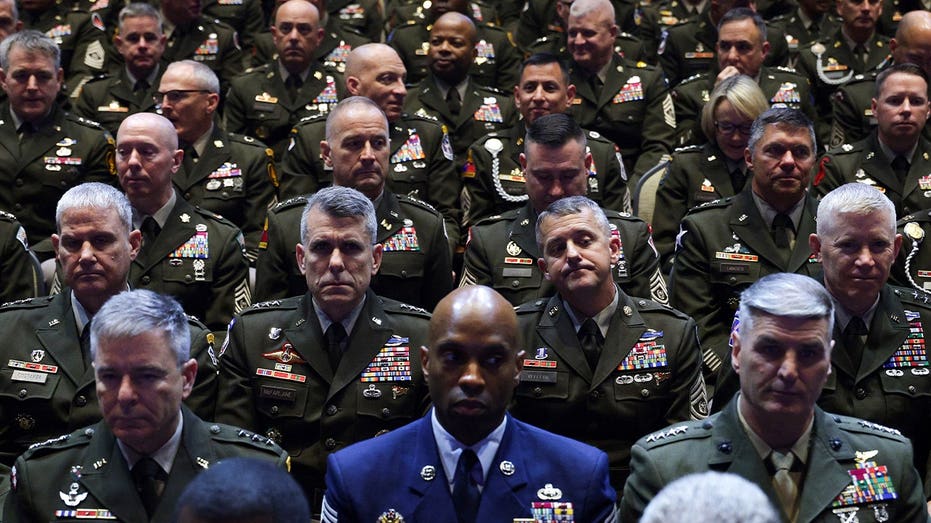
Image via Fox News
Pentagon Wants Generals Who Can Win, Not Just Brief
The Pentagon is rolling out a wargame-style battlefield assessment for senior officers aiming for general and flag rank, putting would-be stars in the hot seat to solve combat problems before they get promoted. The goal is simple: reward leaders who can fight and win, not just those who can navigate the paperwork and the politics.
For folks like me who’ve hired, fired, and promoted based on performance, this reads like a long-overdue shift from résumé management to real-world capability. In business, you don’t hand the keys to a new division to someone who’s never closed a deal; in war, you shouldn’t hand a star to someone who can’t think under pressure when lives are on the line.
If the Pentagon sticks with it, you’ll see second- and third-order effects: training pipelines change, career incentives shift, and the defense industrial base starts hearing different questions from leaders who actually understand operations. That matters for procurement priorities, readiness spending, and whether America’s deterrence posture is credible to our enemies and comforting to our allies.
🏛 Wade's Take: I like this because it’s accountability in a system that’s gotten too comfortable rewarding box-checking. If you can’t perform in a realistic scenario, you shouldn’t be running a command that costs taxpayers billions and can get young Americans killed. The market angle is straightforward: better leadership means less waste and clearer requirements, which ultimately benefits defense spending discipline and real capability over shiny paperwork.
📎 Fox News
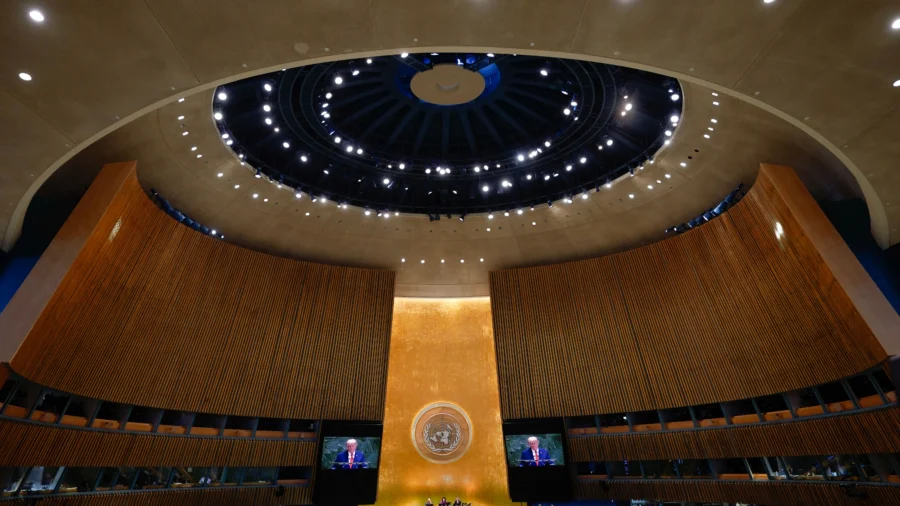
Image via NTD
U.N. General Assembly: Big Speeches, Real Stakes
World leaders gathered at the U.N. General Assembly with President Trump taking the stage in a setting that’s part diplomacy, part political theater. The speeches are always heavy on slogans, but the real story is what gets signaled to markets and to capitals: who’s serious about energy, trade, war, and border security—and who’s just auditioning for headlines.
For American businesses, the U.N. matters less for its resolutions and more for how it shapes the narrative that can turn into sanctions, tariffs, aid packages, and regulatory pressure. If you own property, run a logistics operation, or invest globally, you watch for anything that hints at supply chain disruption, commodity shocks, and the cost of capital moving in the wrong direction.
When Trump speaks in that room, you’re also watching how foreign leaders react to U.S. leverage. Whether they like his style or not, markets price power, not feelings, and the U.S. still has the deepest capital markets and the strongest consumer engine when we’re not strangling ourselves with bad policy.
🏛 Wade's Take: I don’t look to the U.N. for solutions; I look to it for signals. If America projects strength and clarity, risk premiums shrink and business plans get easier to underwrite. If we project apology and confusion, adversaries take ground and everybody pays more—at the pump, at the port, and on the borrowing line.
📎 NTD

Image via Western Journal
Midterm Mood Check: The ‘Blue Wave’ Math Looks Smaller This Time
A new look at the 2026 midterm environment argues the Democrats’ numbers and energy don’t resemble what they had heading into 2018. The point isn’t that conservatives should get complacent—it’s that the panic narrative on the right doesn’t match the data being circulated about fundraising, enthusiasm, and expected turnout patterns.
Politics is downstream of economics, and the last few years have trained voters to care about prices, jobs, and safety more than whatever social-media issue is trending this week. If families feel squeezed, if small businesses feel regulated to death, and if cities feel less safe, the party associated with that drift usually pays a price.
For investors, midterms matter because they can change the tone of tax policy, energy rules, and enforcement priorities. Even the expectation of divided government can cool off some of the more aggressive regulatory ideas, which tends to stabilize certain sectors and reduce uncertainty in planning and capital expenditure.
🏛 Wade's Take: The numbers may be better than the doomers claim, but elections aren’t won on vibes—they’re won on turnout and organization. If conservatives treat this like a layup, we’ll fumble it. If we treat it like a close fourth quarter—focus on kitchen-table economics and competence—we’ve got a real shot to protect growth, property values, and sanity in governance.

Image via The Daily Signal
Canada’s New ‘Moral Leader’ Routine Won’t Pay Your Bills
A commentary piece takes aim at Canada’s political posture, arguing its leadership is leaning into socialist branding while posturing as a global counterweight to President Trump—especially on trade disputes and the tone of North American politics. The framing is that Canada is trying to claim the mantle of “leading the free world” while embracing policies that look a lot like bigger government, higher spending, and more centralized control.
From a business perspective, Canada matters because it’s not some distant spectator; it’s a major trading partner and a real factor in energy, manufacturing, agriculture, and cross-border investment. When Ottawa talks tough while simultaneously leaning into heavy-handed economics, you get uncertainty that shows up in contracts, supply chain decisions, and currency risk.
And let’s be honest: the “anti-Trump” brand is an identity, not a strategy. Identity doesn’t build pipelines, doesn’t lower input costs, and doesn’t help a small manufacturer decide whether to expand headcount or hold cash.
🏛 Wade's Take: Canada can posture all it wants, but you can’t regulate and subsidize your way into prosperity. A North American economy needs reliable energy, predictable trade rules, and leaders who understand production, not just talking points. If Canada drifts further left, U.S. businesses should treat cross-border exposure like any other risk: price it, hedge it, and don’t assume yesterday’s stability is guaranteed tomorrow.

Image via American Thinker
Combat AI Is Spreading Fast, and Washington’s Rulebook Can’t Catch It
An analysis argues that battlefield-tested AI tools emerging from the Ukraine conflict are moving faster than policymakers can regulate or even understand. As systems learn in real combat conditions—targeting, reconnaissance, electronic warfare, logistics optimization—the technology doesn’t stay put; it gets copied, sold, adapted, and exported across borders and into non-state hands.
That’s not science fiction, and it’s not just a Pentagon issue. It’s a national security issue that will spill into domestic markets through cybersecurity costs, critical infrastructure protection, insurance pricing, and the broader cost of doing business in a world where autonomous and semi-autonomous systems are cheaper every month.
For investors, this is a classic dual-use wave: defense primes, specialized software firms, sensor manufacturers, drones, and cyber companies may see huge demand, but the regulatory pendulum can swing hard and suddenly. You could get export controls, liability frameworks, procurement shifts, and a whole new compliance layer that hits small contractors first and hardest.
🏛 Wade's Take: When technology is trained in war, it doesn’t politely wait for a committee hearing before it goes global. We need rules that protect Americans without strangling innovation, and we need them written by people who understand both security and markets. If Washington fumbles this, we’ll get the worst of both worlds: higher risk and a weaker domestic industry base.
That’s the day’s read. Keep your balance sheet clean, your head on a swivel, and your politics anchored to what actually makes a country strong: productive citizens, secure borders, and a government that knows its place.
— Wade Lawson