Sponsored By:
History shows a clear pattern: the investors who recognized the exact inflection point in the dot-com boom pocketed 400–800% gains in 18 months. Those who spotted the same moment in cloud computing saw 300–600% returns. Based on 50 years of market data, that same moment is happening right now — and the acceleration phase has already begun.
This free 7-page report reveals where we are in the current megatrend cycle, why the next 18 months are critical, and how to position yourself before the window closes. Don't be the investor who enters too late.
Get the Free ReportBy clicking 'Get the Free Report' you are automatically subscribing to Darwin Investor Network and will receive a free subscription to the Chaikin PowerFeed newsletter. Unsubscribing is easy. Privacy Policy

From fresh Russiagate questions to DMV voter rolls, plus Colombia’s quake shock, a West Wing shake-up, and a culture fight at DFW airport. Here’s what matters to your wallet, your vote, and your country.
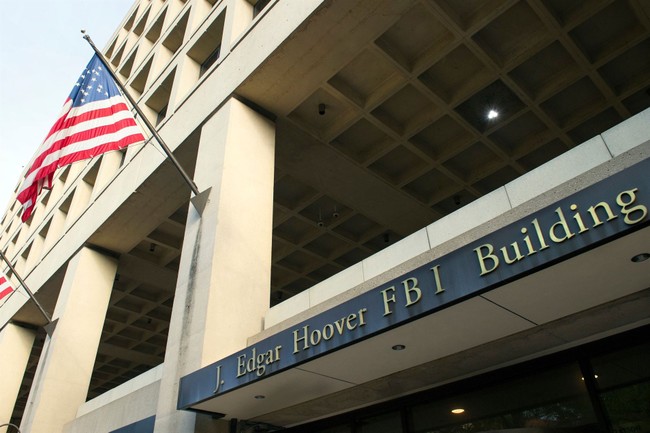
Image via PJ Media
Russiagate Keeps Aging Like Spoiled Milk as New FBI Details Surface
PJ Media points to new FBI revelations that, at minimum, reopen old questions about how the Russia investigation was initiated, sold to the public, and sustained inside the federal bureaucracy. For regular Americans, the biggest issue isn’t partisan scorekeeping. It’s whether the most powerful law enforcement agency in the country followed the rules, told the truth, and treated political targets with a different set of standards.
When federal institutions lose credibility, markets don’t shrug. Businesses price in uncertainty, donors and investors pull back, and public trust erodes the same way a building rots when you ignore a small leak. If agencies can bend process to chase a narrative, every regulated industry has to assume the same playbook can be used on them next.
We also can’t ignore the opportunity cost. Years of political oxygen and bureaucratic manpower went into this saga while inflation, border control, crime, and energy policy were right in front of everybody. That kind of misallocation is what kills organizations in the private sector, and it corrodes government too.
🏛 Wade's Take: A country that lets its top agencies run politics through leaks and half-truths is a country that can’t stay competitive. If these revelations show misconduct, there needs to be real accountability: names, consequences, and reforms that actually change incentives. Conservatives should keep the focus on restoring equal justice under law, because that’s the foundation markets and small businesses depend on.
📎 PJ Media

Image via The Daily Signal
Noncitizen Voting ‘Errors’ Start at the DMV, and That’s the Whole Problem
The Daily Signal highlights a New Jersey case where officials disclosed a processing error tied to motor vehicle systems, with noncitizens only being discovered after they were already registered. That detail matters. A clean election system doesn’t rely on catching mistakes after the fact, the way a good accountant doesn’t wait until tax day to discover missing receipts.
When the registration pipeline is designed for convenience first and verification second, you get predictable outcomes: messy voter rolls, legal disputes, and another round of Americans losing faith in the basics. And once trust is gone, every election becomes a courtroom drama, which is terrible for social stability and bad for the investment climate.
Election administration should be boring. But it can’t be boring if the systems feeding the rolls are allowed to auto-enroll people with weak front-end checks and then act shocked when problems appear later. That’s not a glitch, that’s a design choice.
🏛 Wade's Take: If you want election integrity, you don’t start by arguing about results on TV. You start by fixing the intake valve: proof of citizenship at registration, clean data matching, and routine audits with transparent reporting. In business, we call it internal controls, and you either have them or you’re inviting fraud and error.

Image via NTD
Colombia Declares Economic Emergency After Quake, and Investors Should Watch the Aftershocks
NTD reports Colombia’s president declared an economic emergency following a deadly earthquake, signaling the government is preparing to move fast on spending, rules, and executive actions. Natural disasters are tragic on their own, but they also become stress tests for institutions: supply chains, insurance markets, utilities, and the government’s ability to execute without corruption.
An emergency declaration can mean rapid reconstruction, but it can also mean looser oversight, rushed procurement, and policy swings that spook capital. If you’ve got exposure to emerging markets, commodities, or Latin America funds, you should pay attention to how Colombia finances the response and whether the central bank and fiscal authorities stay disciplined.
For the broader region, a major quake can disrupt trade routes, energy infrastructure, and agricultural output. Even if you’re not invested directly in Colombia, shocks like this ripple into pricing for inputs, shipping, and risk premiums across the hemisphere.
🏛 Wade's Take: The humanitarian priority is obvious, but the financial reality is just as real: emergency powers often come with economic shortcuts that can do long-term damage. Investors should watch the currency, sovereign debt signals, and any talk of capital controls or price controls. The best rebuilding is transparent, private-sector friendly, and focused on infrastructure that boosts productivity, not politics.
📎 NTD

Image via The Hill
Press Office Turbulence: Leavitt Exit Raises Questions About Message Discipline
The Hill reports former Trump spokesman Mike Dubke said he’s very surprised that Karoline Leavitt is leaving the press secretary role without a replacement already named. In politics, communications isn’t window dressing. It’s operational, because the message shapes expectations, and expectations drive everything from legislative leverage to market reactions.
When leadership transitions aren’t clearly managed, you get a vacuum. And vacuums get filled by anonymous sources, rumor mills, and opponents happy to define you before you can define yourself. That’s not just a media problem, it’s a governance problem.
For business owners and investors, unstable messaging out of Washington usually means more volatility. If the public can’t tell what the administration is prioritizing or how it’s negotiating, companies delay hiring, delay projects, and demand a higher return to take risk.
🏛 Wade's Take: A serious White House should treat communications like you treat a CFO: you don’t leave the seat empty and hope it works out. If the administration wants to keep confidence high, it needs a clear replacement and a steady line on policy, especially around taxes, energy, and regulation. Markets can handle bad news; they don’t handle confusion.
📎 The Hill
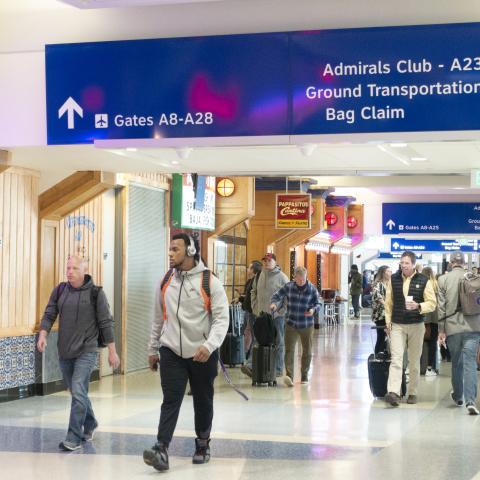
Image via Just the News
DFW Airport Foot-Wash Stations: Private Money, Public Space, and a Cultural Flashpoint
Just the News reports that bathrooms at Dallas-Fort Worth International Airport are set to include Islamic ritual foot wash stations, privately funded and projected around $300,000 based on regulatory filings. Airports are complicated public-private ecosystems, but they’re also civic symbols. When changes touch religion and culture, you can guarantee the debate won’t stay confined to plumbing specs.
On one hand, major airports already accommodate all kinds of needs: family rooms, nursing rooms, chapels, accessibility upgrades, and international traveler services. On the other hand, travelers and taxpayers have a fair question: what standard is being used to approve specialized religious accommodations, and is it being applied evenly across faiths and across the broader needs of the traveling public?
Even when a project is privately funded, it still consumes space, maintenance capacity, and administrative attention. And in a world where airports are constantly hiking fees and struggling with operational reliability, people want to know whether leadership is focused on throughput, safety, cleanliness, and cost control first.
🏛 Wade's Take: I’m fine with private philanthropy, but public facilities need neutral rules that don’t play favorites and don’t turn airports into culture-war billboards. If DFW is going to approve faith-specific installations, the policy should be transparent, consistent, and paired with a commitment to top-tier maintenance and core operations. The priority at an airport is moving people safely and efficiently, not signaling.
That’s the roundup. Keep your head on a swivel, your balance sheet conservative, and your principles non-negotiable. See you next issue. Wade Lawson
— Wade Lawson