Sponsored By:
Gold's rally isn't over — and institutional investors know it. As economic uncertainty, rising debt, and shifting fiscal policy reshape the financial landscape, smart savers are turning to physical gold held inside tax-advantaged IRAs to protect what they've spent a lifetime building. The window isn't closed. But it won't stay open forever.
The Reagan Gold Group Wealth Protection Guide shows you exactly how physical gold can legally and tax-efficiently anchor your retirement — covering IRS-approved assets, portfolio strategies, and why experienced investors are repositioning now before markets shift further. Get the clarity you need to act with confidence.
Get Your FREE Wealth Protection GuideThis is an advertisement. Reagan Gold Group does not provide financial, legal, or tax advice. This information is for educational purposes only and should not be considered investment advice. All investments carry risk, including loss of principal. Past performance is not indicative of future results. Consult your licensed financial advisor before making investment decisions. If you no longer wish to receive this promotional message, please Unsubscribe. Or write to: 2029 Century Park E Suite 400, Los Angeles, CA 90067.

Washington and the courts are moving fast, and the ripple effects land right where conservatives live: safety, sovereignty, election confidence, and the everyday costs that hit families and small businesses first.

Image via NTD
The Air Force Just Confirmed Weapons in Space — and That Changes the Scoreboard
The Air Force says it has deployed weapons in space, a statement that would’ve sounded like science fiction when I was starting out signing my first leases. Now it’s being talked about in the open, which tells you two things: first, the capability is real; second, the threat environment is bad enough that they want adversaries to hear it loud and clear.
From an economic standpoint, this is the next phase of defense spending and a major shift in what we’re protecting. Satellites aren’t just military toys anymore; they’re the backbone of communications, navigation, banking timestamps, shipping logistics, precision agriculture, and the way markets move information in real time. If space becomes a contested battlefield, you’re not just talking about national security, you’re talking about systemic risk for the entire economy.
For investors, the obvious knock-on is more money flowing to aerospace, launch providers, cybersecurity, and the companies building hardened communications and redundancy. But it also means higher baseline federal spending for a long time, and that matters for rates, deficits, and the cost of capital every business owner feels when it’s time to refinance.
🏛 Wade's Take: I’d rather deter a fight than pay for one, and deterrence only works if the other guy believes you can and will defend what matters. Space is now critical infrastructure, and pretending it’s off-limits doesn’t protect a single American paycheck. The real conservative job here is accountability: spend what’s necessary, audit it like a hawk, and make sure we’re building capability, not just feeding contractors.
📎 NTD

Image via Western Journal
Supreme Court Puts NYC on the Spot Over Its Stun Gun Ban
The Supreme Court has ordered New York City to answer for its stun gun ban after Second Amendment groups pushed back, and the city apparently tried to duck a straight-up legal challenge. When the high court is telling you to show your work, that’s not a great sign your policy can survive daylight.
This isn’t just a culture-war argument. Stun guns are commonly viewed as a defensive tool, especially for people who can’t physically match a criminal or don’t want to carry a firearm. Cities love to talk about safety, but when they restrict lawful self-defense while crime and disorder push people out, they’re also undermining property values, business confidence, tourism, and the very tax base they depend on.
For anyone who owns property or runs a storefront, the pattern is familiar: regulators create a controlled environment on paper, but real life doesn’t cooperate. When citizens feel unprotected and unheard, they move, and capital moves with them.
🏛 Wade's Take: If a city can’t keep its streets safe, it shouldn’t be in the business of disarming the law-abiding. I’m all for reasonable rules, but blanket bans that ignore constitutional protections and practical reality are how you bleed residents and investment. New York needs to focus less on restricting citizens and more on locking up repeat offenders.
Image via The Daily Signal
Google, Politics, and the SAVE America Act: The Information Fight Is the Real Fight
A Daily Signal piece argues that Google and the broader information gatekeepers are shaping how voters perceive the SAVE America Act and where Republican candidates stand on it. The complaint is familiar by now: the Left doesn’t just campaign, it curates what people can easily find, what gets labeled “extreme,” and what disappears into the search results basement.
Whether you love or hate any specific bill, the bigger issue for the market and the country is narrative control. When information flows are tilted, elections become less about persuasion and more about filtration, which erodes trust and increases volatility. Businesses hate uncertainty, and nothing creates uncertainty like a system where half the country thinks the other half is being manipulated.
This also has a direct investor angle. The same tech platforms that can steer political narratives can steer consumer behavior, ad markets, and the fate of competing businesses. That’s not just politics; that’s market power, and it’s why antitrust and platform accountability won’t go away.
🏛 Wade's Take: If a company can quietly tilt what citizens can easily learn about major legislation and candidates, that’s not “just a private business decision” anymore; it’s civic infrastructure with no election-day oversight. Conservatives need to stop acting shocked and start building alternatives while pushing for transparency rules that apply to everyone. Sunlight doesn’t pick parties, it just exposes games.

Image via The Hill
Patel Faces the Senate as Courts Keep Election Rules in the Crosshairs
The Hill reports that FBI Director Kash Patel is appearing before the Senate Judiciary Committee for an oversight hearing, with attention on what the bureau is prioritizing and how it’s handling politically sensitive matters. Oversight hearings are usually theater, but the stakes are real when public confidence in institutions is already frayed.
In the same stream of developments, the report notes that the justices halted President Trump’s mail-in voting plan. Whatever side you’re on, election procedure fights are now a permanent feature of American politics, and they carry practical consequences: litigation costs, shifting compliance burdens for counties, and constant uncertainty for campaigns and donors.
Markets price stability. When election rules are being fought over in real time, it feeds the sense that outcomes depend on procedure as much as persuasion. That’s bad for civic health and bad for business, because it keeps half the country convinced the system is being gamed.
🏛 Wade's Take: We need law enforcement to be boring again: focused on crime, foreign threats, and public safety, not playing tag with politics. And we need election rules that are clear, constitutional, and consistent well before ballots go out, not stitched together midstream by judges and emergency motions. Confidence is an asset; when Washington spends it, the whole country pays the premium.
📎 The Hill
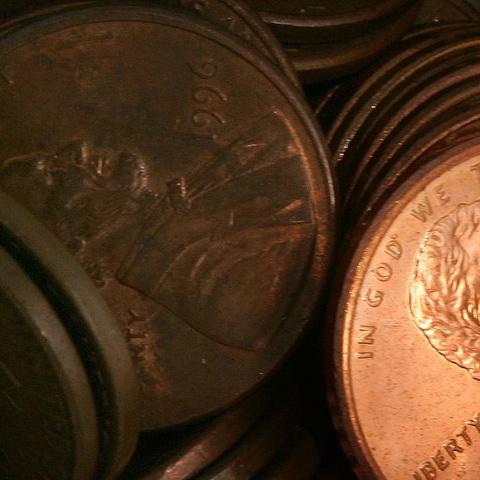
Image via Just the News
House Votes to Kill the Penny — Small Change, Big Signal About Costs
The House voted to permanently eliminate the penny, following the Mint’s move to stop producing pennies in late 2025. On the surface, it’s common sense: if a coin costs more to make than it’s worth, you’re literally manufacturing a loss.
But don’t miss what’s underneath. This is also a quiet admission that inflation has done real damage to the usefulness of our money in daily life. When a denomination that lasted 232 years becomes functionally pointless, that’s not just modernization, that’s the purchasing power of the dollar getting hollowed out.
For small businesses, the operational question is rounding and pricing. Most customers won’t notice much day to day, but retailers will need clear rules so cash handling doesn’t turn into another compliance headache. And for investors, it’s one more reminder that hard assets and pricing power matter when policymakers treat currency like an afterthought.
🏛 Wade's Take: I’m fine with ending the penny, but let’s tell the truth: the penny didn’t fail America, Washington’s spending and inflation did. If lawmakers want to clean up small change, they ought to show the same courage cleaning up the federal budget. Until then, families will keep paying the hidden tax at the grocery store, the gas pump, and the rent office.
I’m Wade Lawson. Keep your head on straight, your balance sheet clean, and your eyes on where the money moves — because politics always follows it.
— Wade Lawson