Sponsored By:
History shows a clear pattern: the investors who recognized the exact inflection point in the dot-com boom pocketed 400–800% gains in 18 months. Those who spotted the same moment in cloud computing saw 300–600% returns. Based on 50 years of market data, that same moment is happening right now — and the acceleration phase has already begun.
This free 7-page report reveals where we are in the current megatrend cycle, why the next 18 months are critical, and how to position yourself before the window closes. Don't be the investor who enters too late.
Get the Free ReportBy clicking 'Get the Free Report' you are automatically subscribing to Darwin Investor Network and will receive a free subscription to the Chaikin PowerFeed newsletter. Unsubscribing is easy. Privacy Policy

Today’s lineup runs from election-season guardrails to food-stamp courtroom fights, a warning about foreign help for domestic radicals, a hot Michigan Senate race, and the Army’s front office changing hands again.

Image via NTD
Top General: No Plans to Put Troops at Polling Places This November
The Chairman of the Joint Chiefs of Staff, Gen. Dan Caine, told senators he has no plans to deploy U.S. troops to polling sites in November. That statement matters because once you even float the idea of soldiers near the ballot box, you’re playing with gasoline in a room full of matches. Americans need elections that are secure and trusted, but they also need them to look and feel civilian, local, and normal.
From a business perspective, stability is an asset. Markets price risk fast, and nothing spikes risk like political uncertainty. If folks think elections are being “managed” with uniforms and hardware, you’ll see it in consumer confidence, hiring decisions, and the cost of capital—especially for small operators who don’t have big corporate cushions.
The better path is boring competence: clean voter rolls, clear rules, strong chain-of-custody for ballots, and consequences for fraud. You don’t fix trust with theatrics; you fix it with process, transparency, and local accountability.
🏛 Wade's Take: Keep the military out of civilian elections, period. If a state can’t secure polling places with local law enforcement and clear procedures, that’s a governance failure—not a reason to call in the Pentagon. Trust is the real currency here, and once it’s spent, the economy pays the bill.
📎 NTD

Image via The Western Journal
SNAP Junk-Food Limits Hit the Brakes as Federal Courts Step In
Efforts in two states to restrict what can be bought with SNAP benefits—specifically targeting junk food—are on hold after court rulings. The push behind these rules is straightforward: taxpayers are funding a program meant to fight hunger, not bankroll soda and candy habits that drive long-term health costs. But when states try to draw the line, they run straight into federal rules, administrative law, and lawsuits.
This is what happens when a safety-net program becomes a massive, permanent piece of the consumer economy. Grocery chains, food manufacturers, and lobbyists know exactly what’s at stake. For local grocers and convenience stores, SNAP dollars can be the difference between a decent month and a bad one, especially in lower-income neighborhoods.
There’s also a practical question: if you ban certain products, who decides what counts as “junk,” and how quickly do those definitions get politicized? One administration’s “nutrition” list becomes the next administration’s social engineering experiment. Courts are now the referee because the rules weren’t built for fifty different state experiments inside a federal program.
🏛 Wade's Take: I’m sympathetic to the idea that public assistance should prioritize real food, but I don’t trust bureaucrats and judges to build a clean, fair list that won’t turn into endless litigation and backdoor control. If states want flexibility, Congress should reform SNAP honestly instead of leaving governors to fight federal agencies in court. And if we’re serious about outcomes, work requirements and local job growth will do more than arguing over whether chips count as groceries.

Image via PJ Media
Cut the Wiring: Target the Foreign Hands Helping Domestic Extremists
A new argument making the rounds is that we can’t treat domestic extremism like it’s sealed inside our borders when foreign actors can fund, amplify, and coordinate it from afar. The point isn’t just “bad people on the internet.” It’s logistics: money flows, encrypted platforms, front groups, propaganda operations, and sometimes direct encouragement from hostile regimes or transnational networks.
If you want to reduce political violence, you don’t just chase the foot soldiers; you go after the supply chain. That means better financial intelligence, tougher scrutiny of NGOs and shell entities that act as pass-throughs, and a serious look at how foreign influence campaigns piggyback on American social media and nonprofit ecosystems.
But there’s a tightrope here. A government that claims it’s hunting foreign enablers can quickly slide into policing speech and branding political opposition as “extremist.” That risk is real, and conservatives have watched it happen. The goal has to be targeted enforcement against actual criminal coordination and illegal foreign funding, not a new excuse to harass lawful dissent.
🏛 Wade's Take: Follow the money and the foreign coordination, not the talking points. If a hostile actor is wiring cash, tools, or direction into American chaos, that’s a national security problem and it should be treated like one—using due process and clear standards. The minute this turns into speech policing, it becomes just another weapon aimed at regular citizens.
📎 PJ Media
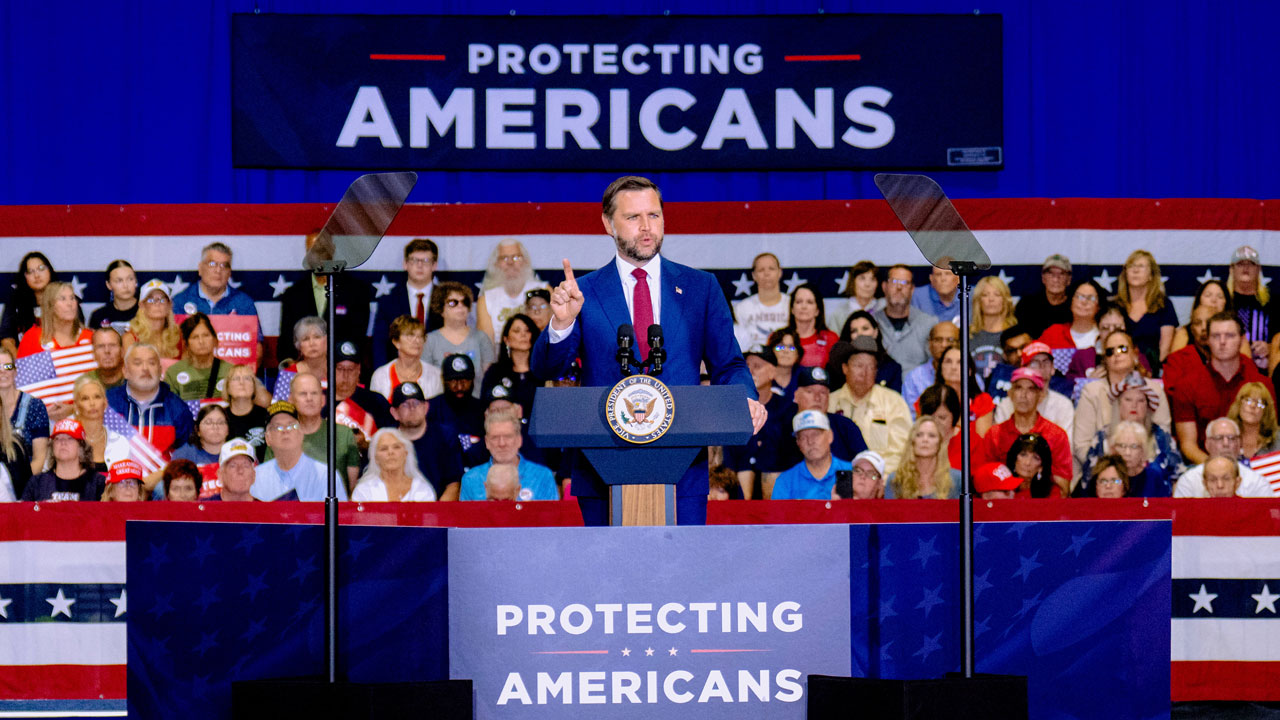
Image via The Daily Signal
Vance Turns Up the Heat in Michigan: ‘This Is What’s Taking Over the Democrats’
At a rally in Michigan, Vice President JD Vance blasted Democrat Senate nominee Abdul El-Sayed, warning he represents an “evil” he says is overtaking the Democratic Party. Campaign rhetoric can get sharp, but the underlying fight is familiar: whether the country’s direction is ordered liberty and opportunity, or a top-down system that treats everyday Americans like units to be managed.
Michigan isn’t just a political battleground; it’s an economic one. The state sits at the intersection of manufacturing, autos, energy policy, and labor markets. Whoever wins seats there has a real say in what happens to permitting, taxes, trade posture, and the cost structure for factories, suppliers, and the small businesses that live off those payrolls.
When national figures frame an opponent as a symbol, they’re trying to nationalize a local race. That can drive turnout, but it also raises the stakes for investors and employers who want predictable policy. If Washington pushes more regulatory weight onto energy, transportation, and employers, states like Michigan feel it fast—and the ripple hits property values, local tax bases, and consumer spending.
🏛 Wade's Take: Name-calling alone won’t fix a thing, but Vance is right to make the election about consequences. The Democrats’ modern playbook is more control, higher costs, and more “expert” oversight for people who already know how to run their lives. If Republicans want to win Michigan, talk wages, energy prices, permitting, and the dignity of work—then back it with policies that actually lower the cost of doing business.
Army Secretary Dan Driscoll Steps Down After 18 Months, Adding to Pentagon Turnover
The White House says Army Secretary Dan Driscoll is stepping down after about 18 months on the job. Leadership changes at the top of the Army matter because they touch everything from procurement priorities to readiness to how bases and contractors plan their next two to five years.
For communities like mine across the South, defense spending isn’t abstract. It’s jobs, industrial contracts, local real estate demand, and small businesses that serve families tied to the military. When leadership turns over quickly, long procurement cycles get even more uncertain, and that uncertainty trickles down to suppliers, staffing, and capital investment.
The Army is also staring down recruitment and retention pressures, modernization decisions, and global risk that isn’t going away. Stability and clarity at the top help the rank-and-file and the private sector partners who build, house, and supply what the force needs. Constant churn makes everyone more cautious, and caution is expensive.
🏛 Wade's Take: Eighteen months is barely enough time to learn where the bodies are buried, let alone fix the big problems. The Army needs steady management that treats readiness and accountability like non-negotiables, not talking points. If Washington wants better results, it should stop treating top defense roles like political pit stops and start rewarding long-term execution.
📎 AP News
That’s the rundown. Mind your costs, keep cash flow king, and don’t let Washington noise distract you from the basics: security, stability, and policies that let working people build something real.
— Wade Lawson