Sponsored By:
In 1971, Nixon ended the gold standard in a single 15-minute broadcast — no warning, no debate. Gold tripled in 3 years and rose 20x over the next decade. The people who saw it coming protected their wealth. Everyone else watched their savings quietly erode. History may be about to repeat itself. Trump holds the same executive authority Nixon used — and his own advisors are now openly saying a reversal is on the table.
Reagan Gold Group has put together a free briefing covering exactly what Nixon did, why Trump is the first president positioned to undo it, and the one move you can make right now to be on the right side of what comes next. Free. 30 seconds to request. Don't wait for the Sunday night broadcast.
Get the Free Briefing NowReagan Gold Group does not provide financial, legal, or tax advice. This information is for educational purposes only and should not be considered investment advice. All investments carry risk, including loss of principal. Past performance is not indicative of future results. Consult your licensed financial advisor before making investment decisions. This is an advertisement. If you no longer wish to receive this promotional message, please Unsubscribe. Or write to: 2029 Century Park E Suite 400, Los Angeles, CA 90067.

Five stories today that all point to the same truth: politics isn’t theater. It’s power, and power shows up in markets, permitting offices, border crossings, and your cost of doing business.
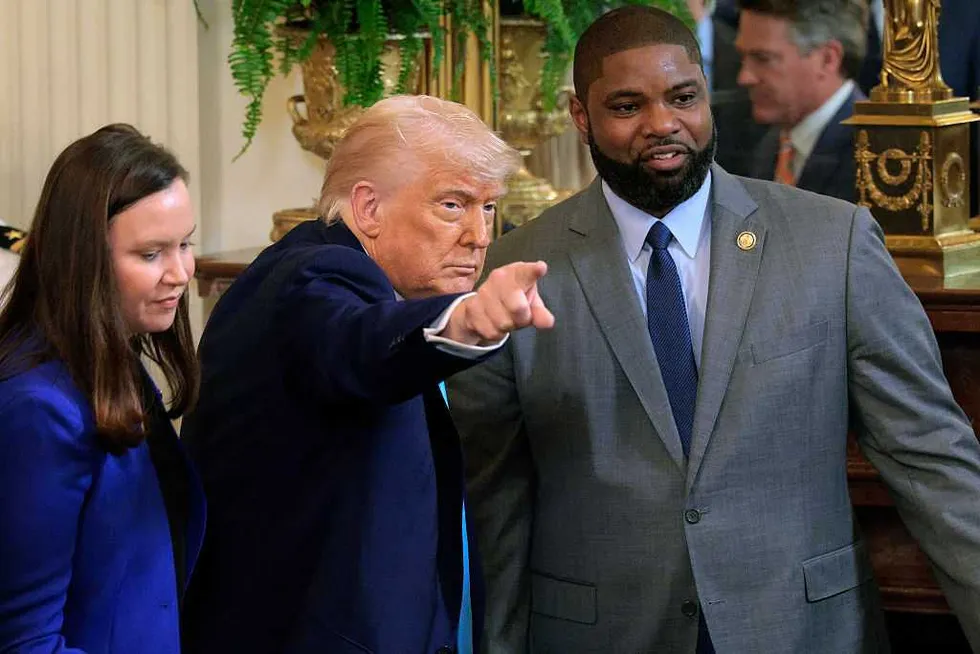
Image via TheBlaze
Trump-Endorsed Candidate Wins a High-Stakes Governor’s Primary
A bruising gubernatorial primary wrapped Tuesday night with a clear result: another Trump-backed candidate came out on top in one of the season’s most closely watched fights. The win adds to the former president’s growing list of endorsements that have turned into nominations, even when local party elites and big donors lined up the other way.
The immediate impact is inside the party. It signals that Republican primary voters still want a fighter brand, and they’re using the primary process to enforce it. The longer-term impact is the general election map: a nominee coming out of a contentious primary has to stitch the coalition back together fast, raise real money, and pivot from intraparty combat to persuasion voters who care less about slogans and more about prices, jobs, and safety.
In business terms, endorsements are leverage. And in this case, the leverage is still working where it counts: at the ballot box.
🏛 Wade's Take: If you’re a Republican who wants to win, you don’t get to ignore the customer, and the customer is the primary voter. But after a hard primary, the nominee’s next job is boring, grown-up work: talk about the economy like a CFO, not a talk-show host. Win the base, then win the middle with a plan that lowers energy costs, cuts regulatory drag, and makes it easier to hire without getting sued into bankruptcy.
📎 TheBlaze

Image via The Daily Signal
Florida’s Primaries Deliver a Warning Shot as a Socialist Upset Lands
Florida’s Tuesday primaries covered the usual mix of local, state, and federal contests, but one surprise result drew the national spotlight: a self-identified socialist candidate backed by the Democratic Socialists of America pulled off a notable upset. The outcome underscores something conservative business owners have felt for a while: the Democratic coalition has real internal momentum shifting toward candidates who talk openly about expanding government control over prices, housing, labor, and energy.
Even in a pro-business state, the activist left can win low-turnout primaries with disciplined ground games, targeted messaging, and donors who understand that local offices and congressional seats are where policy starts. From there, it’s not a huge leap to statewide pressure campaigns on rent regulation, “free” public programs that aren’t free, and rules that make private investment feel like a public utility.
Florida is often a bellwether for where national politics is headed because it’s a big state with real economic diversity. When the far left starts stacking wins there, it’s a signal, not a fluke.
🏛 Wade's Take: Socialism doesn’t show up wearing a hammer and sickle anymore; it shows up as “fairness” paired with regulations that crush small owners and hand the market to the biggest players who can afford compliance. If you own property or run a business, pay attention to local races the way you pay attention to insurance renewals and property taxes, because that’s where your margins get decided. Conservatives win by making the case for opportunity and affordability through growth, not government control.

Image via NTD
Texas Border Bust Stops Nearly $15 Million in Meth, and It’s Not Just a Crime Story
Border agents intercepted a major methamphetamine load at the Texas border in Pharr, with authorities valuing the seizure at nearly $15 million. The encounter, dated Aug. 15, is another reminder that the drug trade is not a side hustle for cartels; it’s a core revenue line with industrial logistics.
On the ground, these seizures matter because every shipment stopped is poison kept out of communities. But for the broader economy, it’s also a story about capacity and control: when enforcement is stretched thin, criminal networks treat the border like a business environment with predictable gaps.
Communities pay for that in healthcare costs, law enforcement strain, lost productivity, and the kind of instability that drags down neighborhoods and property values. You can’t build wealth in a place that doesn’t feel safe.
🏛 Wade's Take: If this much product is being caught, you can bet plenty is slipping through, and that should make every taxpayer mad. Secure borders aren’t a “political talking point”; they’re basic infrastructure for a functioning economy and stable communities. We need enforcement that’s resourced, supported, and allowed to do the job, plus policy that stops incentivizing chaos.
📎 NTD
Alaska’s Senate Race Takes Shape: Sullivan vs. Peltola After the Primary
Sen. Dan Sullivan and former U.S. Rep. Mary Peltola are moving into the next phase of Alaska’s U.S. Senate contest after advancing from the state’s primary, setting up a high-profile campaign with national implications. Alaska’s election system and unique political terrain can produce unusual matchups, but the stakes are straightforward: energy, federal land policy, fisheries, and the balance of power in Washington.
For investors and operators watching from the Lower 48, Alaska is always a policy canary. When Washington clamps down on development, permits, and access, Alaska feels it first and hardest. When development is encouraged, it’s a jobs engine that echoes through supply chains, shipping, and energy markets.
Expect both campaigns to talk “cost of living” and “local control,” because in Alaska those aren’t slogans. They’re survival issues, and they connect directly to fuel prices, infrastructure, and whether private enterprise is treated as a partner or a problem.
🏛 Wade's Take: The Senate isn’t just about speeches; it’s about whether the U.S. is serious about domestic energy and strategic resources. If we want lower prices and a stronger national posture, we need senators who will fight for permitting reform and against the regulatory slow-walk that kills projects quietly. Alaska should be a powerhouse, not a paperwork museum.

Image via RedState
Trump Pauses Canada Tariffs as Keystone XL Talk Re-Emerges
A new twist hit the U.S.-Canada trade front: President Trump has reportedly hit pause on certain Canada tariffs while Keystone XL is back in the conversation. The linkage matters because tariffs aren’t just political weapons; they’re price signals that ripple through construction materials, manufacturing inputs, and cross-border investment decisions.
The mention of Keystone XL is the bigger economic tell. Pipeline capacity affects North American energy pricing, refinery feedstock logistics, and the stability of supply that businesses rely on. When energy transport is constrained, you don’t just feel it at the pump; you feel it in freight, in fertilizer, and in the operating costs that squeeze every small business.
A tariff pause paired with energy infrastructure bargaining is classic dealmaking: apply pressure, then trade it for something tangible. Markets tend to like clarity, and businesses like predictability even more.
🏛 Wade's Take: I’m fine with tariffs as leverage, but they’re a tax you pay in the meantime, and small businesses always pay first. If this pause is part of a serious push to expand North American energy infrastructure, that’s a pro-growth trade I can understand, because cheaper, steadier energy lifts every sector. The end goal should be simple: lower input costs, stronger supply chains, and fewer Washington-made bottlenecks.
📎 RedState
That’s the Wednesday read. Keep your head on a swivel, your debt matched to your cash flow, and your politics focused on what actually moves prices. Wade Lawson, The Local Conservative
— Wade Lawson