Sponsored By:
Global tensions are quietly reshaping the market — and Street Ideas has identified three under-the-radar small-cap stocks tied to defense infrastructure, energy security, and next-generation technology that are already starting to move.
These shifts don't wait. Our free Market Themes Report breaks down exactly what's happening, why these sectors are heating up, and which three small-caps are appearing on our radar right now — before the crowd catches on.
Get the Free Market Themes Report*We encourage readers to perform their own research and due diligence on any information we provide. By clicking the link you will automatically be subscribed to the Street Ideas Newsletter.

Five stories, one lens: what moves markets, payrolls, property values, and America’s leverage abroad.
Image via AP News
From Peace Talks to Pennsylvania: Trump Hits a Mack Truck Floor, Not a Ballroom
President Trump is heading to a Mack Truck facility in Pennsylvania, and that’s not just a campaign-style photo op — it’s a signal about priorities. When a president shows up on a factory floor, he’s talking to wage earners, suppliers, and the towns that live or die by real production, not the consultant class.
For business owners and investors, manufacturing visits are a shorthand for what’s coming next: procurement decisions, trade posture, energy policy, and labor rules that either expand the productive base or choke it off. In a mid-sized Southern city like mine, you can feel those ripple effects fast — higher freight volumes, more warehouse demand, more industrial service contracts, and better household formation that supports retail and housing.
🏛 Wade's Take: I’ll take a president who goes where the payrolls are. If Washington wants to talk about “economic dignity,” start by making it profitable to build and ship things again — then get out of the way with taxes and red tape. Industrial growth isn’t a slogan; it’s lease demand, truck traffic, and families who can afford a mortgage.
📎 AP News
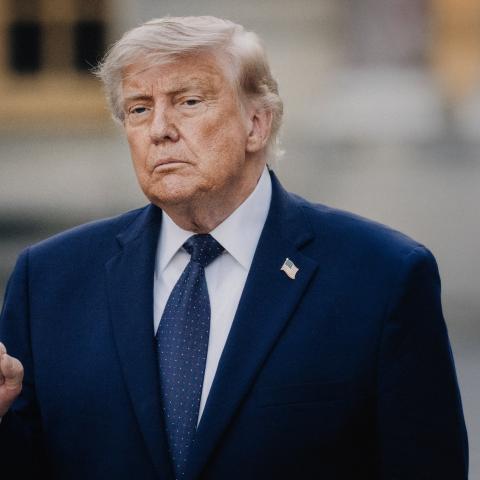
Image via Just the News
Hormuz Re-Opens: Trump Claims Iran Chooses “Nuclear Honesty” — Energy Markets Exhale
Trump says the Strait of Hormuz is open after Iran agreed to what he called “nuclear honesty,” including allowing inspectors back in. He also knocked the media for downplaying the importance of inspectors re-entering the country, framing the deal as a concrete step toward verification instead of vibes.
If this holds, it matters immediately for fuel prices, shipping insurance, and risk premiums across global markets. The Strait of Hormuz is a choke point where headlines turn into real invoices: diesel for contractors, jet fuel for travel, plastics and chemicals for manufacturers, and the overall inflation pulse that the Fed watches when it decides how hard to squeeze the economy.
🏛 Wade's Take: Energy stability is a working-family issue and a small-business survival issue, period. Verification beats speeches — but I’m not hanging a banner until inspectors are actually on the ground and the results are public and enforceable. If this reduces the risk premium in oil, that’s like an instant tax cut for everybody who moves goods or runs equipment.
Vance vs. the Neocons: A New GOP Foreign Policy Coalition Takes Shape
The American Conservative argues Vice President J.D. Vance is “infuriating the neocons” by putting Israel “in its place,” signaling a more restrained posture and a tougher, interest-first tone. The piece frames it as Vance making the right people mad — the folks who treat every overseas conflict like a blank check that never comes due back home.
There’s a business angle here that Washington pretends not to see: foreign policy sets the temperature for energy, defense spending, shipping lanes, sanctions regimes, cyber risk, and the value of the dollar. The more chaotic and open-ended our commitments, the more uncertainty gets priced into everything — from equities to cap rates on commercial buildings.
🏛 Wade's Take: I’m for allies, but I’m against “forever invoices.” If Vance is pushing a doctrine where America supports friends while demanding accountability and clear objectives, that’s healthier than reflexive interventionism. The conservative position should be strong, smart, and solvent — not sentimental and broke.

Image via American Thinker
Climate Alarmism Takes a Hit: The Worst-Case Scenario Loses Credibility
American Thinker points to the climate scenario that powered a decade of the loudest alarmism and says it’s no longer considered plausible. The argument is that some of the most extreme projections were built on assumptions that don’t match observed trends and evolving scientific assessments, undermining the justification for emergency-policy economics.
Even if you believe in climate risk — and any serious investor prices risk — policy built on exaggerated models can do real damage. It pushes capital into politically favored projects regardless of return, raises utility costs, punishes domestic energy production, and drives up construction and compliance expenses that hit renters, homeowners, and small employers first.
🏛 Wade's Take: This is why conservatives keep saying: show your work. If the scariest scenario isn’t credible, then the mandates, subsidies, and prohibitions built on it need a hard reset. I want clean air and efficient technology — but I don’t want my community paying luxury prices for ideological power grids.
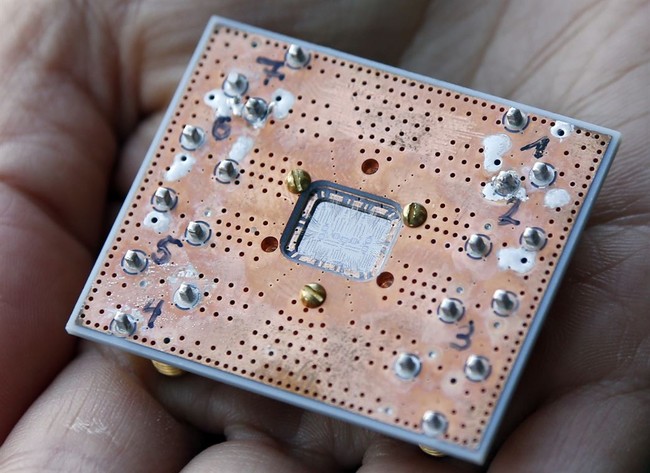
Image via RedState
Trump’s Quantum Sprint: A “Sputnik Moment” With Real Stakes for Markets and National Security
RedState reports Trump is launching a major quantum push aimed at beating China by 2028, casting it as a modern “Sputnik” race. The framing is blunt: treat advanced computing as a strategic priority and move with urgency, not committee meetings.
Quantum isn’t just a science-fair project — it’s the kind of platform shift that can redraw competitive advantage. Breakthroughs could change optimization in logistics, materials science, drug discovery, and especially encryption. And the second quantum threatens current cryptography at scale, financial systems, defense systems, and corporate data all face a very expensive upgrade cycle.
🏛 Wade's Take: I like big, clear goals when the target is China and the prize is technological leadership. But here’s the conservative requirement: spend like an owner, not like a bureaucracy — milestone-based funding, private-sector competition, and zero tolerance for grant-chasing fluff. If Washington gets this right, investors will find the winners in semiconductors, cybersecurity, and next-gen computing infrastructure.
📎 RedState
That’s the rundown. Build things, verify deals, stop paying for fantasies, and invest like the future is competitive — because it is. — Wade Lawson, The Local Conservative
— Wade Lawson