Sponsored By:
History shows a clear pattern: the investors who recognized the exact inflection point in the dot-com boom pocketed 400–800% gains in 18 months. Those who spotted the same moment in cloud computing saw 300–600% returns. Based on 50 years of market data, that same moment is happening right now — and the acceleration phase has already begun.
This free 7-page report reveals where we are in the current megatrend cycle, why the next 18 months are critical, and how to position yourself before the window closes. Don't be the investor who enters too late.
Get the Free ReportBy clicking 'Get the Free Report' you are automatically subscribing to Darwin Investor Network and will receive a free subscription to the Chaikin PowerFeed newsletter. Unsubscribing is easy. Privacy Policy

Five stories that all point to the same truth: politics isn’t theater when it changes the risk, the rules, and the price of doing business.
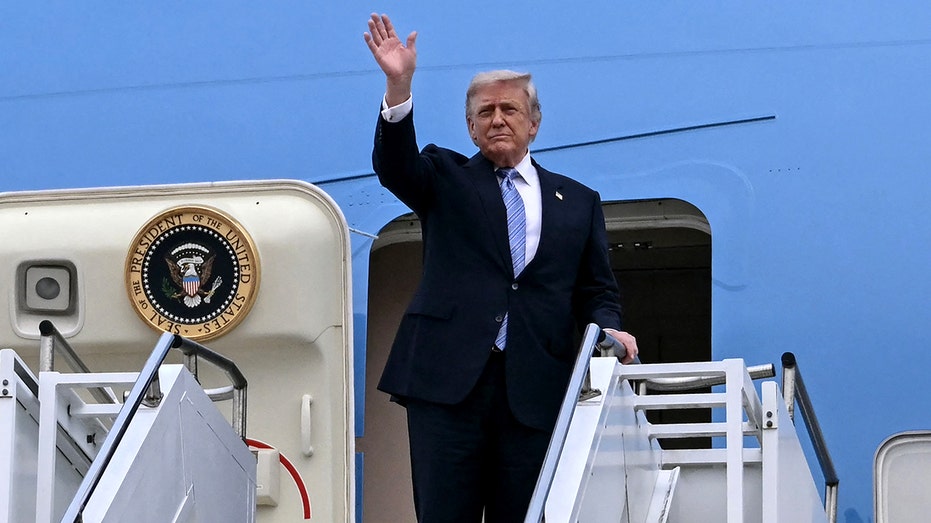
Image via Fox News
Trump Warns Iran Has Him in the Crosshairs as Security Questions Swirl
At the NATO summit, President Trump repeatedly said Iran considers him its "No. 1" assassination target, framing renewed Middle East tensions as a direct personal threat as well as a national security flashpoint. The reporting also notes a mysterious aircraft switch involving Air Force One that raised alarms and fed a wave of speculation about elevated security measures.
Whether you love Trump or can’t stand him, this is the kind of headline that moves markets and changes behavior. When leaders start talking openly about assassination risk, you get higher security costs, tighter travel protocols, and a nervous system reaction across energy, defense, and global risk assets.
And for the average American business owner, geopolitical instability isn’t some faraway chess match. It shows up in fuel costs, insurance premiums, supply chain delays, and the general “everybody hold your breath” mood that freezes hiring and expansion decisions.
🏛 Wade's Take: If Iran is truly running a target list, then the right response isn’t cable-news panic, it’s cold, disciplined deterrence and hardening security without telegraphing every move. The bigger issue is credibility: when our enemies believe America won’t respond decisively, they get bolder and your cost of living goes up with every barrel of crude. Washington needs to treat this like a real threat to national stability, not a storyline.
📎 Fox News

Image via The Blaze
Alaska Airlines Finds Out: HR Ideology Can Turn Into a Lawsuit Fast
A new commentary highlights the legal fight involving Alaska Airlines flight attendants Marli Brown and Lacey Smith, describing it as a cautionary tale about what happens when corporate culture shifts from "professional standards" to ideological enforcement. The core claim is that religious convictions and dissenting views were treated as a liability instead of something a free society and a mature employer can accommodate.
Corporate America has spent the last decade acting like the workplace is a political seminar. But planes don’t fly on slogans, and businesses don’t run on mandatory groupthink. When management chooses to police speech and beliefs instead of performance, they’re not just picking a side in the culture war; they’re inviting regulatory scrutiny, legal exposure, and internal mistrust.
Investors should pay attention, too. Legal turbulence creates reputational risk, customer backlash, employee turnover, and training costs, all of which hit margins in an industry where margins are already thin and operational reliability is everything.
🏛 Wade's Take: If you’re running a company, your job is to deliver a product safely and profitably, not to audition for the next activist headline. The moment HR starts punishing people for mainstream religious beliefs, you’ve turned your workforce into a liability and your brand into a target. Smart management focuses on conduct and competence, and lets adults be adults.

Image via Washington Examiner
Washington Finally Stares Down Big Tech on Kids, and Silicon Valley’s Sweating
An opinion piece argues that Big Tech’s "worst nightmare" is taking shape: a bipartisan consensus around children’s safety online. It points to a left-of-center group, Project 2029, tied to Sen. Cory Booker, making "Kids Over" policies its first priority, signaling that Democrats may be preparing to campaign on tougher rules for social platforms.
From a business perspective, this is the kind of regulatory risk that arrives quietly and then hits earnings all at once. If Congress and the next administration start treating addictive feeds, targeted ads to minors, and lax content controls as a bipartisan political winner, platforms could face new compliance costs, limits on data collection, and greater liability.
Parents already know the damage: attention, anxiety, pornography exposure, and algorithmic rabbit holes that don’t care what your kid believes or what your family values. The question isn’t whether there should be guardrails. The question is whether Washington can build them without creating a censorship machine that ends up aimed at conservatives and faith-based viewpoints.
🏛 Wade's Take: I’m for protecting kids, and I’m for putting real liability on companies that profit from digital harm, but I don’t trust Washington to stop there. The right approach is narrow, enforceable rules: age verification that actually works, transparency on algorithms, and real penalties for knowingly pushing harmful content to minors. If they try to use "child safety" as a back door to police political speech, conservatives should fight it like it’s a tax hike.

Image via NTD
ICE Detainer Filed After Haitian National Accused of Workplace Stabbing
ICE lodged a detainer against a Haitian national accused of stabbing a co-worker after an argument, according to reporting that focuses on the immigration enforcement angle following the alleged violent incident. A detainer typically signals federal immigration authorities want custody when local proceedings allow, especially if the person is removable under immigration law.
This is the part of the immigration debate that politicians love to dodge: the downstream costs when enforcement is inconsistent and communities are left to clean up the mess. Workplace violence is already a major risk for employers, and when immigration status, identity verification, and release decisions get tangled up in politics, the people paying the price aren’t lobbyists in D.C. They’re employees, small business owners, and local taxpayers.
It also hits property and community stability. Rising crime risk changes insurance pricing, hiring decisions, security spending, and commercial lease desirability. Businesses don’t invest where they don’t feel safe, and families don’t stay where government can’t keep order.
🏛 Wade's Take: A country that can’t control who’s here can’t guarantee basic public safety, and that’s not compassionate, it’s negligent. ICE detainers should be honored, period, and violent offenders who are here unlawfully should be removed after due process, not recycled back onto the street. The first civil right is the right of innocent people to live and work without fear.
📎 NTD

Image via Western Journal
NYPD Officer’s Brooklyn Bridge Rescue Reminds Us What Real Public Service Looks Like
Video coverage shows an NYPD officer rescuing a distressed woman who appeared ready to jump from the Brooklyn Bridge. In a moment where so much of the national conversation treats law enforcement as either villains or faceless bureaucracy, this was a clear example of a cop doing the hardest kind of job: saving someone from a decision they can’t take back.
We talk a lot about crime, but mental health crises are a major part of what police respond to every day. These situations demand courage, patience, and the ability to de-escalate in seconds with no script and no margin for error.
It’s also a reminder that the fabric of a city isn’t just policy; it’s people willing to run toward danger and tragedy when everyone else is backing away. That matters for civic confidence, tourism, investment, and the basic sense that a community is still held together by duty.
🏛 Wade's Take: Back the good cops, train them well, and stop pretending public safety is optional. This officer didn’t ask what her politics were, or whether the moment would look good on social media; he just did the job and saved a life. A society that can’t honor that kind of service isn’t serious about keeping communities intact.
That’s the roundup. Keep your eyes on risk, keep your powder dry, and don’t let Washington’s drama distract you from what really moves money: security, regulation, and whether your community is safe enough to build a life in.
— Wade Lawson