Sponsored By:
The biggest market moves rarely start with headlines — they start with early signals. Market Maven Insights has identified a developing trend tied to artificial intelligence, next-gen infrastructure, and shifting market leadership heading into 2026, and their brand-new research briefing breaks it all down. For a limited time, digital copies are available free.
Inside, you'll discover why analysts believe a new wave of market leadership may already be forming, how AI-driven growth themes are reshaping Wall Street, and how to spot momentum opportunities before they go mainstream. Once the headlines catch up — the early positioning window is already closed.
Download Your Free Research BriefingWe encourage readers to perform their own research and due diligence on any information provided. By clicking the link above, you will automatically be subscribed to the Market Mavens Newsletter. Privacy Policy.

Tuesday’s roundup looks at the money trail behind symbolism in D.C., the courts protecting the lawfare industry, why a bad Iran deal is worse than no deal, the corporate media’s panic over new management, and what Rubio and Blanche’s hearings signal for the next budget fights.
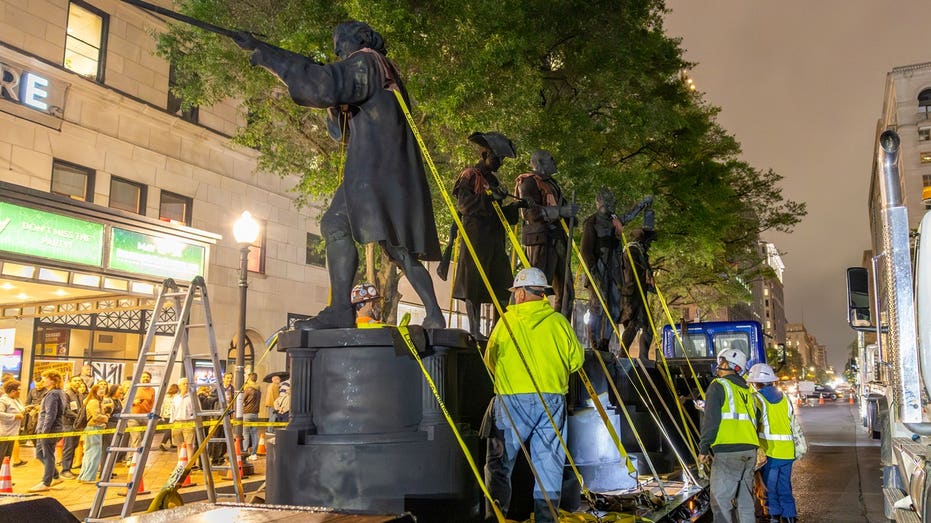
Image via Fox News
Trump Interior Turns a Protest Epicenter Into a Patriotic Landmark
The Trump administration’s Department of the Interior is remaking D.C.’s Freedom Plaza — a spot that became a national stage during the George Floyd protests — with a new patriotic installation featuring Caesar Rodney and Revolutionary War soldiers. The message is not subtle: this administration wants the capital’s public spaces to reflect the country’s founding story, not the last news cycle’s unrest.
Whatever you think of the politics, the practical impact matters. Cities signal “order” or “chaos” through how they manage prime public corridors, and that trickles straight into tourism, convention bookings, retail foot traffic, and the willingness of private capital to finance renovations. In commercial real estate, perception is a rent multiplier — especially in a town like D.C. where government is the anchor tenant for the whole regional economy.
There’s also a bigger point here about civic confidence. When public space is treated like contested territory, businesses price in risk and families opt out. When public space is treated like a shared front porch, people invest — with their time, their money, and their future.
🏛 Wade's Take: Symbolism isn’t “just symbolism” when it changes the temperature of a city. If D.C. wants to keep its hotels full and its storefronts leased, it needs stability and pride, not permanent protest theater. I’d rather see leaders honoring the country that built the marketplace than apologizing for it.
📎 Fox News
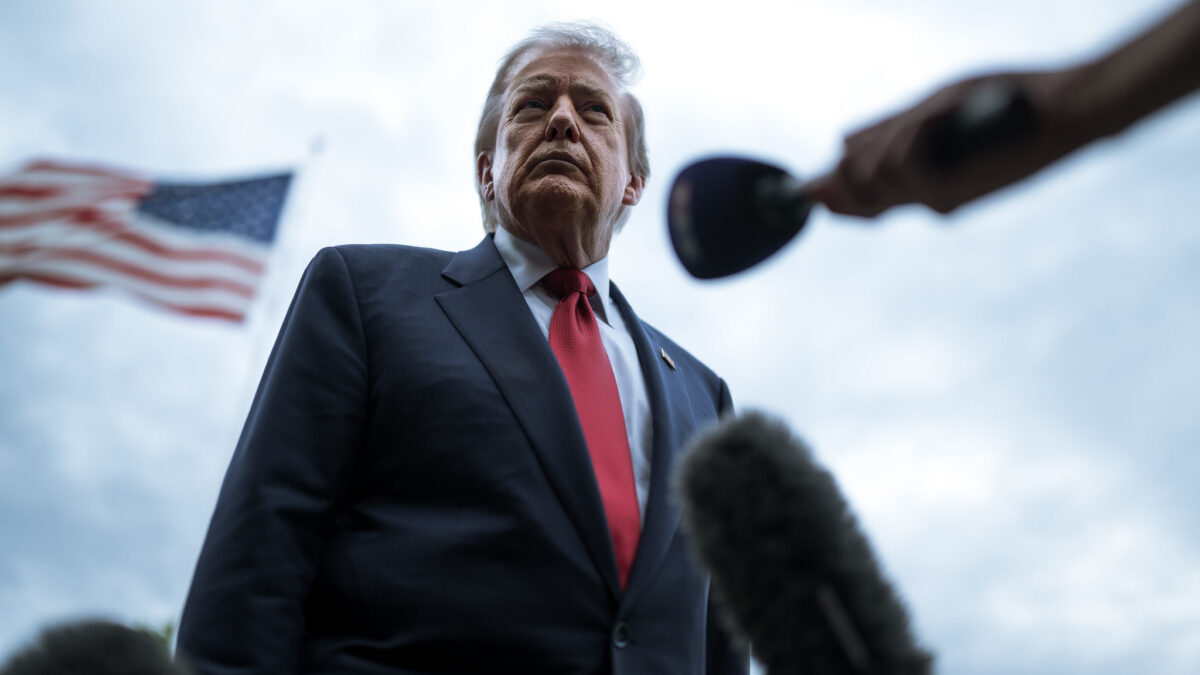
Image via The Federalist
A Judge Blocks “Lawfare Victims” Fund — Protecting the People Who Broke Trust
A federal judge, according to the report, sided with Democratic election-law attorney Marc Elias in blocking a fund intended to compensate victims of politically driven “lawfare.” The argument from opponents is wrapped in procedure and jurisdiction, but the core fight is simple: should people who were targeted by weaponized institutions have a pathway to be made whole?
From a business standpoint, this hits a nerve. If a regulator or prosecutor can drag you through years of legal bills and reputational damage, and then walk away with no accountability, you’ve created a moral hazard. That risk doesn’t stay in politics — it flows into hiring decisions, expansion plans, bank covenants, and whether entrepreneurs decide it’s worth being public-facing at all.
The real cost is the chilling effect. Communities lose candidates, nonprofits lose board members, and small-business owners keep their heads down because “getting involved” can become a financial death sentence.
🏛 Wade's Take: If the system can bankrupt you on a hunch and never pay a price when it’s wrong, that’s not justice — it’s a business model. Conservatives should keep pressing for due process reforms and fee-shifting in clear abuse cases. You want trust in institutions? Start by punishing the people who misuse them.

Image via National Review
Iran: No Deal Is Better Than a Bad Deal That Funds the Next War
National Review argues the U.S. doesn’t need a deal with Iran and warns that walking away — even with military risk — may be the lesser evil compared to signing a weak agreement. The case is that a bad deal buys “peace” today by purchasing bigger danger tomorrow: cash relief, legitimacy, and time for Iran to advance toward capabilities the world can’t un-invent.
Markets hate uncertainty, but they hate predictable self-sabotage even more. A deal that lifts pressure without permanently dismantling the threat is a layaway plan for future conflict — and future conflict shows up fast in energy prices, shipping insurance, defense outlays, and inflation. Every working family feels that at the gas pump; every small business feels it in delivery charges and margins.
A serious policy has to start with incentives. If Tehran’s leadership benefits from delay and deception, then paperwork won’t change outcomes. Deterrence, enforcement, and clear red lines do more to keep the peace than wishful diplomacy.
🏛 Wade's Take: I’m not interested in “a deal” as a press release. If it backstops Iran’s regime with money and time, you’re not preventing war — you’re financing it at a higher price later. Peace through strength isn’t a slogan; it’s the cheapest option over the long run.
Scott Pelley’s CBS Freak-Out Tells You Everything About the Media’s Power Panic
Townhall reports that CBS’s Scott Pelley had a public meltdown over Bari Weiss and Nick Bilton taking the reins at CBS. Strip away the theatrics and you see the fear: that a legacy newsroom might stop operating like a closed guild and start acting like a competitive business again.
Legacy media has enjoyed a protected-market mindset for years — captive audiences, prestige pricing, and “trust us” branding while ratings fell and credibility got auctioned off. When leadership shifts toward outsiders who value transparency and subscriber-style accountability, the old guard reads it as an invasion. But every other industry had to adapt. Newspapers, cable, and broadcast are not exempt from the laws of supply and demand.
For investors and advertisers, none of this is culture-war gossip. Brand safety and audience trust determine ad rates, distribution deals, and the valuation of media assets. If CBS is serious about rebuilding credibility, the loudest objections will come from the people most invested in the old playbook.
🏛 Wade's Take: When a veteran anchor melts down over management, it’s usually because the payroll story is changing. Media companies need to earn trust like everybody else — deliver value or lose customers. If Weiss and Bilton push CBS toward competition and away from narrative protection, that’s healthy for the whole information economy.
📎 Townhall

Image via The Hill
Rubio and Blanche Face the Hill: Budgets, Priorities, and the Next Fight Over Power
The Hill’s live coverage tracks Secretary of State Marco Rubio and Acting Attorney General Todd Blanche appearing before Senate panels in budget hearings. On paper it’s routine oversight. In reality, these hearings are where Congress telegraphs what it plans to fund, what it plans to starve, and which agencies it wants to steer — or restrain.
For the economy, State and Justice aren’t abstract line items. State affects sanctions, alliances, and trade posture — which ripple into commodities, defense manufacturing, and global risk pricing. Justice affects enforcement priorities, business confidence, mergers, and whether entrepreneurs believe the rules are predictable or political.
Watch the questioning for two things: whether lawmakers demand measurable outcomes for spending, and whether they press DOJ on politicization and process. Investors price countries on stability. Small-business owners live or die on it.
🏛 Wade's Take: Budget hearings are where “values” become invoices. I want Rubio talking results and leverage, not endless diplomatic overhead, and I want Blanche answering hard questions about equal justice under the law. If Washington can’t show discipline and neutrality, capital will keep acting cautious — and Main Street will keep paying for D.C.’s dysfunction.
📎 The Hill
That’s the roundup. Keep your balance sheet strong, your leases tight, and your politics grounded in what actually builds communities — work, order, faith, and freedom. — Wade Lawson, The Local Conservative
— Wade Lawson