Sponsored By:
Three under-the-radar small-cap stocks are showing early signs of unusual market activity. Our research team has identified emerging changes in volume patterns and momentum that typically precede broader market attention.
These lightly covered companies are just starting to appear on institutional watchlists. Get our complete analysis covering where the activity is happening, what's driving participation, and our criteria for tracking these emerging setups — releasing in the next 24-48 hours.
Get the Free Research UpdateThis material is shared strictly for educational and informational purposes. We encourage readers to perform their own research and due diligence. By clicking the link you will automatically be subscribed to the Stock News Trends Newsletter. Privacy Policy

I read politics like a lease negotiation: who’s paying, who’s skimming, and who’s about to get stuck holding the bag. Here’s what moved markets, culture, and common sense today.
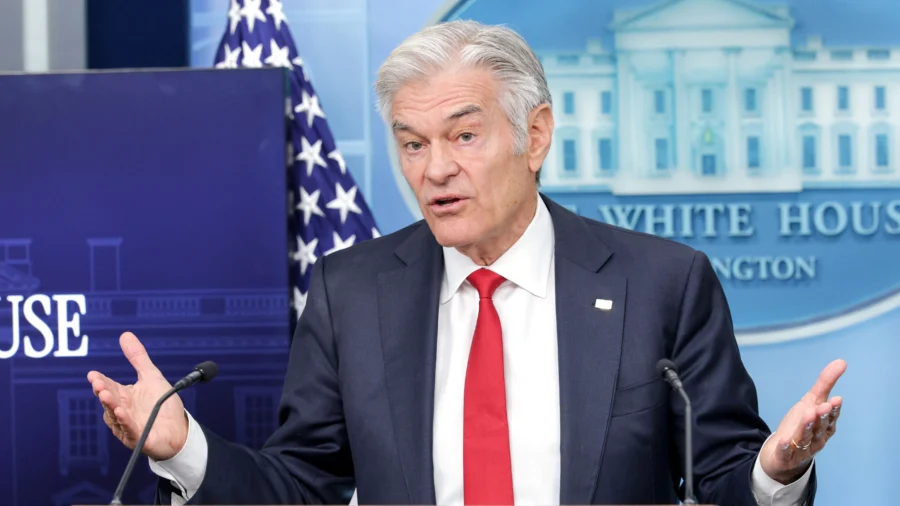
Image via NTD
TrumpRx.gov Hits 750+ Meds — And That’s What Competition Looks Like
CMS Administrator Dr. Mehmet Oz says TrumpRx.gov now lists more than 750 medications, positioning the site as a central price-and-access tool for patients shopping prescriptions. The pitch is simple: more transparency, more options, less of the backroom pricing that’s made pharmacy benefit managers and middlemen richer than the folks actually making the pills.
If the platform is kept current and truly comparable across suppliers and plans, it’s not just a “healthcare” story — it’s an inflation story. Prescription costs hit retirees on fixed income, working families, and small employers trying to keep benefits without cutting hours. When drug pricing stops being a mystery box, it puts downward pressure on the whole chain, and it changes the negotiating leverage between insurers, pharmacies, and manufacturers.
The political subtext matters too: Republicans have been accused for years of not having a practical healthcare lane beyond slogans. A tool that helps people find better pricing without creating a new entitlement is exactly the kind of conservative reform that can scale — especially if it’s paired with cracking down on the opaque rebate games that distort the market.
🏛 Wade's Take: If you want prices to fall, you don’t start with another thousand-page mandate — you start by shining a light on what things cost and who’s taking a cut. TrumpRx.gov is a pro-market move as long as it stays honest, updated, and not captured by the same lobbyists who broke the system. Families don’t need speeches; they need receipts.
📎 NTD
Democrats Can’t Control the Platner Chaos — And Voters Notice
Townhall highlights what it calls the “chaos” around Graham Platner — and, more importantly, the way Democrats appear unable (or unwilling) to get a handle on it. Whatever you think of the personalities involved, the larger point is familiar: when a party loses control of its own message, it starts governing by crisis management, not principle.
That kind of political instability has real economic costs. Businesses delay hiring and expansion when they can’t predict permitting, enforcement priorities, or tax policy. Investors demand a higher risk premium when institutions look unserious. And normal people — the ones paying for groceries, gas, and insurance — don’t have the luxury of treating governance like an online slap-fight.
The last few years taught us a hard lesson: “managed chaos” becomes higher borrowing costs, regulatory whiplash, and more power migrating to unelected bureaucrats who claim they’re the only adults in the room. That’s not accountability; that’s a workaround.
🏛 Wade's Take: When grown-ups can’t run their own shop, they shouldn’t be trusted to run the country. Chaos isn’t a governing philosophy — it’s a tax on everybody trying to plan a future. Conservatives win when we stay steady, keep the focus on kitchens and paychecks, and refuse to get dragged into clown-show politics.
📎 Townhall

Image via TheBlaze
CBS Cuts Scott Pelley After Bari Weiss Jab — The Old Media Eats Its Own
TheBlaze reports CBS News has fired longtime “60 Minutes” figure Scott Pelley after controversy tied to his public comments about Bari Weiss. Pelley has been a staple of the legacy-news era — the era that talked down to half the country while insisting it was “just reporting.”
No matter where you land on the personalities, this is another sign the prestige-news model is cracking. These organizations are losing audience, losing trust, and losing the ability to pretend their internal politics don’t shape coverage. When the economics get tight, ideological indulgences become expensive — and the first thing corporate managers do is reduce reputational risk.
For markets and business owners, the practical takeaway is that information distribution is still decentralizing. That’s good and bad: good because gatekeepers are weaker, bad because noise rises. The opportunity is for outlets that can build credibility with facts and consistency instead of drama and moral lectures.
🏛 Wade's Take: Legacy media taught America to doubt what we can see with our own eyes, and now they’re shocked people doubt them. When a network starts firing its own stars over culture-war crossfire, it’s not strength — it’s panic. If you’re an investor or a business owner, diversify your information diet the same way you diversify your portfolio.
📎 TheBlaze
New Jersey Democrats Pick a Candidate with Al-Qaeda-Linked Baggage — You Can’t Make This Up
Breitbart reports Democrat primary voters in New Jersey nominated Adam Hamawy to replace retiring Rep. Bonnie Watson Coleman, spotlighting his past involvement volunteering with a group described as al-Qaeda-linked. The story is already setting off alarms, because “background issues” like this aren’t just opposition research — they’re national-security questions.
Even if supporters try to wave it off as old history or guilt-by-association, the standard should be higher, not lower, for anyone seeking federal office. Voters deserve to know exactly what the ties were, who vetted them, and why party leadership didn’t step in before it got to a primary finish line. If the roles were reversed, the same media that yawns today would be running wall-to-wall “threat to democracy” segments.
There’s also a domestic consequence: when parties normalize radical associations or excuse them as “complicated,” it erodes public trust in institutions and invites more extremism at the margins. That drives more security spending, more surveillance arguments, and more political polarization — all of which land on the taxpayer and the business climate.
🏛 Wade's Take: I’m a simple man: if there’s credible reporting of ties to extremist networks, you don’t get a pass because you’ve got the right letter next to your name. Parties that won’t police their own candidates are telling you they won’t police their own bureaucracy either. National security isn’t a vibe — it’s a responsibility.

Image via The Federalist
An IRS “Inconvenience” Is the Point — Trump’s Fraud Crackdown Gets Real
The Federalist argues that an IRS notice in the mail — a minor hassle for a compliant taxpayer — is actually evidence the Trump administration is serious about fighting fraud. The piece frames the annoyance as a feature, not a bug: verification and enforcement are how you stop bad actors from gaming the system.
From a small-business perspective, fraud is not some abstract moral issue. It’s a direct cost. Every dollar stolen through bogus credits, identity scams, or fake filings becomes pressure for higher rates, tighter rules, and more audits on people who are already doing things the right way. When fraud runs wild, honest operators end up subsidizing crooks.
The tightrope is real: enforcement must be focused, fast, and fair. The IRS has a long history of making the compliant feel hunted while the sophisticated cheaters lawyer up and delay. If the administration is shifting the agency toward smarter detection and cleaner data matching, that’s a win — but it has to come with accountability and clear timelines so regular people aren’t left twisting for months.
🏛 Wade's Take: If you’ve ever made payroll, you know the rage of watching someone else cheat while you carry the load. A little verification doesn’t bother me — what bothers me is selective enforcement and endless paper-chasing that wastes productive hours. Go after fraud hard, but don’t turn law-abiding taxpayers into collateral damage.
I’m Wade Lawson. Keep your balance sheet clean, your information diversified, and your politics grounded in what actually builds a community — jobs, safety, and families. See you tomorrow.
— Wade Lawson