Sponsored By:
Gold's rally isn't over — and institutional investors know it. As economic uncertainty, rising debt, and shifting fiscal policy reshape the financial landscape, smart savers are turning to physical gold held inside tax-advantaged IRAs to protect what they've spent a lifetime building. The window isn't closed. But it won't stay open forever.
The Reagan Gold Group Wealth Protection Guide shows you exactly how physical gold can legally and tax-efficiently anchor your retirement — covering IRS-approved assets, portfolio strategies, and why experienced investors are repositioning now before markets shift further. Get the clarity you need to act with confidence.
Get Your FREE Wealth Protection GuideThis is an advertisement. Reagan Gold Group does not provide financial, legal, or tax advice. This information is for educational purposes only and should not be considered investment advice. All investments carry risk, including loss of principal. Past performance is not indicative of future results. Consult your licensed financial advisor before making investment decisions. If you no longer wish to receive this promotional message, please Unsubscribe. Or write to: 2029 Century Park E Suite 400, Los Angeles, CA 90067.

From Title IX fights to an Army shake-up and Milei stirring the Falklands pot, today’s headlines all point to the same question: who gets to set the rules, and who pays the bill when they do?
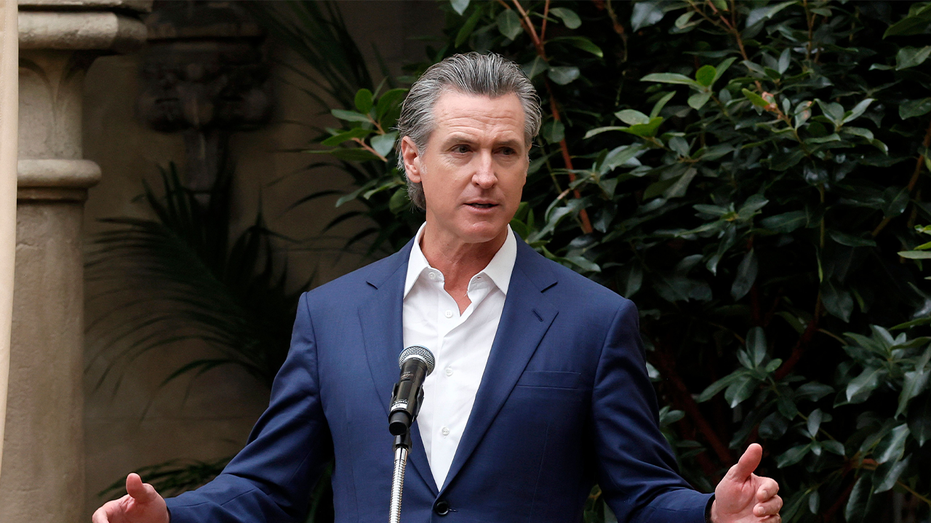
Image via Fox News
Newsom Picks a Fight After Judge Tosses DOJ Title IX Case on Trans Athletes
A federal judge dismissed the Department of Justice’s Title IX lawsuit challenging California’s policy on transgender athletes participating in girls’ sports, and Governor Gavin Newsom wasted no time turning it into a political brawl with President Trump. The DOJ says it will appeal, which means this is heading deeper into the courts and likely toward a longer-running federal-state collision over how Title IX is interpreted and enforced.
For families, schools, and local districts, the practical impact isn’t the press conference language. It’s uncertainty. When policy gets litigated in big, expensive chunks, districts either spend on lawyers and compliance consultants or they clamp down on sports programs to reduce risk. Either way, the kids lose time and opportunity while administrators cover themselves.
Economically, these fights don’t stay in the gym. They affect migration, business climate narratives, and the “is this state governable?” factor that matters to employers deciding where to expand. California’s leadership keeps signaling it’s willing to absorb years of friction with Washington, and that friction has downstream costs for residents and for anyone trying to run a stable organization inside the state.
🏛 Wade's Take: If you want to know why people and capital keep leaving high-drama states, it’s not one law or one headline. It’s the constant churn and the certainty that every issue becomes a federal case with no off-ramp. Let the courts sort out Title IX, but states should stop using kids’ sports as a political battering ram while school budgets get squeezed and programs quietly shrink.
📎 Fox News
Randy Fine Says Pro-Hamas Rhetoric Isn’t Politics, It’s Terror Apologetics
Rep. Randy Fine is doubling down on calling U.S. politicians who rhetorically support Hamas “terrorists,” arguing that public figures who normalize or excuse Hamas are providing aid and comfort in everything but name. In an exclusive interview, Fine framed the language war as more than semantics, pushing the idea that nonviolent political cover can still function as operational support for violent movements.
This is the kind of argument that makes cable news heat up fast, but it also tees up real-world consequences for speech boundaries, party discipline, and donor coalitions. When elected officials label other elected officials with terrorism-adjacent language, it hardens lines, invites censure fights, and can quickly become a litigation and security headache for agencies tasked with threat assessments.
From an economic angle, the stakes show up in places most folks don’t connect to foreign terror groups: university funding battles, nonprofit compliance, corporate reputational risk, and public pension boards getting dragged into political screening. The more our politics rewards incendiary labels, the more institutions respond with policies that are expensive to administer and easy to weaponize.
🏛 Wade's Take: I understand the instinct: Hamas is evil, and anyone playing footsie with that cause deserves public condemnation. But if we’re going to use words like “terrorist” for American politicians, we better be precise, because sloppy accusations turn into lawsuits, security escalations, and another round of institutional overreaction that hits taxpayers and donors. Condemn the ideology and the support networks, then make the case with facts strong enough to hold up outside a microphone.
Trump Installs Adam Telle as Acting Army Chief After Sudden Leadership Shake-Up
President Trump named Adam Telle as the new acting head of the U.S. Army following the resignation of Army Secretary Dan Driscoll. The move was fast and deliberate, with the administration leaning toward a seasoned Washington operator to steady the ship and manage the immediate leadership gap.
Leadership transitions at the top of the Army aren’t just inside-baseball for Pentagon watchers. They influence procurement priorities, modernization timelines, and the tone of civil-military relations. For defense contractors and the industrial base, the question is whether the new acting leadership pushes continuity or uses the moment to redirect programs, accelerate cuts, or reprice risk.
For the broader economy, defense stability matters more than people admit. In a lot of Southern towns, defense dollars are payroll dollars, and payroll dollars become mortgages, church donations, and little league sponsorships. The Army’s leadership and budgeting posture can swing real estate demand in military-adjacent markets and ripple through regional banks that finance the businesses serving those communities.
🏛 Wade's Take: I don’t care what party you’re in, the Army can’t be run like a reality show. Pick steady leadership, keep procurement disciplined, and stop treating the defense budget like a place to hide political favors or punish enemies. If Telle can bring order and predictability, that’s good for readiness and it’s good for every community that depends on defense as a backbone industry.

Image via TheBlaze
The Real Economy Is Roaring Back, and California’s Culture Didn’t See It Coming
A new piece argues that for years California treated the physical economy like an annoyance, betting that the future would be built on ad clicks, expensive software subscriptions, and financial engineering. Now, the thesis goes, the country is rediscovering the value of making tangible things and building infrastructure that actually moves goods, powers homes, and defends the nation.
Whether you call it re-industrialization, reshoring, or just common sense, the trend is real: manufacturing investments are rising in friendlier states, logistics corridors are getting upgraded, and energy reliability is back on the priority list. The places winning are the ones that make it easier to permit, easier to build, and easier to hire without getting smothered by boutique regulation.
This isn’t anti-tech. It’s pro-balance. Software still matters, but the last decade proved you can’t eat an app, ship an app, or keep the lights on with an app. And when financing costs rise, the business model that survives is the one tied to real demand, real assets, and real productivity gains.
🏛 Wade's Take: I’ve made my living in the physical world, and the big secret is it’s not glamorous, it’s just necessary. The states that respect work, energy, and property rights are going to capture the next twenty years of growth while the coastal elites argue about language and vibes. If you’re investing, follow the industries that build, move, power, and defend things, and follow the states that let them operate.
📎 TheBlaze

Image via Washington Examiner
Milei Turns Up the Heat on the Falklands as Trump Signals Less Automatic UK Support
Argentine President Javier Milei escalated his rhetoric over the Falkland Islands after President Trump appeared to question whether the United States would automatically back the United Kingdom in the long-running dispute. The comments have stirred diplomatic nerves, with Milei using the moment to press Argentina’s claim and frame the issue as unfinished business.
Any talk of shifting U.S. posture toward a close ally like the UK sends signals far beyond the South Atlantic. It affects deterrence, alliance credibility, and how other countries calculate their odds in territorial disputes. Even if nothing changes in policy, the perception of uncertainty can invite brinkmanship, and brinkmanship is the enemy of stable trade routes and stable commodity markets.
For investors, geopolitical flare-ups don’t just move defense stocks. They can move energy prices, shipping insurance, and currency risk across emerging markets. Argentina’s own economic story is already fragile, and ramping up nationalist disputes can spook capital that might otherwise fund productive reforms.
🏛 Wade's Take: Allies matter, and credibility is an asset you don’t rebuild overnight once it’s spent. If the U.S. wants leverage, it should use it quietly and strategically, not through public ambiguity that encourages loudmouth escalation from whoever thinks they can grab a headline. Milei should focus on making Argentina investable and stable, because flags don’t pay bond coupons and rhetoric doesn’t fix inflation.
That’s the round-up. Keep your eyes on what changes behavior: court rulings, hiring plans, capital flows, and whether Washington is creating certainty or chaos. See you next issue. Wade Lawson, The Local Conservative
— Wade Lawson