Sponsored By:
It's not gas, groceries, or Medicare premiums. The fastest-rising cost quietly draining American retirees is housing — and Social Security's COLA isn't keeping up. The 2027 adjustment is projected at just 3.9% ($81/month), while rent, property taxes, insurance, and maintenance have surged by hundreds in just two years. Even if your home is paid off, you're still getting squeezed. The Senior Citizens League confirms it: every dollar of Social Security today is worth only 86.3 cents compared to 2016.
Central banks have already responded — buying one specific asset at the fastest pace in 50 years, with JP Morgan forecasting it hits $8,000. Disciplined retirees are making the same move now to protect what they've saved. You're making a decision today whether you realize it or not. Don't leave it to chance.
Get the Free Wealth Preservation GuideThis is an advertisement. If you no longer wish to receive our promotions, please unsubscribe here. Or write to: 5005 Lyndon B. Johnson Fwy. Suite 350, Dallas, TX 75244.

Five stories today that all point to the same truth: power moves money, and the folks paying the bill are usually the ones just trying to run a business, raise a family, and keep America steady.
Image via NTD
DOJ Grabs $560K in Hamas Crypto Donations, and That’s the Tip of the Spear
The Justice Department says it seized more than $560,000 in cryptocurrency tied to donations for Hamas, using seizure warrants to take control of digital funds allegedly routed through wallets and exchanges to support the terror network. The headline number isn’t what should get your attention. It’s the proof of concept: crypto rails can move war money fast, and law enforcement is getting better at following it.
For investors, this is another reminder that the crypto market lives under a regulatory storm cloud that will not lift anytime soon. When the government can show a terror-finance connection, Congress doesn’t debate nuances, it swings a hammer. Expect more pressure on exchanges, tougher compliance demands, and more “guilty until proven innocent” narratives that can yank liquidity out of the market on a dime.
There’s also a national security angle most Americans don’t want to admit: every time we let foreign-linked extremist funding operate through modern payment systems, we invite the kind of blowback that ends up costing us in higher security spending, higher insurance costs, and higher risk premiums across the economy.
🏛 Wade's Take: I’m glad they seized it, and I hope they keep going, because terror finance is not “free speech” and it’s not “just code.” But Washington needs to separate criminals from lawful American investors, or they’ll choke innovation and drive capital offshore while the bad guys simply adapt. If you own crypto, keep it clean, keep records, and don’t pretend compliance is optional anymore.
📎 NTD

Image via The Western Journal
Kaepernick’s Back on TV: Same Old Grievance, Fresh New Product Launch
Colin Kaepernick is making the media rounds again with a new memoir landing mid-September, and the promotional circuit is familiar: long interviews, sympathetic framing, and a storyline built around being wronged. He’s pitching himself as a voice of conscience and consequence, while the press largely treats him like a cultural martyr instead of a former athlete who turned controversy into a brand.
From a business standpoint, it’s a case study in modern monetization: turn a political stance into identity, turn identity into audience, turn audience into sales. There’s nothing illegal about that. But it’s hard to miss the asymmetry: everyday Americans take real risks when they speak up at work, while celebrities can turn “risk” into a revenue model with a publisher, a studio, and a PR team behind them.
The bigger story is what this does to institutions we all rely on. When media companies reward performative outrage, it trains the next generation that the best path to success isn’t competence and accountability, it’s a grievance narrative that can be packaged and sold.
🏛 Wade's Take: He’s free to sell books, and we’re free to see it for what it is: a marketing strategy wrapped in moral language. The people I respect are the ones who build, coach, hire, and serve without needing a camera crew. America doesn’t need more celebrity victimhood; we need more grown-ups who can take responsibility and produce results.
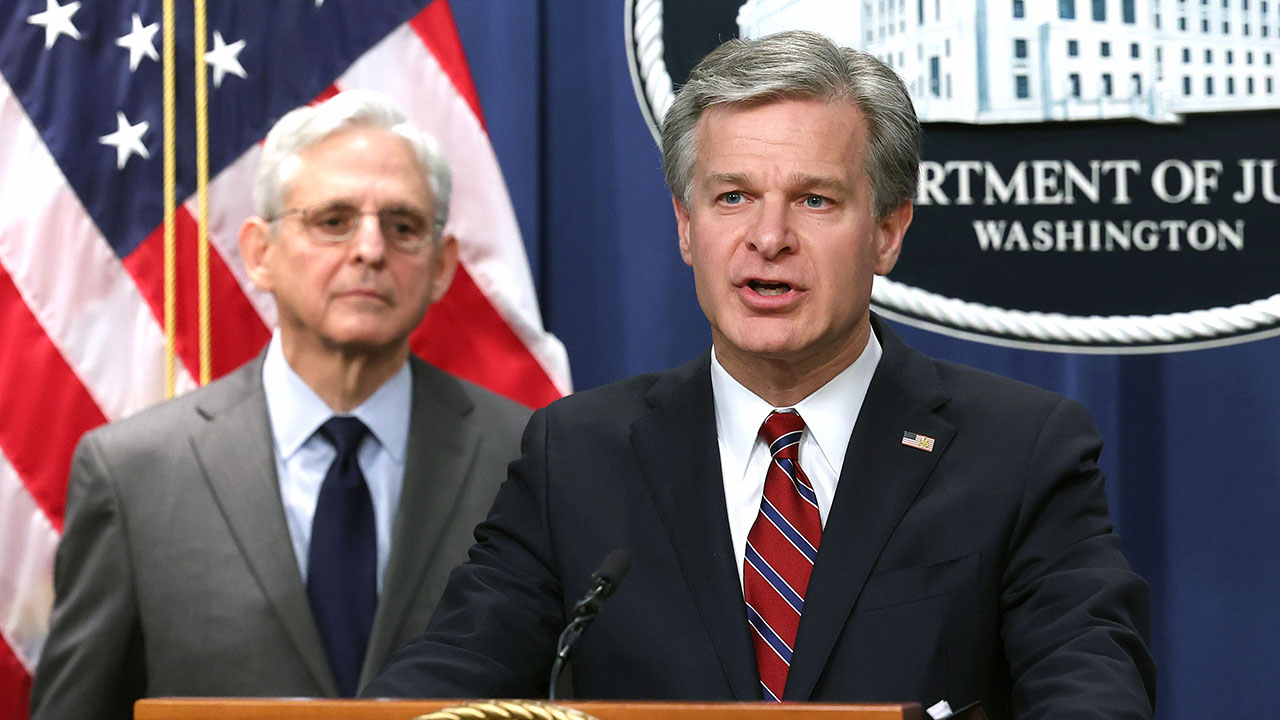
Image via The Daily Signal
FBI Cited SPLC Over 22,000 Times: That’s Not “Research,” That’s Outsourcing Your Moral Compass
A new Justice Department report tied to the Richmond Catholic memo fallout points to a broader problem inside the FBI: agents cited the Southern Poverty Law Center more than 22,000 times while taking thousands of actions, even as concerns about SPLC’s credibility and political bias were known. This isn’t an argument about whether extremists exist. It’s about whether federal law enforcement should be leaning on a partisan-aligned advocacy group as a reference engine.
When government agencies use ideologically loaded labels to guide surveillance, interviews, or internal targeting decisions, the damage isn’t theoretical. It hits real people and real institutions: churches, civic groups, and families who suddenly find themselves treated like a risk category. That chills speech, fractures trust, and makes communities less willing to cooperate with law enforcement when actual threats show up.
There’s an economic consequence too. A country that treats half its citizens as suspect will get less entrepreneurship, less private investment, and more capital sitting on the sidelines. When people think the rules are political, they stop taking long-term bets, and that’s how nations get poorer even when their stock indexes look fine.
🏛 Wade's Take: If the FBI is going to wield the power of the state, it can’t borrow its “enemy lists” from a political shop and call it due diligence. Clean this up with bright-line rules, real audits, and consequences for anyone who used biased sources to justify actions against peaceful Americans. Trust is a form of capital, and Washington has been burning it like it grows on trees.
Trump Promises a Hard Hit on Iran After Fresh Exchanges of Fire
Reuters reports Donald Trump vowed to hit Iran hard after the first exchanges of fire in a month, signaling a sharper posture as tensions flare again. This comes at a time when global shipping lanes, energy infrastructure, and regional proxies are all sitting on a hair trigger. One incident can turn into a week of volatility, and a week of volatility can turn into higher prices at the pump and higher costs for every business that moves goods.
Markets hate uncertainty, but they especially hate uncertainty in energy. A perceived escalation path with Iran tends to bid up crude, widen credit spreads for exposed sectors, and push investors toward “risk-off” assets. For Main Street, that shows up as transportation surcharges, higher materials costs, and another round of inflation pressure right when small operators are trying to plan staffing and inventory.
Strategically, deterrence matters. But deterrence isn’t just tough talk, it’s clarity: what’s the red line, what’s the objective, and how do we avoid an open-ended commitment that bleeds money and attention from problems at home.
🏛 Wade's Take: I’m all for strength, but strength needs a plan, not a soundbite. If Iran is testing us, we should respond in a way that protects Americans and stabilizes the region without stumbling into another forever mess. And Washington needs to remember: every foreign-policy “shock” lands on the backs of working families through fuel, food, and financing costs.
📎 Reuters
Xi Lands in Egypt as China Moves In on the Middle East’s Front Porch
The Associated Press reports Xi Jinping visited Egypt for the first time in a decade, part of China’s push to deepen influence across the Middle East. Egypt is not just another flag on a map. It sits astride critical trade routes, plays power broker in the Arab world, and offers Beijing another platform to expand Belt and Road logistics, ports, and telecom relationships.
For the U.S., this is what strategic competition looks like when it’s not a headline about jets and missiles. It’s financing deals, infrastructure contracts, currency arrangements, and long-term access. China doesn’t need to “win a war” to beat us; it just needs to lock in relationships that tilt supply chains, shipping costs, and regional alignments away from American interests.
Investors should pay attention to what follows: port concessions, industrial zone announcements, energy agreements, and digital infrastructure. Those deals can change who gets the projects, whose standards govern commerce, and whose companies capture the cash flow for the next twenty years.
🏛 Wade's Take: China is buying influence the same way a smart developer buys a corridor: quietly, early, and with patience. America needs to compete with strength and seriousness, not lectures and paperwork, and we need to put real economic tools behind our diplomacy. If we keep outsourcing strategy to slogans, we’ll wake up and find key trade arteries priced and policed on Beijing’s terms.
📎 AP
I’m Wade Lawson. Keep your books clean, your debt manageable, and your eyes on where the money moves next. See you tomorrow in The Local Conservative.
— Wade Lawson