Sponsored By:
When the U.S. government quietly takes ownership stakes in public companies, stocks don't just move — they explode. One tripled overnight. Another surged 200% before the market opened. A third went public days after a formal government partnership in one of the biggest tech IPOs in years. This isn't speculation — it's in the official filings.
A free report reveals all 24 companies named in the government's official partnership announcement, which ones you can trade right now, plus a bonus list of 5 companies where the government took direct ownership stakes — and exactly how each stock reacted when the deal went public. Straight from the source. Fully verified.
Get the Free Report NowClicking the link above subscribes you to future messages from Equiscreen, LLC and provides instant access to two additional bonus subscriptions from our marketing partners. Unsubscribe anytime. View Privacy Policy

Five stories that all land in the same place: risk. National risk, market risk, and the kind of risk that hits small businesses and household budgets first.
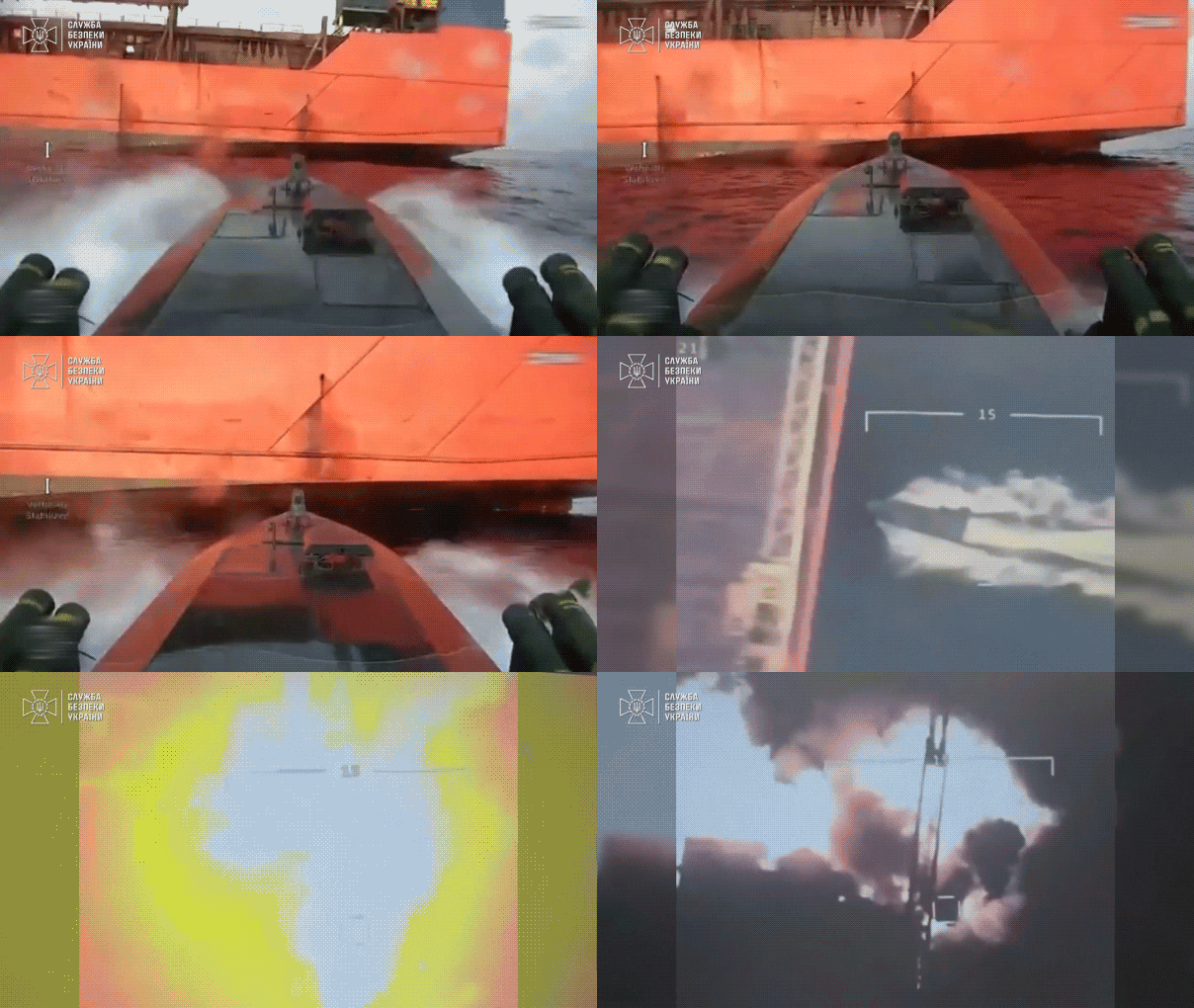
Image via Fox News
Ukraine Takes the Fight Offshore, Sinks Russian Warship Near Libya as Talks Restart
Ukrainian President Volodymyr Zelenskyy released video and praised what he called an “exemplary” operation in which Ukrainian naval drones sank a Russian corvette, the Merkury, off the coast of Libya. The message wasn’t subtle: Ukraine can reach Russian assets far from the Black Sea, and the battlefield now includes supply lines, ports, and the gray-zone waters where shipping and energy routes live.
The timing matters because peace talks are resuming after a nine-month pause. When you see a high-visibility strike like this right as negotiations come back to life, it’s usually about leverage. Markets should read it the same way lenders read a shaky tenant: the situation can change fast, and the “risk premium” on everything from insurance to freight to energy can jump overnight.
Any expansion of the conflict footprint into the Mediterranean-adjacent corridor raises the temperature for commercial shipping, maritime insurance, and regional energy flows. That filters down into fuel costs, delivered goods prices, and the margins of every outfit that moves product for a living.
🏛 Wade's Take: If you’re a working American trying to make payroll, you don’t have the luxury of “symbolic” military actions. Every escalation near major trade lanes shows up as higher costs in the real economy, plain and simple. I want a peace that’s enforceable, not a photo-op, and I want U.S. policy focused on ending the war in a way that stops the inflationary aftershocks we keep importing through energy and logistics.
📎 Fox News
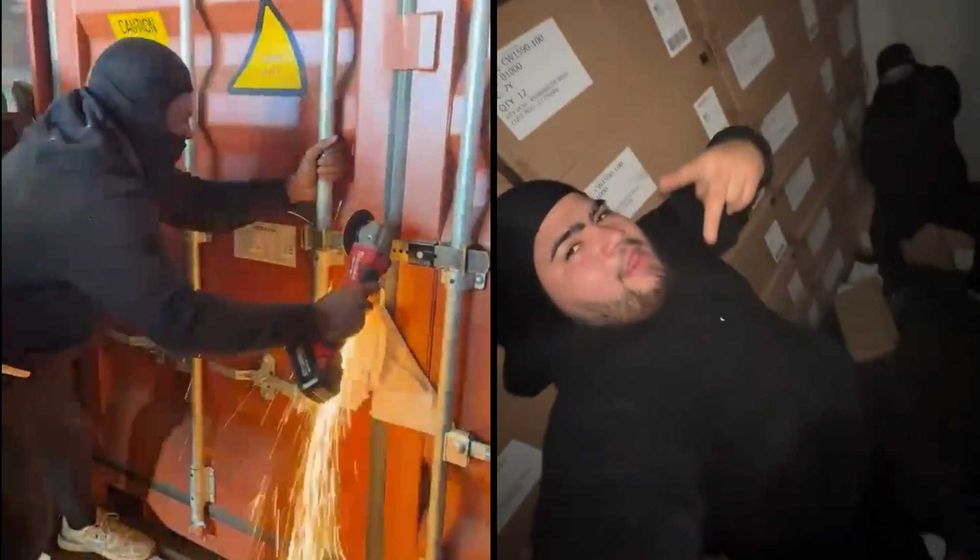
Image via TheBlaze
Train Robbery Ring, Alleged Illegal Alien Suspects, and the Quiet Tax on Business
Federal prosecutors in California say two suspects tied to a large-scale train robbery operation are in the country illegally, according to reporting that cites the U.S. Attorney’s Office for the Central District of California. The underlying allegation is bigger than two names: organized theft targeting freight shipments at scale, the kind of crime that turns a supply chain into a crime scene.
When theft shifts from “petty” to “professional,” businesses respond the only way they can: more security, more monitoring, more insurance, and more shrink assumptions built into pricing. That’s not politics, that’s math. The end buyer pays, and the small operator pays first because we don’t have a corporate balance sheet to absorb it.
This is also a reminder that border enforcement isn’t an abstract debate. Labor markets, policing, court backlogs, and local budgets all get strained when federal policy invites chaos and then acts surprised when criminal networks exploit it.
🏛 Wade's Take: You can’t run a serious economy with a porous border and then pretend organized crime is unrelated. The hidden cost shows up in freight rates, insurance premiums, and higher prices on the shelf, which is a direct hit to families and a gut punch to small business margins. Enforce the law, deport criminals quickly, and stop treating basic sovereignty like it’s optional.
📎 TheBlaze
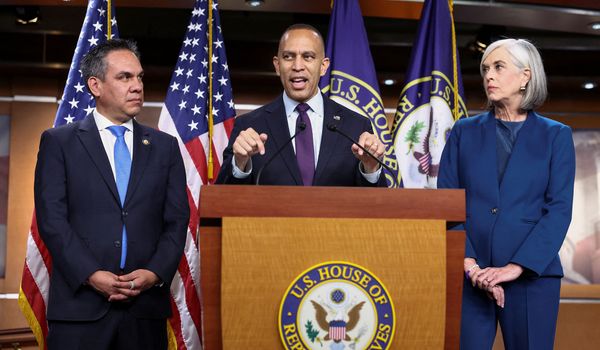
Image via National Review
Jeffries Wants a Medicare Expansion That Washington Can’t Afford
A new argument making the rounds in Washington is a proposed Medicare expansion pushed by House Democratic Leader Hakeem Jeffries, with conservatives warning it would widen the entitlement footprint at the worst possible moment. The critique is straightforward: Medicare is already a fiscal monster, and expanding benefits or eligibility without structural reform just loads more debt onto the next generation.
For investors and business owners, the question isn’t whether health care is important. It is. The question is who pays, when, and how. Washington’s usual answer is to borrow now and “figure it out later,” which translates into higher future taxes, reimbursement games that squeeze providers, and more pressure on private insurance premiums as cost-shifting accelerates.
This kind of policy also distorts labor decisions. When government programs expand, businesses get hit on the compliance side, the benefit-cost side, or both, while the overall economy gets less flexible and more dependent on federal spending flows.
🏛 Wade's Take: I’ve never met a landlord who solved a cash-flow problem by promising to spend more next month, but that’s Washington’s favorite trick. If Republicans cave on a Medicare expansion without real reform, they’ll be signing up the country for higher debt, higher inflation risk, and eventually higher taxes. Protect seniors, yes, but stop pretending we can buy political points on a national credit card forever.

Image via The Hill
Trump Signals Potential Iran Strikes After New Year Without a Deal
President Trump said he’s inclined to resume strikes against Iran after the New Year if Washington and Tehran don’t reach a deal to end the conflict, according to reporting on his remarks. He acknowledged the stakes and framed the posture as conditional, but the headline is what markets will trade: a credible possibility of renewed U.S. military action.
Any time Iran is on the board, you’re really talking about energy, shipping lanes, and the price of risk. Even if the U.S. hits are “limited,” the second-order effects can be broad: threats to maritime traffic, insurance spikes, and speculative moves in crude that filter down into diesel, jet fuel, and the cost structure of almost everything in the economy.
For commercial real estate folks like me, this matters because higher fuel and transport costs can cool consumer spending and raise operating expenses at the exact moment many businesses are still adjusting to higher-for-longer rates. Geopolitics isn’t theoretical when it shows up in your tenants’ sales.
🏛 Wade's Take: I’m for peace through strength, but strength has to be paired with clear objectives and a plan for the day after. If strikes are necessary to protect Americans and restore deterrence, fine, but don’t stumble into an open-ended mess that lights up oil and punishes working families at the pump. The best outcome is a deal that actually restrains Iran, not one that just buys a quiet headline for 90 days.
📎 The Hill
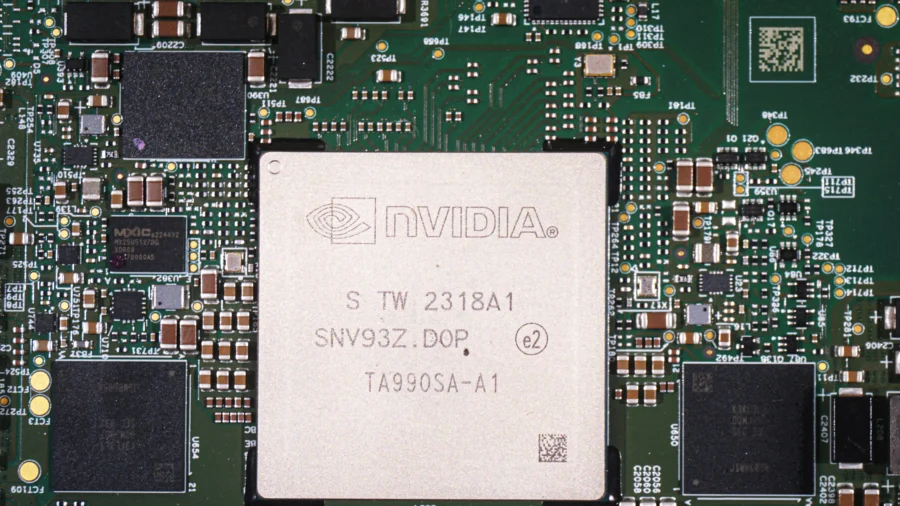
Image via NTD
Washington Presses Nvidia on China Chip Sales, and Investors Should Pay Attention
The U.S. is seeking answers about Nvidia’s sale of chips to China, with Treasury Secretary Bessent weighing in as questions mount, according to the report. The core issue is whether advanced chips or workarounds are still flowing into China in ways that undermine U.S. export controls and national security aims.
This isn’t just a political skirmish; it’s a market structure story. Nvidia sits at the center of the AI buildout, and any tightening of China exposure affects revenue assumptions, supply chain strategy, and the broader valuation story across semiconductors. Investors need to understand that “policy risk” is now a permanent line item for Big Tech, not an occasional headline.
At the national level, America can’t talk tough on competing with China while allowing critical enabling technology to leak through loopholes. At the business level, uncertainty is its own tax: companies delay capex, partners hesitate, and markets demand a higher return to compensate for regulatory whiplash.
🏛 Wade's Take: If we’re serious about competing with China, we can’t run a system where rules exist mainly for the companies that follow them. Enforce clear export lines, punish deliberate evasion, and stop putting American firms in a guessing game that changes every quarter. As an investor, I like Nvidia’s business, but I don’t like any stock whose biggest variable is a closed-door policy decision in Washington.
📎 NTD
That’s the rundown. Keep your balance sheet clean, your insurance current, and your eyes on where the risk is moving next. Wade Lawson, Editor, The Local Conservative
— Wade Lawson