Sponsored By:
Nuclear energy isn't waiting around — and neither should you. Last year, nuclear-related stocks surged 40%+, driven by real earnings, real contracts, and real demand. One uranium producer alone generated nearly $200 million in quarterly free cash flow, while others locked in long-term government contracts — no commodity swings required. With U.S. nuclear capacity projected to triple over the coming decades, this buildout is just getting started.
MarketBeat analysts have identified 7 top nuclear stocks positioned to ride this wave — some with upside tied to uranium prices, others backed by steady contracts and infrastructure spending. The full report is free right now, but it won't stay that way. Grab your copy before it moves behind the paywall.
Send My Free Nuclear ReportBy clicking the link above, you will receive this free report and a free subscription to MarketBeat's daily email newsletter. You are also agreeing to the terms of our privacy policy. Unsubscribe at any time.

Five stories, one lens: power always follows money. Today we look at political coalitions held together by resentment, performative outrage at sacred moments, media-for-hire culture in D.C., a troubling FDA power grab, and yet another Medicare money trail that ends in somebody else’s pocket.
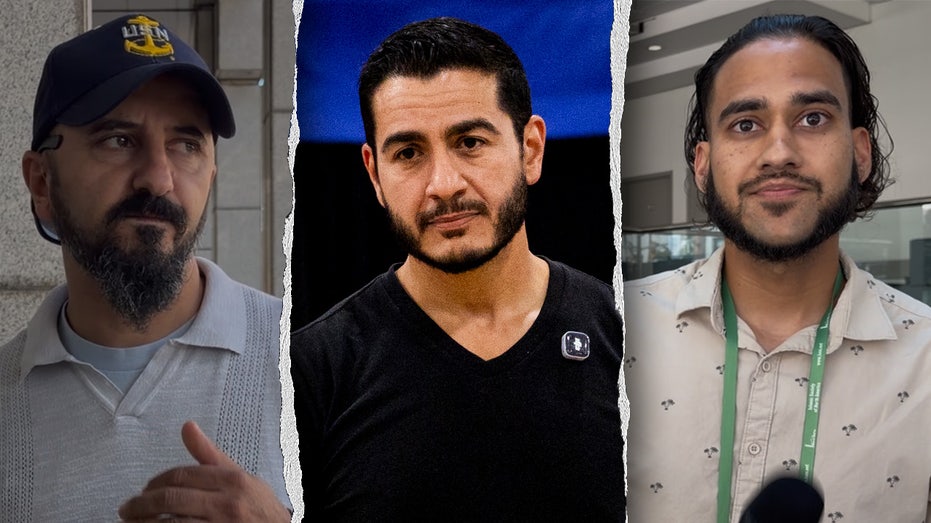
Image via Fox News
El-Sayed Courts a Voting Bloc That Doesn’t Buy His Social Agenda
At an ISNA conference, Muslim voters told Fox News they plan to back Abdul El-Sayed even while disagreeing with his positions on abortion and LGBTQ issues. The through-line wasn’t enthusiasm for his platform as much as frustration with Republicans and a sense of betrayal by Trump-era politics, so they’re willing to vote for a candidate whose social views they don’t share.
That’s the modern coalition game in a nutshell: you don’t have to align on values if you align on grievances and power. For small business owners and investors, the practical question isn’t the personality comparison games, it’s what the policy coalition will deliver: more regulation, higher labor and compliance costs, and local governance that tends to treat private enterprise like an endless ATM.
In cities and states where progressive leadership is strongest, you see the same economic pattern—higher operating costs, heavier permitting friction, more politicized enforcement, and pressure on commercial real estate as employers rethink where to expand. Whatever a voter thinks about social issues, the economic consequences land on payroll, property values, and whether capital decides to stay or leave.
🏛 Wade's Take: When voters knowingly pick leaders whose values they don’t share just to punish the other side, they’re renting out their influence and acting surprised when they get used. If El-Sayed governs like the progressive model suggests, the bill shows up in taxes, regulation, and the kind of anti-business posture that drains investment from neighborhoods that can least afford it. Conservatives win this by offering a serious, respectful economic agenda that makes family formation and small enterprise easier, not by writing whole communities off.
📎 Fox News
A Sacred Day Turns Into a Photo-Op, and Trump Calls It What It Is
President Donald Trump slammed Rep. Alexandria Ocasio-Cortez and New York City Mayor Zohran Mamdani for what he called inappropriate behavior at a 9/11 memorial event, pointing to a gleeful exchange that struck many as tone-deaf. Whether you love Trump or you can’t stand him, the core issue isn’t complicated: 9/11 isn’t a stage for political brand-building.
New York runs on confidence. Confidence in safety, confidence in leadership, confidence that the city respects its own history and the people who keep it running. When leadership looks unserious at serious moments, it bleeds into everything else—business sentiment, tourism, corporate location decisions, and the willingness of families to stay and build.
I’ve watched the same phenomenon in smaller cities: when leaders treat civic institutions like props, the private sector starts pricing in chaos. Investors demand higher returns to take the risk, insurance and security costs creep up, and you get that slow-motion decline where good operators quietly stop renewing leases and start looking elsewhere.
🏛 Wade's Take: A memorial is for mourning and resolve, not for a viral moment. Leaders who can’t read the room on 9/11 usually can’t read a budget, a crime report, or a jobs report either, and that costs real people real money. If New York wants capital to stop fleeing, it needs seriousness, order, and respect for the citizens who still believe the city is worth fighting for.
Image via The Federalist
Politico’s Pay-to-Play Problem Shows Why Nobody Trusts the D.C. Press
The Federalist argues that Politico’s promotion of lobbyist-driven PR illustrates how corrupted the Washington media ecosystem has become. The critique is straightforward: when the same outlet that claims to explain policy is also packaging influence as a premium product, the line between reporting and selling access gets real thin.
This matters outside the Beltway because it changes who gets heard. If the loudest voices are the ones who can afford the subscription, the consultant, and the curated narrative, then small business owners, homeowners, and taxpayers become background noise. And when media coverage shapes regulation, enforcement priorities, and the political pressure campaign of the week, the people with the smallest lobbying budget end up with the biggest compliance burden.
Markets hate information asymmetry, and so does democracy. When media becomes a toll road for insider class messaging, it distorts expectations—about interest rate policy, sector winners and losers, even local development decisions. The result is a country where the rules feel like they’re written for connected people, and that’s exactly why trust is collapsing.
🏛 Wade's Take: I don’t mind anybody making a profit, but don’t sell influence and call it journalism. The D.C. media bubble is part of the same cartel as the consultants and lobbyists: they all eat first, and the rest of us split the leftovers. If conservatives want to govern, we need to build parallel channels that respect facts, understand economics, and don’t confuse access with truth.

Image via National Review
The FDA Wants to Police Drug Ads Like It’s Policing Your Speech
National Review warns that the FDA’s proposed rule on drug advertising could trample First Amendment protections, and notes that the proposal is drawing support from the far left. The debate centers on how much the government can control what companies say about their products, especially when the speech is tied to regulated industries.
I’m no fan of misleading advertising, and healthcare is personal. But there’s a big difference between enforcing fraud laws and creating a speech regime where bureaucrats decide what information the public is allowed to hear, when they’re allowed to hear it, and how it must be framed. Once that door opens, it never closes—and it never stays limited to just one industry.
There’s also an economic angle investors should notice: heavier ad restrictions and compliance uncertainty tend to entrench incumbents. Big pharma can hire armies of lawyers and compliance staff; smaller biotech firms and upstarts can’t. So while the far left cheers “regulation,” the likely outcome is less competition, slower commercialization, and higher costs pushed downstream into premiums and taxpayers.
🏛 Wade's Take: If the FDA is worried about deception, enforce deception. Don’t write a rulebook that treats free speech like a privilege granted by a regulator. Every time Washington centralizes control in the name of “protecting people,” it ends up protecting the biggest players and sticking families with the bill.

Image via Western Journal
Medicare Gets Worked Again, and American Taxpayers Are the Mark
The Western Journal reports that the son and daughter of former Somali dictator Siad Barre were found living in Ohio while running a home healthcare business funded by Medicare, allegedly taking millions from the program. The story taps into a pattern the public has seen too many times: federal healthcare dollars, limited oversight, and operators who learn how to game the system.
Home healthcare is a vital service when it’s legitimate. But the fraud incentives are obvious: high-volume billing, complex documentation, and patients who often can’t easily advocate for themselves. When bad actors get in, they don’t just steal money—they corrode trust in the providers who do the work honestly and they strain a system that already struggles with costs.
The economic consequences are not abstract. Medicare fraud contributes to higher taxes, tighter reimbursement rules, and more red tape for legitimate providers—which then reduces access for seniors and drives consolidation. And for the rest of the economy, every wasted dollar is one less dollar that could have gone to debt reduction, pro-growth tax policy, or simply staying in taxpayers’ pockets.
🏛 Wade's Take: If you steal from Medicare, you’re stealing from every working American who pays into the system and every senior who depends on it. We need aggressive auditing, real penalties, and faster asset recovery, and we should treat organized healthcare fraud like the financial crime racket it is. A country that can track a package across the nation can figure out where Medicare money is going if it actually wants to.
That’s the roundup. Keep your eyes on where the money moves, keep your debt manageable, and don’t let Washington talk you into thinking their mistakes are your responsibility.
— Wade Lawson