Sponsored By:
Markets are shifting — and most investors are missing it. The free Market Shift Report + Real-Time Watchlist breaks down exactly what's moving right now: policy impacts on economic trends, the return of supply-chain concerns, and what mixed consumer signals mean for the next quarter.
This complimentary report is only available for a limited time while these patterns are still developing. Don't get caught flat-footed — access it now before it's gone.
Get the Free Market Shift ReportWe encourage readers to perform their own research and due diligence on any information provided. By clicking the link above, you will automatically be subscribed to the Market Crux Newsletter. Privacy Policy

Five takes on security vs. slogans, the civic maintenance cost of liberty, DOJ vs. New Jersey tuition perks, the fallout from a DHS shutdown, and Democrats’ reaction to a Supreme Court voting ruling.
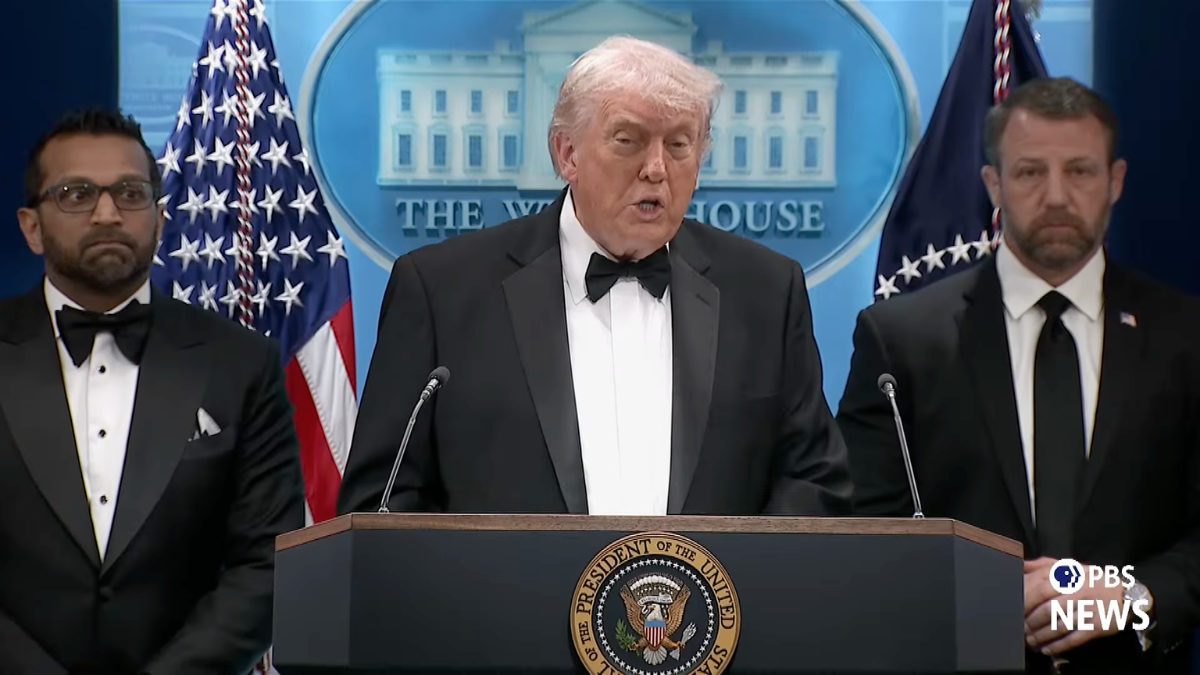
Image via The Federalist
Gun Control Wouldn’t Have Stopped This — Security Failures and Enforcement Would’ve
The latest assassination attempt against President Trump has already been weaponized by the usual crowd to demand “gun control,” as if another layer of paper restrictions would’ve magically stopped a determined attacker. The real story, as always, is less about slogans and more about specifics: access, intent, surveillance gaps, and whether existing laws and protocols were actually enforced.
When a high-profile target is involved, you’re dealing with a security problem first—threat assessment, perimeter control, coordination failures, and intelligence follow-through. If policymakers are serious, the focus has to be on the factors that actually show up in these cases: credible threat reporting, interagency communication, and real consequences for people who violate existing firearms and stalking/terror statutes.
✍ My Take: Every time there’s an incident like this, politicians go shopping for new laws because it’s easier than admitting government failed at its basic job: enforce what’s on the books and secure the venue. “Gun control” is a great fundraising pitch, but it’s a lousy operational plan. Fix the pipeline that misses known risks—and prosecute the heck out of the people who break current law.

Image via American Thinker
Freedom Isn’t Self-Running — It Requires Grown-Up Citizens
A free society isn’t held together by parchment and court rulings alone. It runs on personal responsibility—habits, self-restraint, family stability, moral formation, and the willingness to do the hard thing when nobody’s watching. Take that away, and what fills the vacuum is bureaucracy, surveillance, and coercion—because somebody always steps in to “manage” the chaos.
The piece makes the old-fashioned point that’s become borderline controversial: liberty has a maintenance cost. If citizens outsource responsibility to the state—whether it’s parenting, discipline, debt, health, education, or basic decency—the state will gladly take the job and send you the bill, with interest.
✍ My Take: Conservatives win when we say plainly what everyone knows: rights without responsibility turn into disorder, and disorder is how you get more government. This isn’t abstract—it hits your taxes, your schools, your streets, and your property values. The country doesn’t need more programs; it needs more people acting like adults again.
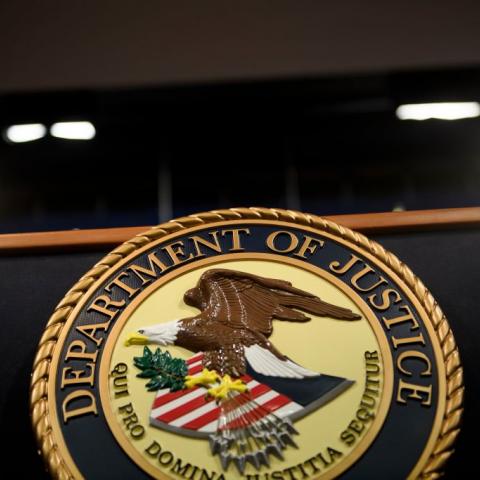
Image via Just the News
DOJ Sues New Jersey Over Tuition Perks for Illegals — And They Should
The Justice Department is suing New Jersey over policies that grant in-state tuition rates and financial support to illegal aliens while not extending the same benefits to U.S. citizens who don’t meet the residency or other qualifying requirements. The argument is straightforward: you can’t structure state benefits in a way that disadvantages citizens in favor of those here illegally and call it constitutional or fair.
Beyond the legalities, this is another example of how “sanctuary” politics reshuffle incentives. When states subsidize tuition for illegal immigrants, they create a magnet—and they shift the cost onto working families who already feel like everything is priced against them: housing, insurance, groceries, and now education.
✍ My Take: If you’re a citizen family paying taxes and playing by the rules, you shouldn’t be placed behind illegal immigrants in the line for subsidized education—period. This kind of policy is exactly why people feel the system is rigged. It’s also a quiet tax on local economies, because those subsidies don’t come from magic—they come from taxpayers and borrowed money.

Image via The Hill
Trump Signs Bill to End Record DHS Shutdown — But the Damage Bill Comes Due Later
President Trump signed legislation ending a record-long shutdown at the Department of Homeland Security, funding most agency operations and reopening the machinery that handles everything from border operations to administrative backlogs. The shutdown ending is good news for federal employees and contractors, and it reduces immediate uncertainty in travel, procurement, and regional spending tied to DHS footprints.
But shutdowns are never “free.” Vendors don’t forget late payments, contractors price in political risk, and productivity losses pile up in the form of delays, backlogs, and overtime. When Washington plays chicken, local economies—especially those with big federal employment bases—take the hit first.
✍ My Take: Ending the shutdown is necessary, not praiseworthy—it’s Washington finally paying the light bill after sitting in the dark. If you ran your business this way, your lenders would cut you off and your employees would walk. Conservatives should demand budget discipline that doesn’t turn basic governance into a recurring crisis premium the taxpayer finances.
📎 The Hill
Dems Melt Down Over Supreme Court Voting Ruling — Now It’s “Impeach the Justices”
After the Supreme Court struck down a majority-Black Louisiana congressional district as an unconstitutional racial gerrymander, Democrats responded with the now-standard escalation: calls for term limits, structural “reforms,” and even impeachment talk. The decision is a reminder that the Court is still willing, at least in some cases, to tell states they can’t sort Americans into political districts primarily by race and pretend that’s “justice.”
The political messaging is just as important as the legal holding. When one side treats unfavorable rulings as illegitimate by definition, it’s not “defending democracy”—it’s pressuring the judiciary to become a legislative arm. And markets don’t love institutional instability, especially when it threatens how elections are run and how states draw power.
✍ My Take: When Democrats lose in court, they don’t adjust their argument—they attack the referee. That’s not principled reform; that’s a power play, and it erodes confidence in the whole system. If you want to talk term limits, fine—make it bipartisan, prospective, and constitutional, not a tantrum because you didn’t get your preferred map.
I’m Wade Lawson — build real, invest smart, and don’t let Washington’s bad incentives wreck your hometown.
— Wade Lawson